
I learned I was the father of five-year-old twin boys while standing on the polished marble floor of Terminal 2 at Minneapolis–Saint Paul International Airport. Ironically, it happened just thirty-five minutes after I had thrown a quiet tantrum over an unexpected flight delay that I was convinced would ruin the single biggest business deal of my career.
At forty-four years old, punctuality was not merely a discipline to me—it was a relentless obsession. Over two decades, I had poured my heart, sweat, and sleepless nights into building a boutique luxury resort enterprise. With flagship properties humming along the white sands of Miami, the breezy coves of Key West, downtown Nashville, and the mountains of Salt Lake City, I lived by tight schedules and bottom-line margins. That crisp morning, I was scheduled to catch a morning flight to Baltimore to ink the purchase of a historic waterfront estate—an acquisition destined to crown my company’s legacy.
Because I never left anything to chance, I had arrived at my departure gate a full two hours before boarding.
Then, the luminous flight departure display abruptly flashed crimson: MECHANICAL DELAY – 35 MINUTES.
Irritation flared behind my temples. I immediately called my chief financial officer, my voice tight and impatient. “Start the board briefing without me if you must, Julian. The second this bird clears inspection, I’ll be on the runway.”
Needing an escape from the buzzing gate and the chatter of restless travelers, I grabbed my leather briefcase and wandered toward the expansive, floor-to-ceiling windows where the morning sunlight spilled across the tarmac. I popped open my laptop, fully intending to review the acquisition’s financial summaries. But before I could read past the opening balance figures, a quiet silhouette tucked into the alcove caught my eye.
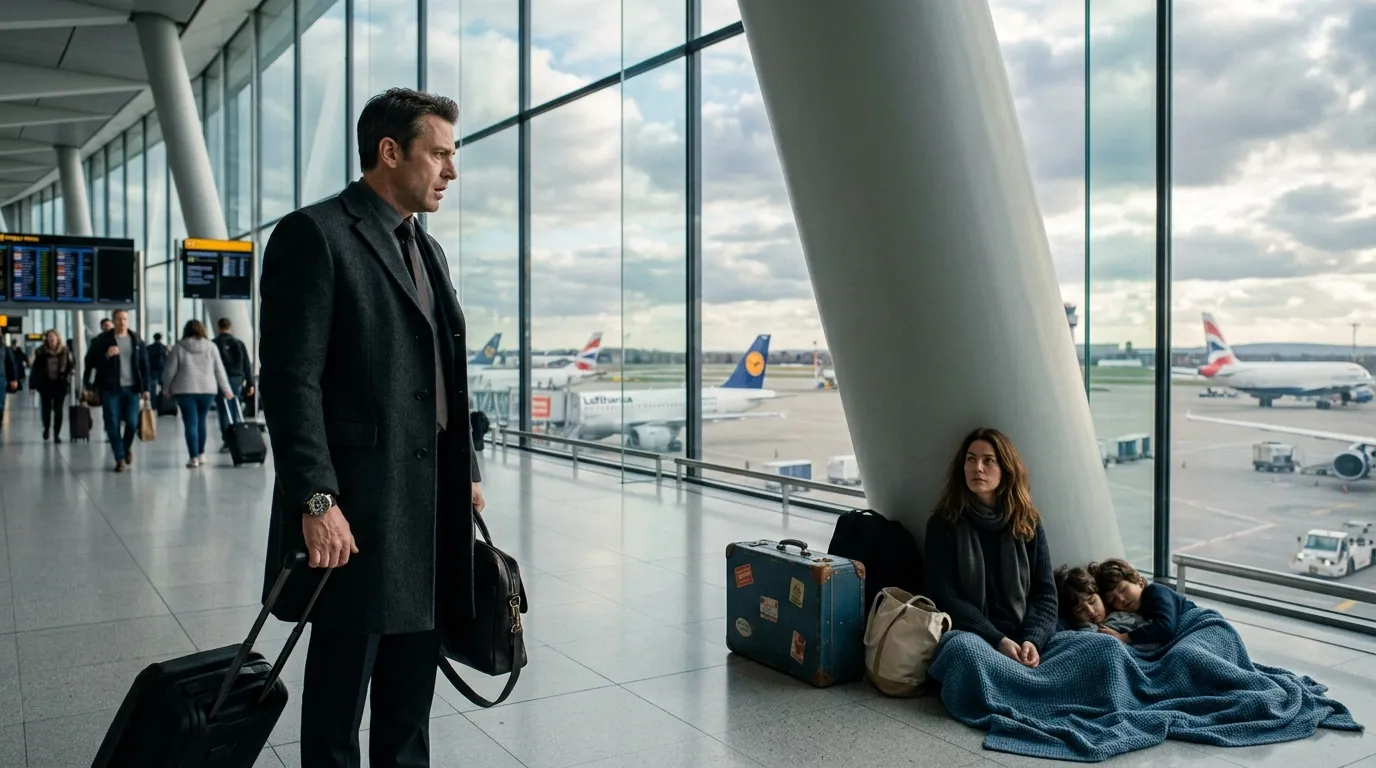
The sudden flight delay led me straight toward the past I thought was gone forever.
A woman was sleeping upright against a structural pillar, resting beside a scuffed, battered navy blue suitcase that had seen better decades. Huddled close against her sides were two young boys. One of them had his head nestled comfortably against her knee, while the other slept with his little fingers curled tightly around the suitcase handle, as though letting go might mean losing the only secure thing left in his world.
I would have dismissed the scene as just another exhausted family navigating travel chaos—except for the gentle, subconscious motion she made in her sleep. She raised a slender hand and tucked a stray lock of chestnut hair behind her ear.
My breath hitched. The air rushed out of my lungs in a cold shock.
Rosalind.
It was the woman who had vanished without a trace from my life six years ago.
I froze, my laptop hanging heavy in my hand. She was visibly thinner now, her cheekbones sharper and shadowed by chronic exhaustion. Her coat was plain and worn at the cuffs, yet there was no mistaking the grace that had captivated me years ago.
For six agonizing years, I had attempted to bury the ghost of our relationship beneath multi-million-dollar balance sheets, high-stakes investor summits, ribbon-cuttings, and cross-country flights. Whenever the grief threatened to resurface, my mother, Genevieve, had stepped in with her icy, practiced explanation: “Rosalind realized she simply did not belong in our world, Christopher. Let the girl go with whatever dignity she has left.”
Because the alternative—that the woman I planned to spend my life with had simply discarded me without a backward glance—tore through my soul, I chose to accept my mother’s narrative. I surrendered to pride.
We had met when Rosalind was hired to direct charity galas for our family’s philanthropic foundation in Minneapolis. I was thirty-five; she was thirty-one. Unlike the social climbers who perpetually orbited our circle, Rosalind was wholly unimpressed by our pedigree and openly amused by the rigid, suffocating social rituals my mother treated like scripture. She pushed back against my arrogance, laughed at my stubbornness, and taught me how to live outside boardroom walls.
My mother had loathed her from day one.
“Dallying with someone below your station is one thing, Christopher,” Genevieve had once warned me over dinner at her country club. “Building a dynasty with her is a catastrophic error.”
I had looked my mother in the eye and told her Rosalind was the only person with whom I ever wanted to build anything.
Not long after, an overseas hotel launch pulled me away to Europe for three weeks. When I flew back to Minnesota, eager to see her, Rosalind’s downtown apartment was vacant. Her phone was disconnected. My desperate emails bounced. Hand-delivered letters were returned marked Return to Sender. My mother assured me that Rosalind had demanded privacy and begged our family to stop pursuing her. Stung by humiliation, I finally stopped calling.
And now, she sat barely ten paces away on an airport floor.
Suddenly, the child leaning against her leg shifted and rubbed his eyes. He sat up, yawning, and turned his face toward me.
The blood drained from my face.
The boy possessed my dark, wavy hair, my father’s distinct square jaw, and—most undeniable of all—a faint, tiny notch sliced through his left eyebrow. It was the identical genetic mark I looked at in the mirror every morning while shaving.
A soft rustle woke Rosalind. Her eyelids fluttered open. When her eyes locked onto mine, every drop of color vanished from her skin. A sharp gasp escaped her throat, and she instinctively threw her arms around both boys, pulling them defensively against her ribs as if shielding them from an oncoming storm.
I took a trembling step forward. “Rosalind?”
Her voice was barely an audible whisper. “It can’t be you…”
“I’ve asked myself that every single day for six years,” I said, my voice cracking under the weight of disbelief.
Rosalind bit her trembling lower lip, glancing nervously down at her sons before meeting my gaze with a heartbreaking mix of terror and sorrow. “Christopher… your mother never told you, did she?”
Those seven words shattered the foundation of my past. As the boys—named Mason and Lucas—woke up completely, Rosalind reached into her bag with shaking hands and pulled out a battered manila envelope. Inside lay an unholy paper trail: dozens of returned letters addressed to my private residence, unanswered emails, and a signed cashier’s check for sixty thousand dollars bearing Genevieve’s pristine signature.
Tears welled in Rosalind’s eyes as the horrific truth poured out. Six years ago, when she discovered she was pregnant, she reached out to my family estate while I was overseas. My mother intercepted her. Genevieve presented her with the check, claiming coldly that I already knew about the pregnancy and wanted nothing to do with her or the children. When Rosalind refused to take the money, Genevieve used her immense influence to have Rosalind’s apartment lease abruptly terminated and unleashed private attorneys who threatened her with criminal harassment charges if she ever attempted to contact me again.
Before I could even process the monstrous cruelty of my own flesh and blood, my phone vibrated in my palm. The caller ID flashed: MOTHER.
I answered, paralyzed. “Christopher,” her cold, regal voice commanded through the speaker. “Turn around and walk directly to your gate. Do not engage with that woman.”
A cold chill shot down my spine. I whipped around. Fifty yards away, standing near the private airline club entrance, was Genevieve. Beside her stood Oliver Vance—our senior family attorney—clutching a thick gray dossier under his arm.
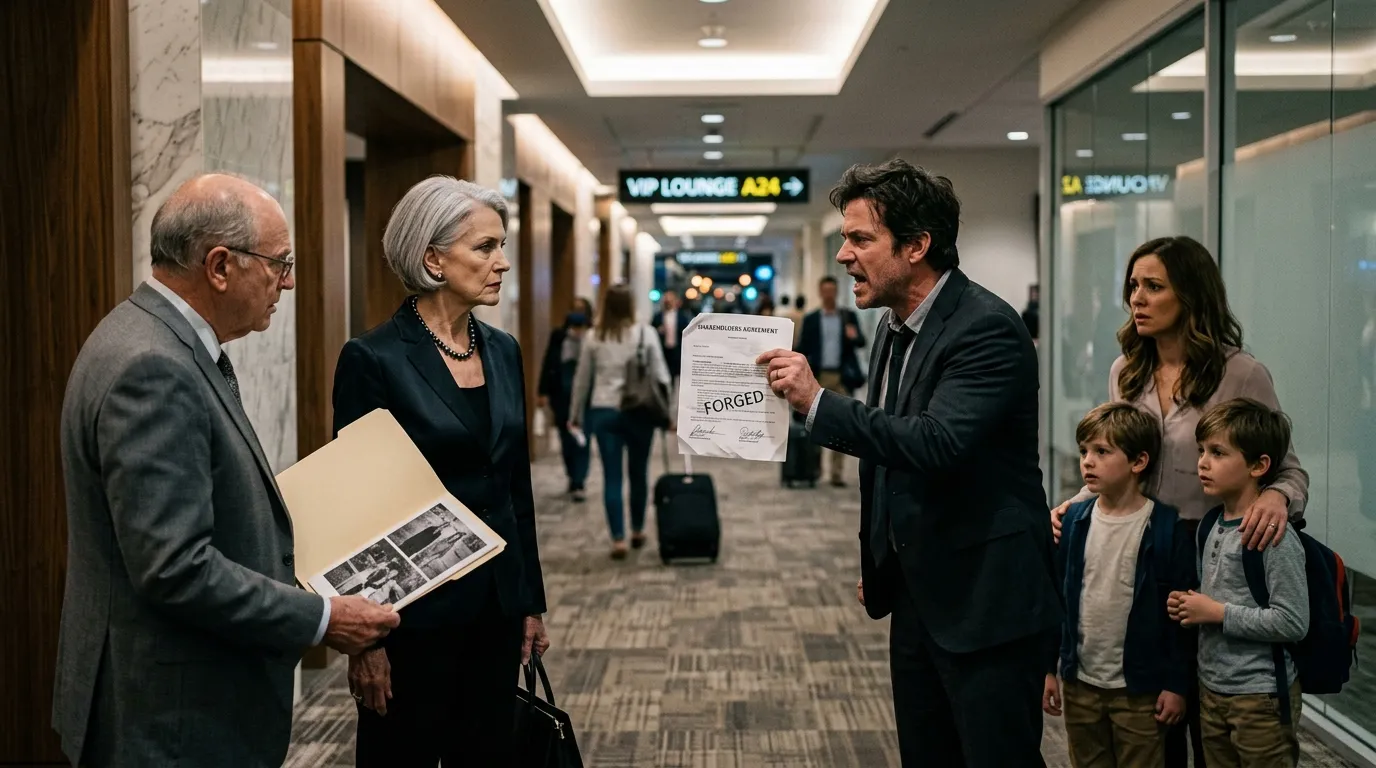
The mask slipped, exposing a six-year conspiracy built on lies, money, and intimidation.
I marched straight toward them, my rage vibrating in every step. I intercepted Oliver before he could speak. “Hand me the folder, Oliver, or your firm is terminated across every resort property I control before this gate boards.”
Trembling, the attorney surrendered the file. I ripped it open. Inside were invasive private-investigator photographs tracking Rosalind’s life—walking the twin boys to a community preschool, working late shifts, living in modest rentals. Folded inside was a newly drafted non-disclosure settlement offering two hundred thousand dollars to buy her permanent silence, accompanied by an older document: a letter on my corporate letterhead from six years ago, bearing my forged signature, stating that I formally rejected all parental rights.
I turned to Genevieve, nauseated by the sight of her. “You stole my children from me.”
My mother didn’t even flinch. Her eyes remained steely. “I preserved your legacy, Christopher. That opportunist would have dragged you down into mediocrity. She should have known her place.”
The illusion was broken forever. Right there in Terminal 2, I pulled out my phone and dialed Julian. “Cancel the Baltimore acquisition immediately. Forfeit the earnest deposit if we must. Then instruct IT security to lock down every email archive, corporate server, and correspondence log involving my mother and Oliver Vance. We are initiating a forensic audit today.”
Oliver paled, confessing in hushed, panicked murmurs that Genevieve had orchestrated the entire smear campaign, claiming she had my full authorization. I told him to pray he kept his license.
Within forty-eight hours, an expedited court-admissible DNA test confirmed what my heart already knew: a 99.99% paternity match for Mason and Lucas. I spent that entire evening locked in my study, weeping openly over five years of missed first steps, bedtime stories, skinned knees, and birthday candles extinguished without a father.
Our internal audit unearthed damning proof: emails showing Genevieve coercing a retired executive secretary to forge my signature on legal affidavits, along with carrier logs showing seventeen frantic phone calls from Rosalind that my mother had secretly diverted and erased. Armed with our evidence, Rosalind filed criminal complaints for harassment, intimidation, and signature forgery. Faced with public disgrace, Oliver Vance voluntarily surrendered his legal license, while Genevieve was completely severed from our foundation board, stripped of executive oversight, and permanently banned from setting foot inside any of my properties.
Rebuilding what had been stolen was a journey paved with patience. Rosalind had raised our sons with the loving assistance of her sister, Charlotte, and the boys were naturally wary of the tall man who suddenly appeared in their lives. I didn’t rush them. I learned to earn their trust slowly—walking them to kindergarten, cheering in the bleachers at Little League games, and delighting in their quirks. Mason was a walking encyclopedia of state capitals and geography, while Lucas possessed a boundless curiosity for taking apart mechanical toys to see how they ticked.

Patience and presence: piece by piece, we rebuilt the years that cruelty tried to steal.
Within six months, Rosalind leased a sunlit condo just ten minutes from my house, fiercely maintaining her independence while accepting court-mandated child support. One afternoon, while unpacking boxes in her living room, Mason pulled out the worn blue suitcase. Hidden in the lining were the letters Rosalind had tried to send me years ago. Kneeling beside him, I told my son that no matter what storms had separated us in the past, I would spend every day of my remaining life making sure they knew they were wanted, cherished, and loved.
Genevieve’s isolation grew bitter and absolute behind the iron gates of her sprawling estate. Stripped of influence and prestige, she adamantly refused court-ordered family therapy, convinced her wealth would eventually compel me to return on bended knee. But time proved the opposite. Every shared laugh with my boys drove home just how hollow my mother’s world of superficial status truly was.
The definitive end arrived two years later. A courier arrived with an urgent letter from a downtown palliative facility. Genevieve had succumbed to an aggressive, terminal illness with only days remaining. Scrawled at the bottom in her trembling, imperious cursive was a final demand: Bring my grandsons to me before it is too late.
When I showed the paper to Rosalind, she squeezed my hand gently. “Whatever choice you make, Christopher, remember who we had to become to survive her.”
I drove to the estate alone. The grand rooms felt cold and stagnant. Genevieve lay in a medical bed in the formal parlor, her formidable frame withered down to bone. Yet when she opened her eyes, that familiar, stubborn pride flickered within them.
“You kept the hotels,” she whispered, her chest rattling. “Yet you surrendered everything else to an outsider.”
“She was never an outsider, Mother,” I answered calmly, feeling the final embers of resentment evaporate into quiet pity. “She was the only authentic thing in an empire built on appearances. The boys will not be visiting. They will never know the woman who tried to delete them from existence.”
A single tear tracked down her hollow cheek—not of repentance, but of bitter defeat. She passed away quietly three days later. When her final will was read, we discovered she had disinherited me completely, directing her personal fortune toward contentious legal foundations. I walked out of that attorney’s office with an unburdened heart, drove straight home, and watched Mason and Lucas chase a baseball across the front lawn while Rosalind smiled from the porch.
Ten years have slipped past since that fateful morning at Terminal 2. Like the rolling waves along our coastal properties in Key West and Miami, time has smoothed away the sharp edges of our grief.
Rosalind and I took our time, allowing our love to grow on a foundation of genuine partnership. Last year, under a gentle sunset overlooking the ocean, we finally married in an intimate ceremony with only Charlotte and our fifteen-year-old boys beside us.
Today, Mason stands tall and thoughtful, possessing his grandfather’s square jaw and an incredible passion for sustainable hospitality management. Lucas channels his boundless creativity into competitive robotics and hotel blueprints, frequently surprising me with miniature architectural concepts for our future eco-resorts. Genevieve’s estate was eventually sold by court decree, its funds redirected into an endowment providing higher education scholarships for single mothers—transforming a monument of pride into an engine of hope.
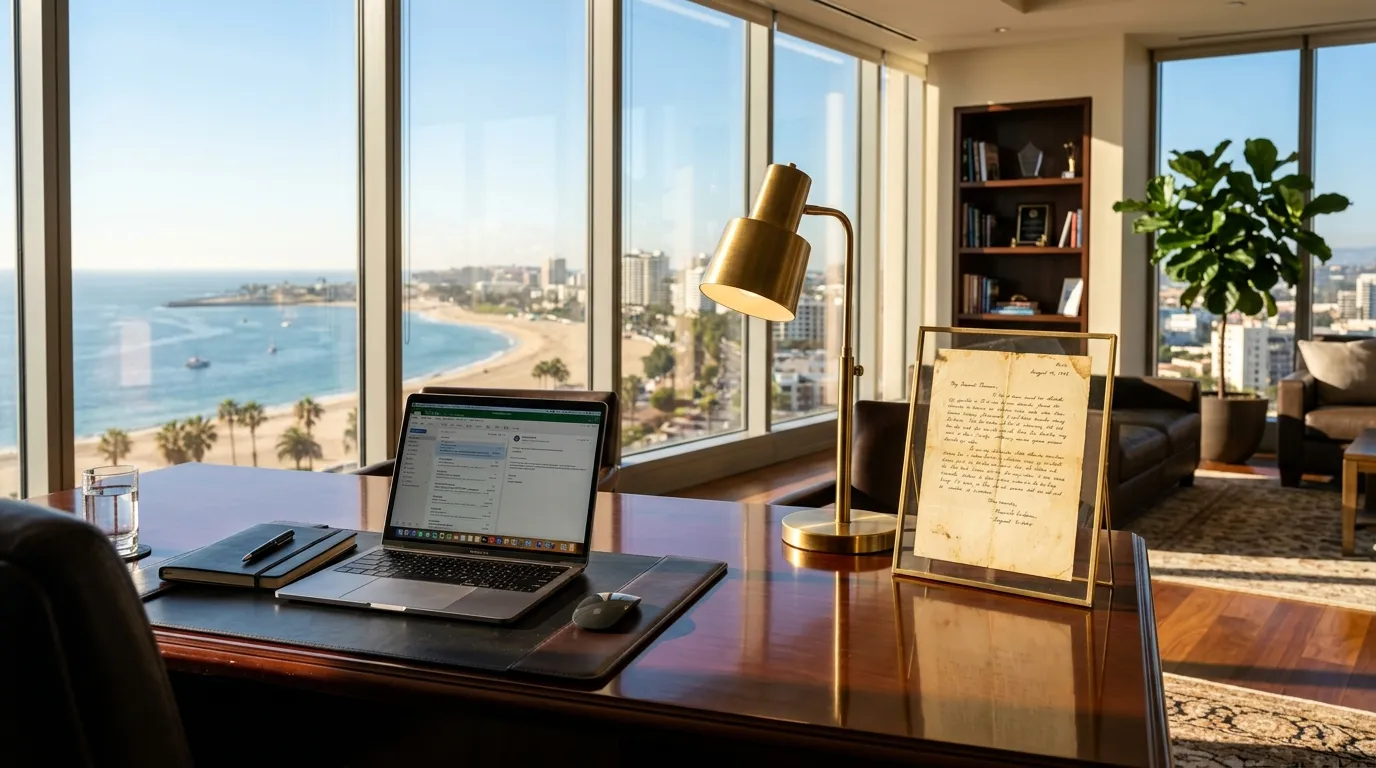
A daily reminder that real family cannot be bought, forged, or hidden.
On my desk, right beside my monitors, sits that first returned, yellowed letter from six years ago, preserved inside a minimalist glass frame. It no longer represents pain or deceit. Instead, it serves as a silent, sacred reminder: a thirty-five-minute flight delay did not disrupt my life—it saved it.
Note:This work is inspired by real events and people, but it has been fictionalized for creative purposes. Names, characters, and details have been changed to protect privacy and enhance the narrative. Any resemblance to actual persons, living or dead, or actual events is purely coincidental and not intended by the author.
All images used in this article are AI-generated and intended for illustrative purposes only.
0 Comments