
My mother didn’t turn around when I walked into that little Wyoming church.
She was sitting where she had sat for nearly forty years—six rows from the front, right on the aisle side, directly beneath a stained-glass window that threw soft blue light across her silver hair. And beside her on that polished oak pew were three completely empty spaces.
For a second, I almost turned on my heel and walked out the heavy front doors.
My name is Wyatt Mercer. I was fifty years old that Sunday morning, walking with a persistent hitch in my stride and carrying the kind of deep lumbar pain that could make bending down to tie your work boots feel like half a day’s hard labor. For most of my adult life, I had worked cattle out in the sagebrush. That life is built on cold dawns, rotted fence posts, unpredictable calving seasons, frozen stock tanks, and headstrong horses that decided they knew the country better than you did.
Then one ordinary, unlucky afternoon tore the ground out from under me. A steel corral gate swung wide while we were pushing a herd through a narrow chute. It caught me hard, and I went down into the dirt. I didn’t end up in a wheelchair or anything dramatic, but my spine never truly healed. The vertebrae stayed angry. My workdays grew shorter. By suppertime, I was usually too exhausted and stiff to keep up a conversation. And somewhere along that quiet stretch of years, I began using that physical ache as an ironclad excuse for skipping nearly everything that took effort.
Including my own mother.
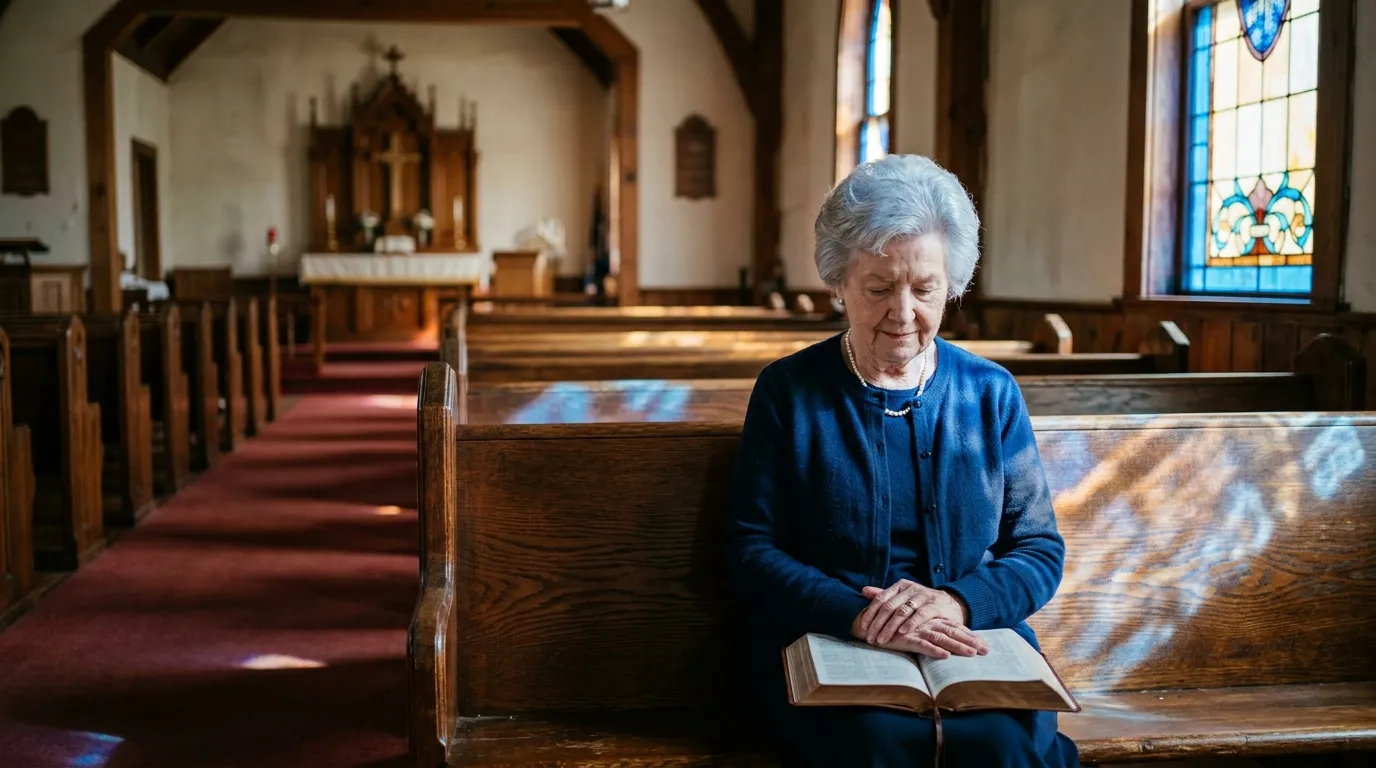
For nine years, Ruth Mercer guarded three empty spaces every Sunday morning.
Mom was eighty years old. Her name was Ruth, and she still lived by herself in the small, white-sided house where my brother, my sister, and I had grown up scraping our knees and doing our homework. Whenever she phoned me during the week, our conversations fell into an identical, predictable rut:
“Hey, Mom.”
“How’s your back feeling today, Wyatt?”
“Same as yesterday.”
“Are you eating decent food out there?”
“Yep. Plenty.”
“Think you’ll be coming by this Sunday?”
Then I would offer up my favorite non-committal reply: “I’ll try.”
I had repeated those three syllables so many times that they had stopped carrying any weight at all. My brother Caleb lived two states away in Idaho. My sister Marlene had relocated to Nebraska to be near her own grandchildren after her husband wrapped up his career. That left me as the only sibling within reach. I lived exactly twelve miles down the county road from Mom. Just twelve miles. Yet some weeks, I acted as if an impassable canyon sat between my front porch and hers.
That particular Sunday, my spine woke me before dawn with a throbbing ache. I brewed a mug of black coffee and stood by the glass, watching the early frost glisten along the cedar fence line. Out of nowhere, an old memory drifted in: my late father standing beside our beat-up pickup on crisp mornings, barking his classic rallying cry: “Mercers! Wheels turn in two minutes flat!” Mom would hurry down the porch steps clutching her leather handbag, a covered casserole dish for a neighbor, and usually a jacket one of us had left behind. Back then, our family filled that sixth row completely. Dad anchored the aisle. Mom sat beside him. Then came Marlene, Caleb, and me. We traded furtive whispers, wrestled over peppermint candies, and caught quick maternal elbow nudges whenever our restlessness got too loud.
I hadn’t thought about that family pew in decades. I set down my lukewarm mug, put on clean clothes, and drove into town.
The church felt smaller than I remembered. It had the same weather-beaten siding, the same squeaking cedar steps, and the familiar cast-iron bell swinging quietly in the belfry. When I eased the door open, the opening hymn had already finished. And there she was. Sitting alone. Her worn Bible lay open across her lap, her Sunday overcoat folded neatly to her left. But between that coat and the center aisle were three vacant spots. Not one accidental gap. Exactly three. The specific places where her three grown children used to sit shoulder-to-shoulder.
I lingered at the back of the sanctuary, frozen. Then Mom shifted slightly. Maybe she recognized the creak of my boots on the floorboards, or maybe mothers possess an instinct that defies logic. She glanced over her shoulder. Her gaze locked onto mine. She didn’t wave or say a word. She simply raised one wrinkled hand and pressed it against her mouth.
I made my way down the carpeted aisle, every step feeling like I was dragging lead weights. When I reached her row, she quietly shifted her coat. I slid in next to her. She reached out and gave my rough hand a single, firm squeeze. That was all. For the remainder of the sermon, the pastor’s words washed right past me. I couldn’t take my eyes off those two open spaces remaining beside us.
When the benediction ended, the congregation lingered near the vestibule to trade banter about hay prices, impending winter weather, and who had firewood to spare. Mom stayed right where she was. I leaned in and asked a question that had been waiting years for an answer.
“Mom, why do you always sit here alone?”
She gave me a faint smile. “Because this is where we’ve always sat, Wyatt.”
“I know that,” I replied quietly. “But why keep all this open bench to yourself?”
She looked down at the empty wood, running her fingertips along the grain. Then she answered with a quiet simplicity that stopped my breath: “I save them.”
“Save them for who?”
She looked startled that I even needed to ask. “For you kids.”
“Mom,” I said gently, “Marlene is hundreds of miles away in Nebraska. Caleb is up in Idaho. And you know how rarely I manage to—”
She cut me off softly. “I know where everybody lives, Wyatt. I just leave the places open in case somebody comes.”
In case somebody comes. A sudden knot tightened in my throat that had nothing to do with pinched nerves or bad joints.
“How long have you been doing this, Mom?”
She gazed toward the pulpit. “Ever since your father passed.”
Dad had been buried nine years earlier. Nine long years. Nearly five hundred consecutive Sunday mornings. And every single week, an eighty-year-old widow had sat in that identical spot, guarding room for people who almost never showed up. It wasn’t senility, and it wasn’t a lack of friends. Holding those spots had simply become her quiet ritual of hope.
I dropped my head into my hands. Mom reached over and patted my forearm. “Wyatt, stop that now.”
“I’m sorry, Mom. I really am.”
“You don’t have to apologize.”
But the guilt was heavy. I pictured every weekend I had spent stretched out on my recliner, telling myself twelve miles was too taxing a drive. I remembered every rushed phone call I’d ended because a ballgame was on. I had judged my love by my good intentions; she had measured hers with an empty space on a wooden bench she refused to surrender. “I thought you preferred being alone,” I mumbled.
She let out a soft, dry chuckle. “Son, getting used to quiet solitude isn’t the same thing as preferring it.”
That sentence carved a permanent place in my memory. We went to lunch afterward at a small diner along the highway where the waitresses poured coffee from scratched glass pots. She had vegetable soup; I had a burger I could barely swallow. For two unhurried hours, she recounted familiar family lore—the winter our home heater broke down, the stray mutt I smuggled into the hayloft, the day Dad tried to teach Marlene how to shift gears on a tractor. For the first time in years, I never once checked my watch.
The following Sunday, I showed up again. Mom was already seated, her coat saving the adjoining places. Two weeks later, I called Caleb out in Idaho. “Did you know Mom saves our childhood seats every single week?” He went dead silent on the line. The next month, Caleb made the drive down. By Thanksgiving, Marlene arrived early and stayed through the weekend. On that holiday Sunday, for the first time in nearly a decade, Ruth Mercer didn’t have a single vacant inch beside her. All three of her children sat in that pew.
When the organ started the opening hymn, I glanced sideways. Silent tears were tracing down Mom’s weathered cheeks, but her voice never wavered as she sang. That was the day I realized that growing old doesn’t make people need less love from their families—it simply teaches them to stop demanding it.
If you stopped there, you might think our family had learned its lesson. We hadn’t. The real test came six months later, when my brother stood in our mother’s kitchen and dropped a phrase that threatened to pull us apart at the seams:
“She can’t live here by herself anymore.”
Mom was sitting barely ten feet away at the laminate table. And neither of us had bothered to ask what she thought.
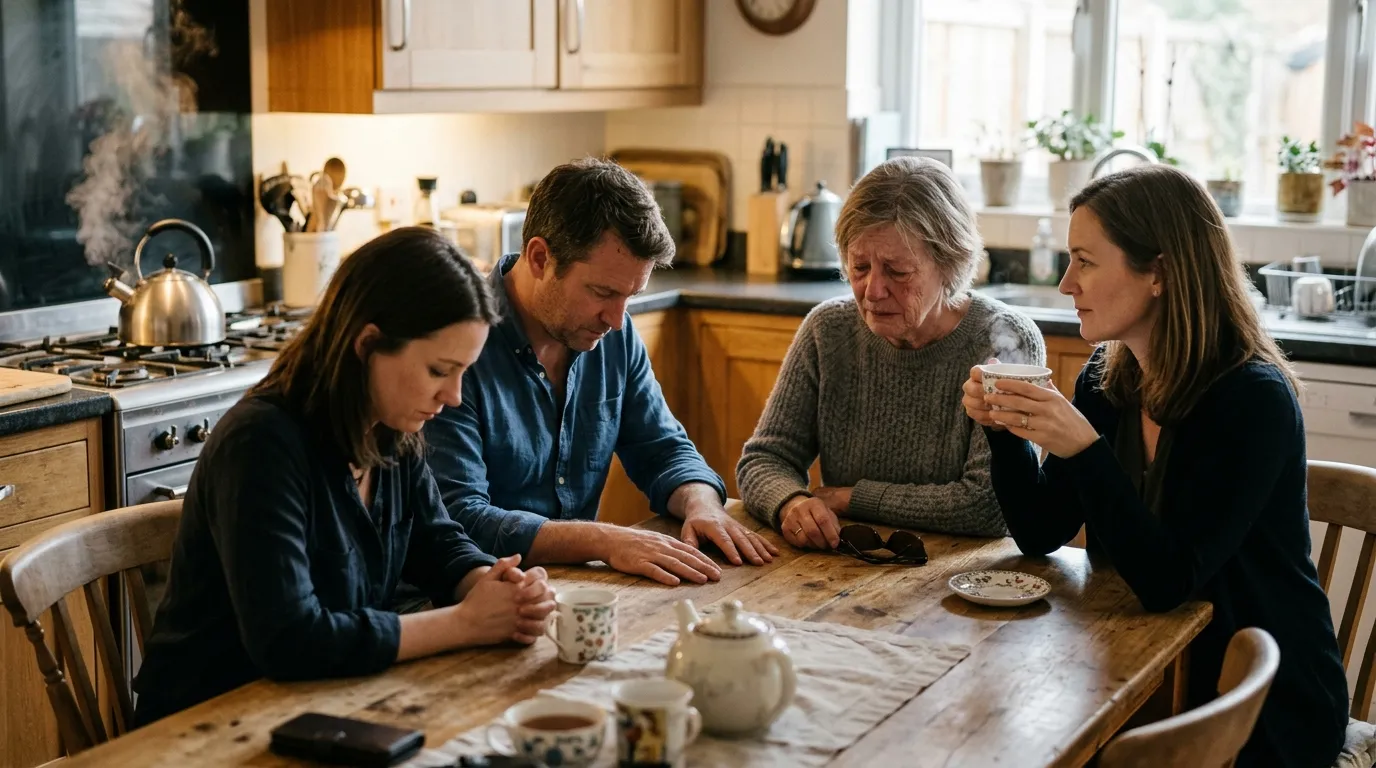
Caleb arrived armed with a yellow legal pad, but Mom refused to be treated like an item on an inventory sheet.
By that spring, our Sunday morning routine had become solid. If I told Mom I was coming to get her, I arrived on time. Sometimes she’d be sitting on her porch steps waiting; other times she’d still be hunting through her purse for the eyeglasses perched squarely atop her head. We would go to church, share a meal, and run a few errands. On quiet afternoons, we just sat across from each other sipping coffee, listening to the electric stove clock hum. I had spent years thinking visits had to be an event; in truth, she simply appreciated a shared silence.
Then arrived a Sunday in early April. I pulled into her gravel drive, but nobody answered my knock. Her sedan sat parked in the carport. The porch light remained on from the previous evening. My stomach sank. I fumbled with my spare key, hands trembling, and shoved the door open.
“Mom?”
A faint voice answered from the back corridor: “Wyatt?”
I rushed down the hall and found her crumpled on the floor near the washing machine. She wasn’t bleeding or broken, but her face held a painful expression I had never seen on her before: sheer, stinging embarrassment. She had risen early to do laundry, stepped backward onto a dropped wool sock, lost her footing, and hit the linoleum hard. Her bruised hip refused to let her stand back up.
She hadn’t been on the floor for ten minutes. She had been there for nearly three hours, waiting for the hour she knew my truck would pull into the yard. Her cell phone rested uselessly on the dining table down the hall.
At the local urgent care clinic, the physician confirmed bad bruising and mild dehydration, but no fractures. He turned toward me and asked, “Does your mother live entirely alone?”
Mom fired back before I could open my mouth. “Yes, doctor, I do.”
The doctor looked back at me, seeking verification. Mom caught the exchange instantly. “I am eighty-one years old,” she said evenly. “I am not invisible.”
“I never claimed you were, ma’am,” the doctor replied politely.
“You looked directly at my son when asking about my living arrangements,” she pointed out. “My ears work fine.”
The doctor advised practical modifications: sturdy grab bars, brighter hallway bulbs, ditching slippery throw rugs, and wearing an emergency alert pendant. Crucially, he never stated that she needed to be placed in an institution. He simply told us that families should make thoughtful safety plans before an emergency forces their hand.
My siblings, however, reacted with pure panic. I had made the rookie mistake of sending a hasty group text: MOM FELL. SHE’S OKAY. I’LL CALL LATER. Within forty-eight hours, Caleb had driven in from Idaho, and Marlene followed right behind him from Nebraska.
The trouble began the moment Caleb pulled a yellow legal pad from his briefcase. Caleb had managed heavy machinery dealerships for thirty years; to him, every emotional family crisis could be solved if you arranged the variables into neat pros-and-cons columns.
“Mom,” Caleb opened gently, “that fall could have ended tragically. You were stuck on the floor for three hours. What if it had happened on a Tuesday when Wyatt wasn’t scheduled to visit?”
Mom tilted her chin up. “Then I suppose I would have spent a very long Tuesday being uncomfortable.”
“This isn’t a joke,” Caleb said, tapping his pencil. “There are exceptional assisted living and senior communities nearby. We need to talk about options.”
“No,” Mom said flatly.
“You haven’t even reviewed the brochures—”
“I heard the part where you decided my life without me,” she said, staring down his legal pad. “You drove eight hundred miles with an agenda.”
Marlene tried to intervene with a softer tone. “Mom, nobody wants to strip your dignity away. But we can’t put the entire weight of caregiving on Wyatt’s shoulders. He’s already running over here constantly to check the furnace, carry heavy groceries, and fix leaking pipes—and his back is in terrible shape.”
I hated having my physical limitations dragged into the argument. “I can manage my own schedule, Marlene,” I snapped.
Marlene gave me a sharp look. “You say you’re fine, Wyatt, and Mom says she’s fine. Neither of you is telling the truth.”
That silenced me because she was right. But Mom wasn’t backing down. She looked at Caleb and Marlene with steady eyes. “You two are getting older as well,” she said softly. “And if you are fortunate enough to live long enough, your own children will one day gather in your kitchen to explain your own life to you.”
The gathering ended in an icy stalemate. Caleb stormed out to inspect porch railings, Marlene washed dishes that were already spotless, and Mom shut herself in her bedroom. That afternoon, Mom caught me tightening screws on the outdoor shed hinges.
“Do you agree with your brother?” she asked bluntly.
I set the screwdriver down and sighed. “Mom, I just don’t ever want to find you on that floor again. I don’t want to wake up every morning wondering if you survived the night.”
“You never worried like that before,” she remarked quietly.
“That’s not fair,” I said.
“No, it isn’t,” she conceded, stepping closer and touching my arm. “I know you carry guilt for those years you stayed away, Wyatt. But you can’t make up for lost time by treating every visit like a building inspection. I am eighty-one years old. I feel that truth in my bones every morning before anyone opens their mouth. I know jar lids are stubborn now. I know the cellar steps are steep. What I don’t want is for my weaknesses to become the only thing my children can see.”
Her words exposed my behavior for what it was. In trying to be the dutiful son, I had turned into a hovering overseer, inspecting her house and questioning her independence.
Two months later, my own body delivered a harsh reality check. While sorting a yearling calf in a narrow pen, my lower back seized with agonizing ferocity. My right leg buckled beneath me. I had to limp home in second gear, and by nightfall, I couldn’t rise from my armchair without groaning.
At seven o’clock, my phone rang. It was Mom. I tried to sound cheerful, but she caught the strain in my voice instantly. Before I could stop her, she drove the twelve miles over to my house in broad daylight, carefully balancing a pot of homemade chicken noodle soup. When she stepped through my doorway, she looked at me—a fifty-year-old rancher who couldn’t even reach his own bootlaces—and burst into laughter. I couldn’t help but laugh along with her.
“Everybody gets their turn needing a hand,” she said as we ate together. “The mess begins when people assume needing a hand means surrendering your right to steer your own life.”
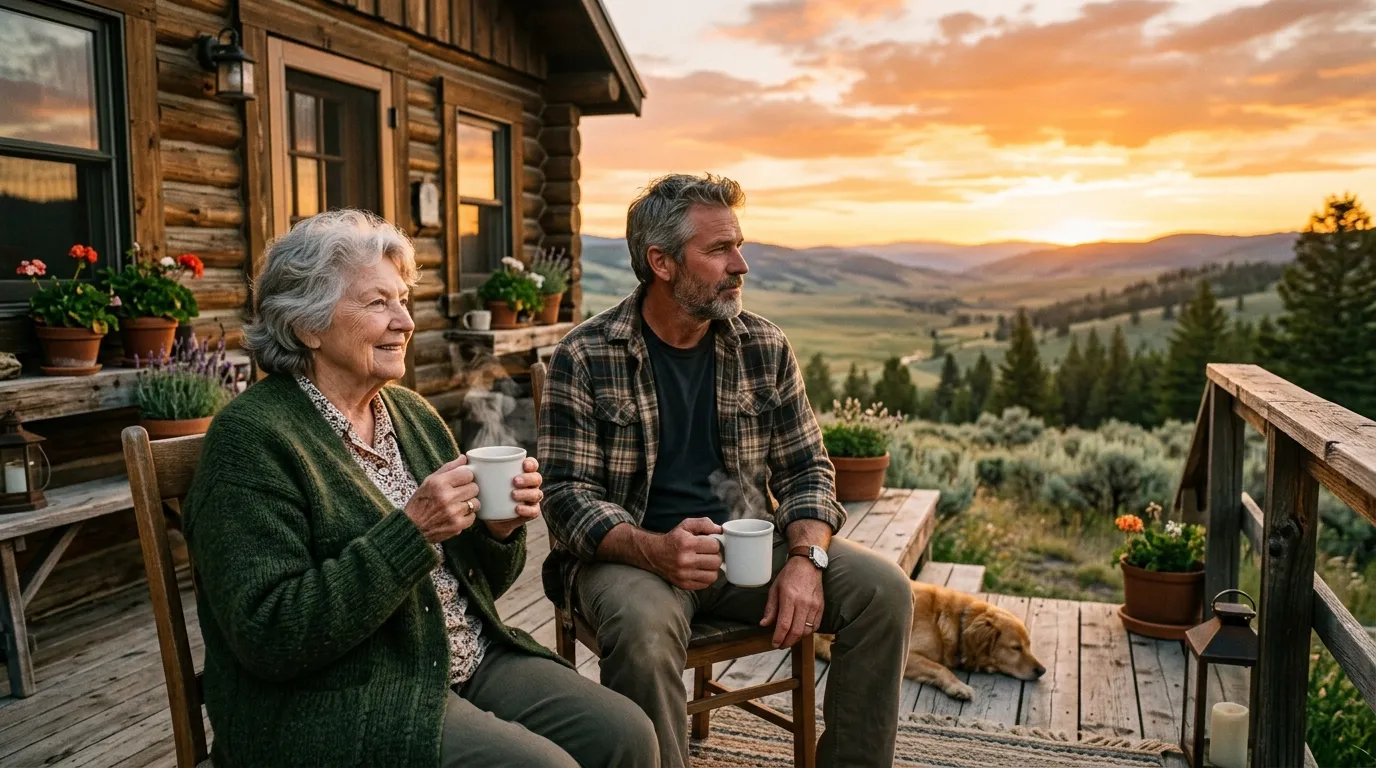
Saying goodbye to a family home is never easy, but memory does not require real estate to survive.
The following Saturday, Mom summoned all three of us for an official family meeting. When we sat down, there were no charts or legal pads. Mom simply slid a manila folder onto the center of the table.
“I am moving,” she announced calmly.
Caleb sat up. “To assisted living?”
“No,” she answered. “I’m taking an independent cottage on the edge of town. Single level, no stairs, emergency call cords, and someone else handles snow removal. Evelyn from church drove me over to inspect them on Tuesday.”
We were stunned. While we had been busy arguing over what to do with her, she had quietly scouted her own future. “I’m not moving because you pressured me,” she explained. “I’m moving because you forced me to decide what I want my remaining years to look like. After your father passed, I tended this property like it was him—fixing gutters, painting siding, weeding gardens. But your father isn’t living in the roof gutters. A house holds a life; it isn’t the life itself.”
Then came the harder pill to swallow: Mom announced she was selling the family homestead to a young local couple—a middle-school teacher and a dental assistant with two young children who had been priced out of the housing market. She was selling it to them below market rate.
Caleb was instantly alarmed. “Mom, that is reckless. You could get thirty percent more on the open market. What if you need that capital for specialized medical care five years from now? Leaving money on the table turns your future care into our financial liability.”
It was a blunt, uncomfortable argument, but Caleb wasn’t entirely wrong. Adult children often end up shouldering the practical fallout when finances run dry. Mom listened carefully, acknowledging his point without getting angry. “You’re right that my choices affect you,” she told Caleb. “Just as your demands affect me, and Wyatt’s overprotectiveness affects my dignity. So let’s meet in the middle.”
We hashed it out like real adults. Mom had the property officially appraised and raised the sale price enough to tuck away a sensible financial cushion, while still ensuring the young family could afford the mortgage. Caleb agreed to oversee her tax paperwork and utility accounts. Marlene scheduled extended visits twice a year. And I had to speak the hardest truth of all: I loved her deeply, but my broken back meant I couldn’t be her full-time groundskeeper and safety net. Honest boundaries replaced guilty promises.
Moving day arrived in late September. We spent three days sorting through forty-three years of memories: Dad’s favorite porcelain mug, old ribbon badges, boxes of macaroni Christmas ornaments, and the pencil marks on the doorframe recording our heights from 1978. When the young family arrived to take the keys, the father noticed me looking at those faint pencil marks. “We’ll keep those right there,” he told me quietly. “Our kids can measure on the opposite jamb.” In that moment, the sting of selling vanished. The house was going to be filled with life again, not preserved as a dusty museum.
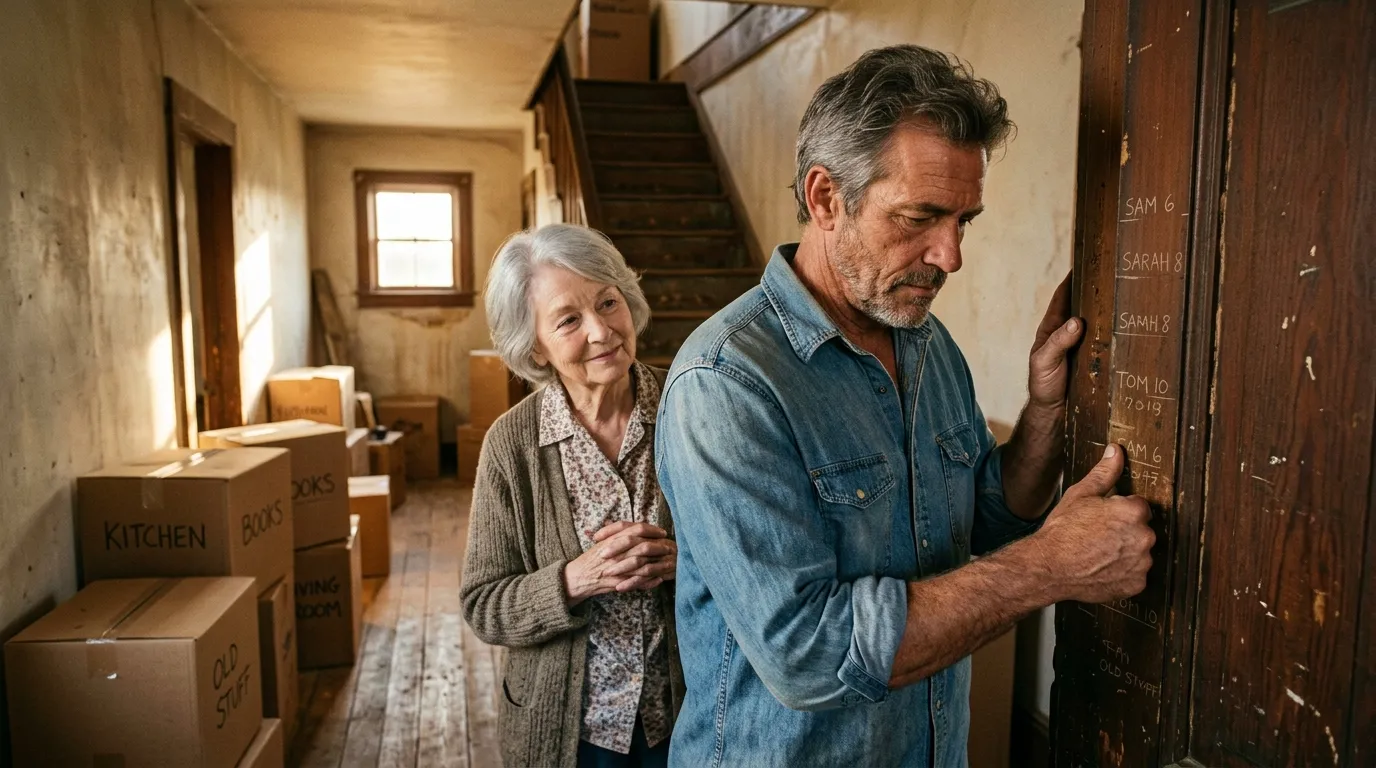
A smaller home, a bigger circle of community, and a shared quiet at the end of the day.
Her new cottage settled into a rhythm almost immediately. Her favorite Bible rested on the end table, Dad’s photo framed the mantle, and the oversized coffee pot perked on the counter. Her square footage had shrunk, but her world had expanded. She had neighbors across the gravel walkway, card games with other widows, and a lively community right outside her door.
The following Sunday, we walked into church together. We approached our longtime row beneath the blue stained glass, but Evelyn Carter and two other solitary seniors from town were already sitting there. Exactly one seat remained open at the end.
Mom didn’t hesitate. She slid into the row, and I squeezed in right next to her. The bench was filled with people whose last name wasn’t Mercer.
Before the choir stood, I leaned over and whispered, “You don’t save our spots anymore?”
Mom looked at the crowded pew, then turned to me with a peaceful smile. “I saved them long enough, Wyatt. I was never saving wood. I was saving hope. And look who came back.”
Those empty seats had fulfilled their purpose. They brought us back together—not by freezing the past in amber, but by teaching us how to show up for each other in the present. Loving an aging parent isn’t about eliminating every risk or taking control of their choices. Sometimes love is installing a sturdy railing, respecting a stubborn red rug, admitting your own human limits, and making room for the person they are still becoming.
A place kept open by love was never meant to remain empty. It was always meant to become a place where someone else could finally belong.
Note:This work is inspired by real events and people, but it has been fictionalized for creative purposes. Names, characters, and details have been changed to protect privacy and enhance the narrative. Any resemblance to actual persons, living or dead, or actual events is purely coincidental and not intended by the author.
All images used in this article are AI-generated and intended for illustrative purposes only.
0 Comments