
The Promise I Kept: Why a Single Man Fought the System to Adopt Five Siblings
“The judge doesn’t usually approve single applicants, Carter. Especially younger applicants with absolutely no parenting experience.”
The ticking of the wall clock in the cramped waiting room seemed to echo the pounding of my heart. Before I could even formulate a response to defend myself, the heavy wooden door creaked open.
Beverly, the county’s senior caseworker, stepped inside with a thick clipboard pressed against her chest. Her expression was unreadable—a mask of professional detachment honed over decades in the system.
“Carter, may I sit down?” she asked.
“Please.”
She took the seat across from me, deliberately folding her hands atop her paperwork in that practiced, careful manner I had seen social workers use countless times before. I had seen that exact posture across a sterile desk many years earlier, in another lifetime. Before I could stop it, my stomach tightened into a familiar, painful knot.
“I want you to understand something,” Beverly said quietly, her eyes locking onto mine. “I’m not your enemy in this.”
I nodded slowly, swallowing the lump in my throat.
“I’ve been doing this for twenty-two years,” she continued, her voice softening just a fraction. “I’ve watched good, kind, well-meaning people take on far more than they could handle. And I’ve watched innocent children pay the terrible price for those broken intentions.”
“I understand, Beverly. I really do.”
“Do you?” She sighed, glancing down at her extensive notes. “You have no spouse. No co-guardian. You don’t currently have a medical coverage plan that extends to five dependents. You’re a carpenter, Carter. You converted part of your woodworking shop into living quarters. The court needs concrete proof that this is a safe, stable home for five young children.”
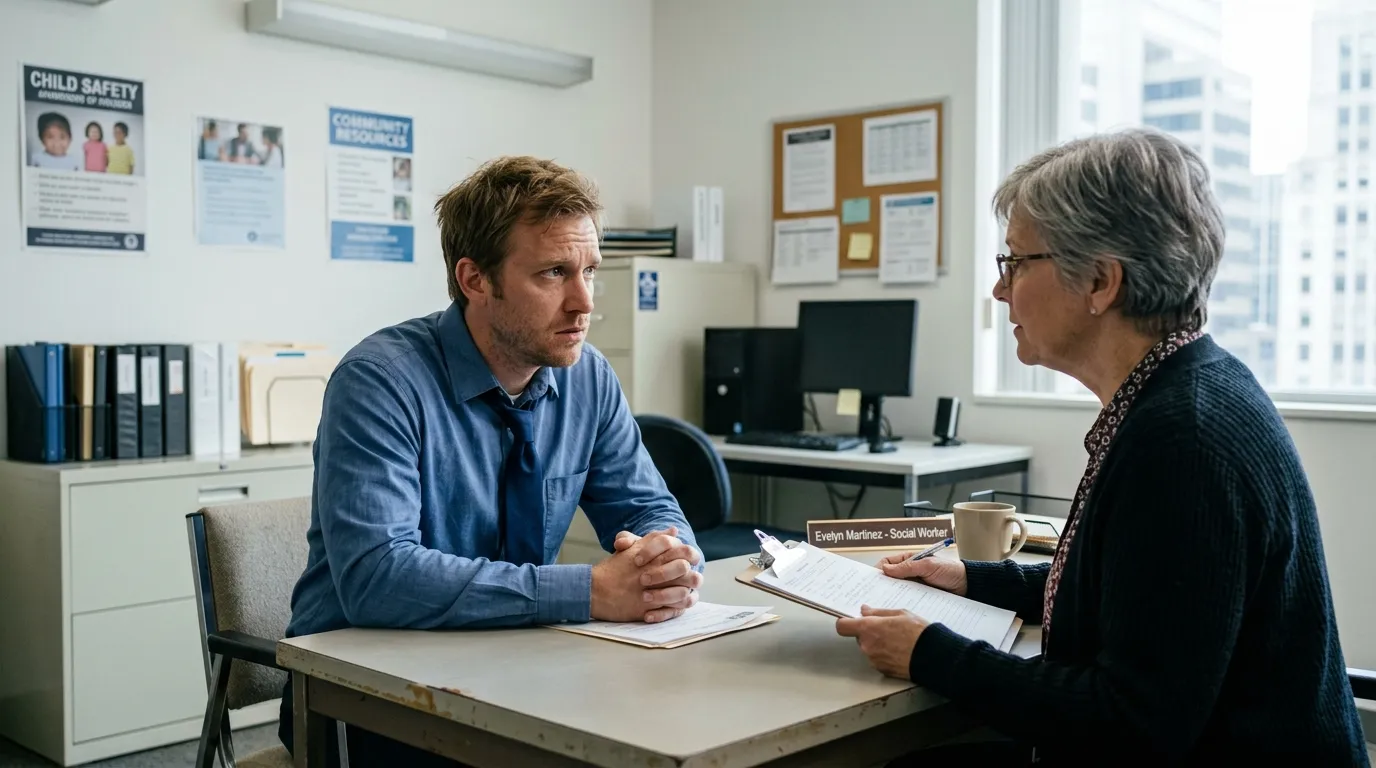
The initial meeting with the caseworker felt less like an interview and more like an impossible test.
“I built solid oak bunk beds,” I said, leaning forward, the desperation bleeding into my voice. I took a deep, shaky breath to steady myself. “I didn’t just throw them together. I insulated the walls to residential code, installed interconnected smoke detectors, and had the entire electrical system professionally inspected and passed. I even installed five brand-new car seats in the van last week.”
Beverly listened silently, her pen hovering over the paper.
“I also contacted a pediatrician over on Elm Street,” I pressed on. “Dr. Aris. She reviewed their files and agreed to accept all five children as new patients immediately.”
Her expression remained strictly professional, but for a fleeting second, something behind her eyes softened. She looked down at her clipboard again, tapping her pen.
“I’d like to speak with Eli alone, if that’s all right,” she said.
Diane, my court-appointed attorney who had been sitting quietly beside me, nodded before I could even open my mouth.
A minute later, a court aide gently guided eight-year-old Eli into the small room. The very first thing the boy did was look at me. His large, anxious eyes locked onto mine. He had been doing that every single hour for the past three weeks of emergency placement—checking, verifying, making absolutely sure I hadn’t vanished. Making sure I was still there.
“It’s okay, buddy,” I told him, forcing a reassuring smile. “Just answer her questions honestly. You’re doing great.”
He gave a single, rigid nod and sat down in the oversized chair.
Beverly leaned forward, her tone shifting to a gentle, maternal cadence. She asked him about school. She asked him about the food I was cooking. She asked him, most importantly, whether he felt safe with me.
Eli answered in a whisper so faint I could barely hear it over the hum of the air conditioner. All the while, his tiny thumb rubbed the frayed edges of a pink ribbon wrapped tightly around his finger—a ribbon that belonged to his youngest sister—in tight, anxious little circles.
When the aide eventually took him back out into the hallway, the air in the room somehow felt heavier, thick with unspoken stakes. Beverly stood up, thanked me with a flash of genuine kindness, and left the room.
Diane waited until the heavy door clicked completely shut before turning to me.
“Carter, there’s something we desperately need to discuss.”
“What is it?”
“Daniel, the state’s attorney, is going to cross-examine you. And he is going to ask you a very personal question.”
I looked at her, my jaw tightening defensively.
“He’ll ask about your background. He’ll ask exactly why a single man in his thirties is trying to adopt five strangers. He’ll want the real reason.”
“He can ask whatever he wants,” I muttered, staring at the floor.
“Carter, listen to me.” Diane leaned closer, her voice urgent. “I’ve read your sealed file twice. There are glaring gaps in your history that the state’s attorney will absolutely notice and exploit. If there’s something you haven’t told me, now is the time.”
I shifted my gaze to a dull yellow water stain on the ceiling tiles. For a long moment, the words simply wouldn’t form in my throat.
“I’ve carried this for twenty years, Diane,” my voice came out quieter, more fragile than I expected. “I’ve never even told my closest friends. I don’t know whether I can sit in a room full of strangers and say it out loud.”
“You may have to,” she warned gently. “The judge may need to hear it more than anyone else.”
Before I could respond, the muffled voice of the bailiff echoed through the door. Our case was being called.
At the end of the long marble hallway, the heavy oak courtroom doors swung open. Daniel, the state’s attorney, stood at his table with the relaxed, calm posture of a man who had won this exact battle hundreds of times. He didn’t even glance at me as he arranged his color-coded charts on the wooden podium.
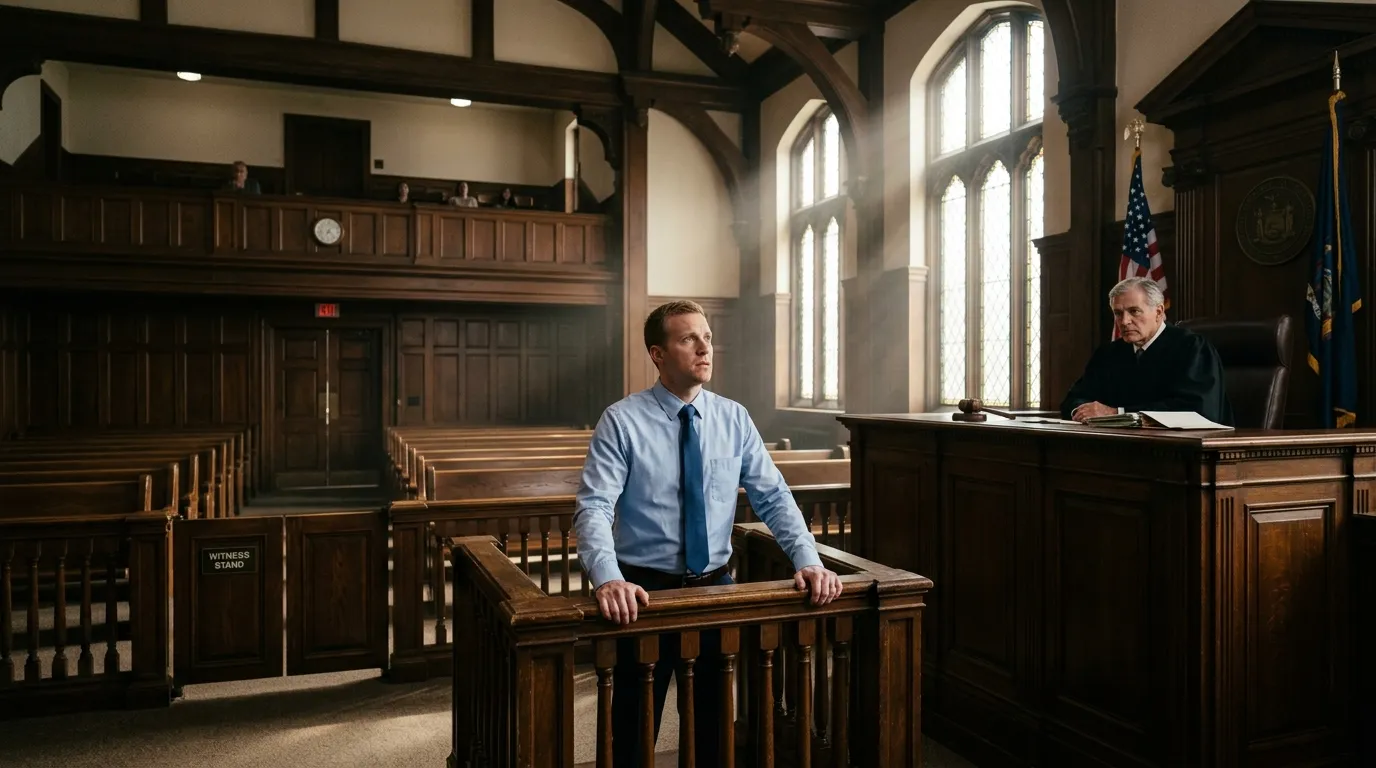
The courtroom felt massive and cold, a place where futures were decided by strangers.
“Your Honor, I want to begin by acknowledging that Carter’s intentions appear remarkably genuine,” Daniel began, his voice projecting effortlessly across the room. He turned gracefully toward the judge. “However, good intentions alone cannot feed, clothe, and raise five growing children under the age of seven.”
He paced a few steps. “His residence is a converted workshop space that has not yet received final, formal approval for permanent foster placement. He has no spouse. He has no co-guardian. He possesses no current medical plan capable of covering five dependents. And, with all due respect, he has absolutely no parenting experience.”
The judge, a stern-looking man with silver hair, watched me silently over the thick rims of his reading glasses. I could feel the unbearable weight of every single eye in the gallery settling squarely onto my shoulders and my borrowed navy tie.
“The state has three fully vetted, experienced foster homes prepared to receive these children by Friday afternoon,” Daniel continued smoothly. “Their separation is, of course, regrettable, but the state must prioritize stability and safety above all else.”
Diane leaned toward me, her shoulder brushing mine. “Stay calm,” she whispered. “Answer only what he asks. Don’t let him rattle you.”
I walked to the front of the room and took the stand. My calloused, working-man hands felt entirely too large and clumsy as they gripped the polished wooden rail of the witness box.
“Carter, you work as a carpenter, is that correct?” Daniel asked, leaning casually against his podium.
“Yes, sir. I’ve worked at the same custom furniture shop for eleven years.”
“And you recently converted part of that commercial property into bedrooms for five children?”
“I built bunk beds along the north wall,” I answered firmly. “I insulated the space, completed all required safety work, and arranged for the county inspections myself.” I paused, making sure to project my voice. “I also secured a pediatrician for all five children before this hearing.”
Daniel nodded slowly, conceding the point. “That is highly commendable.”
Then, the warmth vanished from his tone.
“However, you have no wife, no domestic partner, and no living parents listed anywhere in your file.” He stared right through me. “Why would a single, young man in the prime of his life willingly take on this massive kind of responsibility and financial debt?”
“Because they need someone,” I stated simply.
“Many children need someone, Carter.” Daniel folded his hands, his eyes narrowing. “You didn’t petition the state for any other children. You actively bypassed the standard system. You petitioned specifically for these five. Why?”
I looked past him, over his tailored shoulder, to the back row of the gallery. Eli was sitting there, his legs dangling above the floor, with the youngest toddler fast asleep on his lap. One of his small hands rested protectively against his sister’s back to keep her steady.
“Because they’re siblings,” I said, my voice thick with emotion.
Daniel nodded slowly, as if he had trapped me. “Many siblings are unfortunately separated every single year in this state. That tragic fact alone is not a sufficient legal argument to grant custody to an unqualified guardian.”
“It should be.”
He almost smiled—a sad, patronizing expression. “Carter, there are vast, unexplained gaps in your background file between the ages of nine and seventeen. The court cannot, in good conscience, place five vulnerable children in your care without understanding those missing years.”
The vast courtroom became so deathly quiet that the only sound was the rush of blood in my own ears. I looked down at my rough hands, the silence stretching on.
“I’d rather not discuss that, sir,” I finally murmured.
“I’m sure you would rather not,” Daniel said gently, stripping away his aggressive demeanor for a moment. “But this court is being asked to entrust five human beings to your care. The court is entitled to understand exactly who you are.”
“Objection,” Diane snapped, standing up quickly. “The question is overly broad, irrelevant to his current capabilities, and invades my client’s privacy.”
The judge lifted one hand, silencing her. “I’ll allow a narrower version of the question. Proceed.”
Daniel turned toward me, stepping away from the podium. “Carter, why these specific children?” He paused, letting the silence build. “Why now?”
Then came the question that finally acted as a battering ram against the emotional wall I had spent twenty years meticulously building.
“Why are you willing to spend every single dollar you have saved, and possibly every dollar you will ever earn, on five complete strangers?”
I opened my mouth, but my lungs refused to work. Nothing came out. I looked toward the back row again. Eli was leaning down, whispering something to the younger children. His lips formed the exact same soft, reassuring shape a mother might use to comfort her babies.
My throat completely closed.
“Please answer the question, sir,” Daniel said.
“I…”
“Carter.”
It was the judge. He leaned forward over his high desk. When he lowered his hand, the sharp, adversarial edge of the courtroom suddenly seemed to soften.
“Daniel, sit down for a moment,” the judge said quietly.
Daniel blinked in surprise, but he dutifully returned to his seat.
The judge looked directly down at me. He wasn’t looking at my thick file. He wasn’t looking at the endless stacks of state paperwork. He was looking at me, man to man.
“Son,” the judge said, his deep voice resonating in the silent room, “I’ve served on this bench for twenty-eight years.” He paused, removing his glasses. “I’d like to hear the real reason. In your own words. Take your time.”
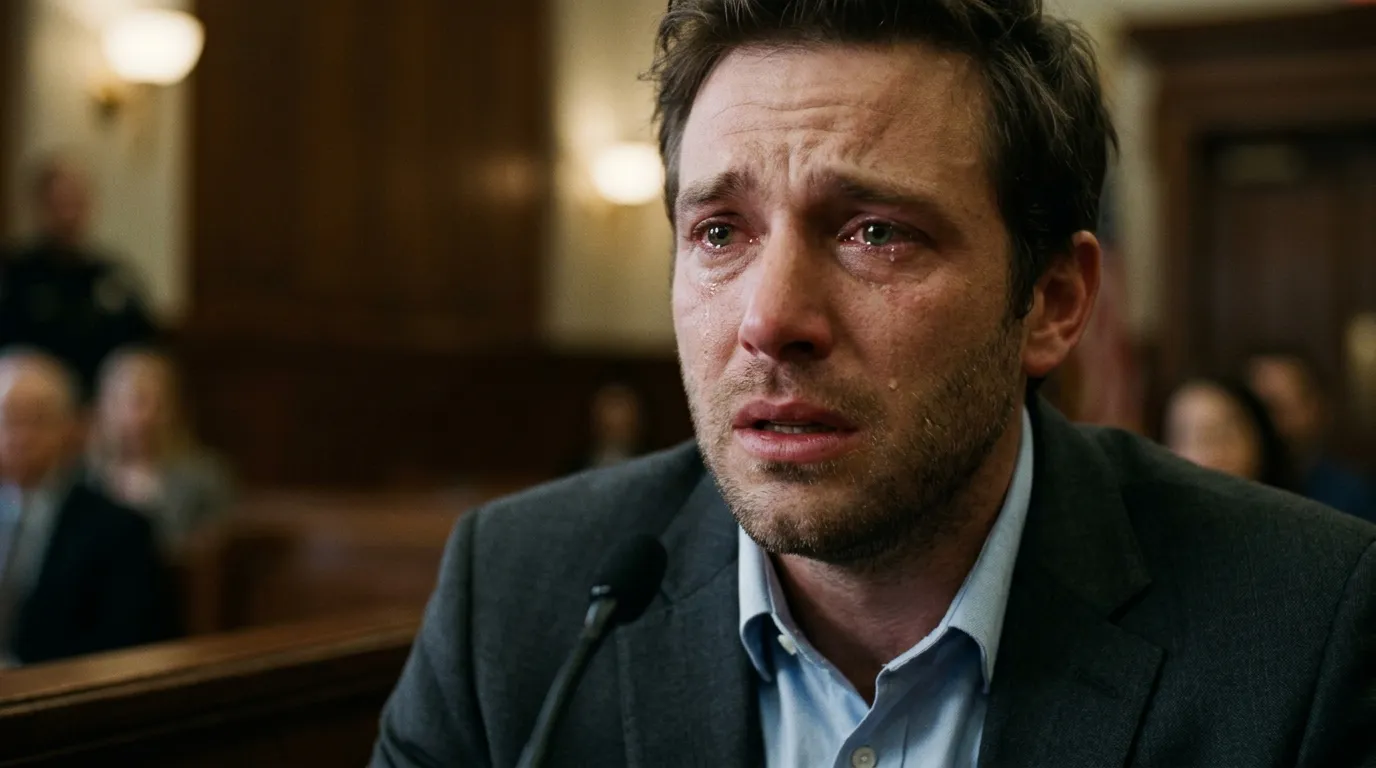
For twenty years, I had kept the pain locked away. But for them, I had to let it out.
I gripped the edge of the wooden witness stand so hard my knuckles ached and turned white. I closed my eyes for a second, fighting the burning behind them, and forced myself to speak the truth.
“Twenty years ago,” I began.
The words caught somewhere deep in my chest, snagging on decades of buried grief. I took a shuddering breath and tried again.
“Twenty years ago, in this exact same courthouse, I sat right where those children are sitting now.”
The judge slowly set down his expensive silver pen. His eyes darted toward the sealed file beside him, then slowly returned to me. A quiet, heavy recognition seemed to settle across the deep lines of his face.
“I was one of five children, too,” I continued, the memories flashing violently in my mind. “Our parents died in a house fire.”
I stopped. The pain was suffocating. I could feel Diane watching me, her posture rigid with shock. But I made myself push through.
“A judge—maybe in this building, maybe even in this very courtroom, I don’t know—signed an order that separated us. They sent us to foster homes in three different counties.”
My voice began to violently shake, no matter how hard I tried to control it.
“My little brother… he had this red toy truck. He loved it so much he wouldn’t let anyone else touch it.” I swallowed hard, tasting salt. “It was made of cheap plastic, and one of the back wheels was missing.”
The entire courtroom was entirely paralyzed. Not a single person moved.
“He was holding it tightly when the social workers put him into the back of the second car. He was so scared.” My fingers dug into the wooden rail. “The car door closed on his hand by accident, and someone had to open it again. He dropped the truck.”
My voice finally broke, a jagged sob escaping into the microphone.
“He was screaming my name through the back window as the car drove away. Screaming for me to save him.” I took a ragged breath, tears spilling freely down my cheeks. “I was nine years old. I ran down the street after the car until my lungs burned and I fell on the pavement.”
The judge sat completely frozen, his eyes locked onto mine.
“I never saw him again, Your Honor,” I whispered, wiping my face with the back of my trembling hand. “I’ve sent hundreds of letters. I’ve searched through endless public records. I’ve spent my savings paying private investigators to help me find my brothers and sisters.”
I looked up, meeting the judge’s gaze with absolute defiance. “After twenty years, there are still two of them I haven’t found. They are out there somewhere, and I don’t know if they are safe.”
Daniel slowly, quietly lowered his yellow notepad onto the table, his aggressive posture completely dissolved.
“When I saw those five terrified faces on the county’s emergency placement registry,” I said, turning to look at Eli and his siblings, “something inside me broke open. I knew exactly what was going to happen to them. I knew the system was going to tear them apart, just like it did to us.”
I turned back to the judge. “I made a promise to myself a long time ago. I swore that another family wouldn’t be torn apart if I had the power to stand in the way. I am here to stand in the way.”
Daniel sat down heavily in his chair. He didn’t ask another question.
The judge remained silent for what felt like an eternity. He looked past me, toward the back of the hushed courtroom.
“Eli, would you come forward, please?”
The little boy slid off the wooden bench. He walked carefully down the long center aisle, his small sneakers squeaking softly on the polished floor. He was still desperately clutching his sister’s pink ribbon.
The judge leaned far over the bench, looking down at the boy with immense gentleness.
“Son, tell me what you want.”
Eli stopped. He looked back at his brothers and sisters huddled on the bench. Then he looked up at the towering wooden desk.
“I just want us to stay together, sir,” he said, his small voice echoing bravely in the cavernous room.
The judge closed his eyes for a long moment. He slowly rubbed the bridge of his nose, exhaling a deep breath. Finally, he looked over toward the gallery where Beverly was sitting.
“Ms. Beverly,” he said quietly, “based on everything you’ve observed over the past three weeks, do you truly believe this placement deserves a chance?”
Every head in the room swiveled toward the veteran caseworker.
Beverly stood up slowly, lowering her clipboard to her side. “When I first reviewed Carter’s application, I had very serious concerns,” she admitted, her voice steady. She looked directly at me. “Five traumatized children are a tremendous, overwhelming responsibility for anyone, let alone a single young man.”
Then she turned her gaze to the children. “But I’ve watched these kids with him every single day since the emergency placement began. They run to him when they’re frightened. They listen to him when he speaks. For the first time in months, they’re finally beginning to sleep peacefully through the night.”
She paused, taking a deep breath. “But most importantly, Your Honor, they are still together.”
Beverly faced the judge, her shoulders squared. “After everything I’ve observed, I firmly believe that keeping these children together in Carter’s care is in their absolute best interest. Separating them now would cause irreversible harm. I recommend he keep them.”
The judge nodded once. A decisive, final motion.
“The state’s request to place these children in separate foster homes is hereby denied.”
A collective breath left the room, but no one dared move.
“Given the extraordinary and emergency circumstances,” the judge continued, his voice ringing with authority, “the court grants Carter temporary custody of all five siblings, effective immediately. This is subject to continued supervision, a successful final home inspection, and the completion of all remaining state licensing requirements.”
He looked directly at me, a soft smile finally breaking through his stoic expression. “I will personally oversee this case until permanent placement is finalized.”
For one heartbeat, the room was completely, utterly silent. Then, a small, sharp gasp broke the quiet.
Lila, the six-year-old, broke free from the court aide’s protective hand. She ran down the aisle, her little shoes slapping the marble, running straight toward me.
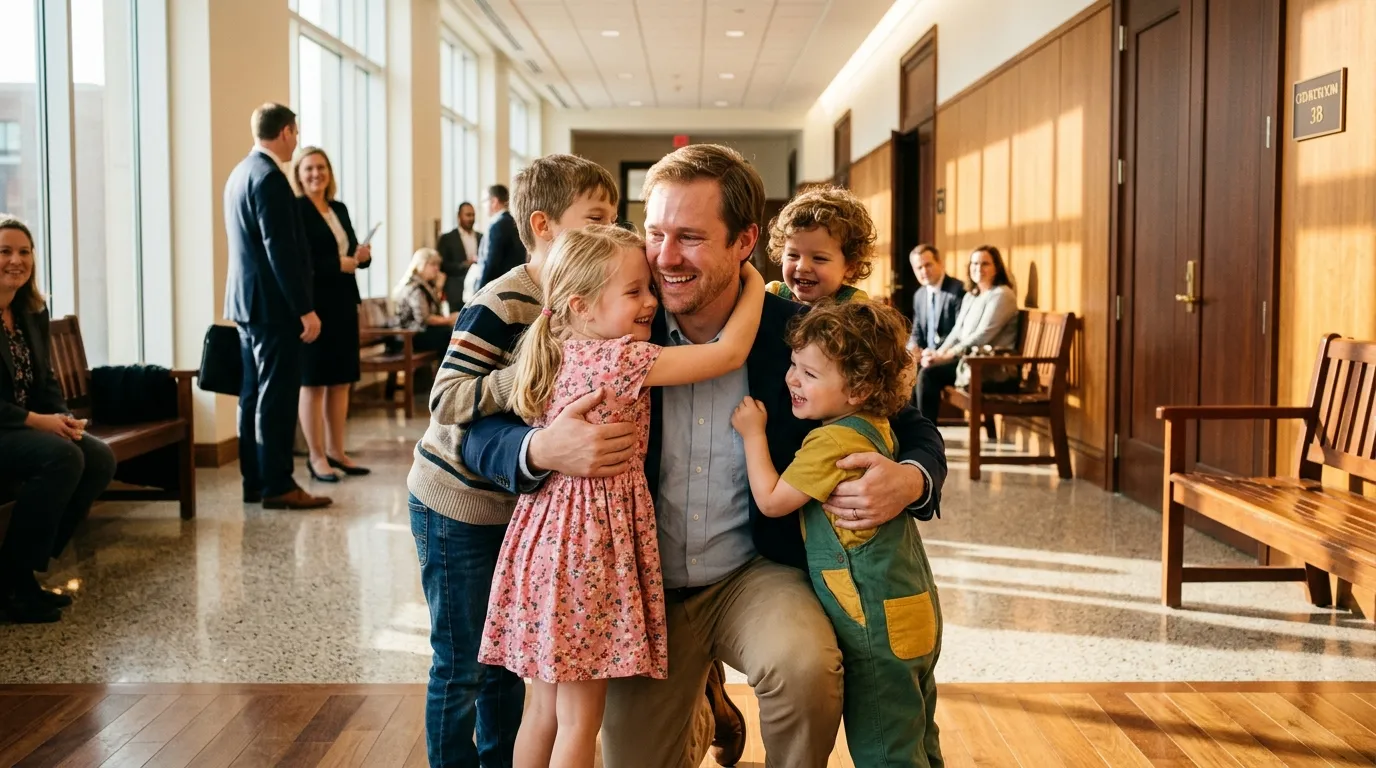
The moment the gavel fell, we weren’t just a case file anymore. We were a family.
I dropped to one knee on the hard floor just as she threw her tiny arms around my neck, burying her face in my shoulder.
“We’re going home?” she whispered, her tears soaking into my collar.
My throat tightened so much it physically hurt. “Yeah, sweetheart,” I choked out, wrapping my arms tightly around her. “We’re going home.”
The twins rushed over moments later, clumsily wrapping themselves around my shoulders and back in a chaotic, beautiful pile. Even Eli, who had spent so much of his young life trying to be brave and strong for everyone else, finally allowed himself to be a child. He buried his face in my chest and began to cry.
“I told them you’d keep trying,” Eli sobbed, aggressively wiping his face. “I told them you wouldn’t leave us.”
I pulled him close, kissing the top of his head. “You helped me keep that promise,” I whispered into his hair.
When I finally looked up through my own tears, Beverly was standing quietly beside us. She bent down and handed me the thick stack of temporary custody paperwork.
“Take good care of them, Carter,” she said softly, her eyes shining.
“I will. With my life.”
She smiled faintly. “I know.”
We walked out of the courtroom together, a messy, exhausted, beautiful unit. Diane rested a comforting hand on my shoulder before heading to her next case.
“You did all the hard work in there,” she smiled. “I just helped the court hear it.”
Stepping outside the courthouse doors, the afternoon sun felt significantly warmer and brighter than I remembered. One by one, I carefully buckled each child into their brand-new car seats in the back of the van. This time, nobody asked where they were going. Everyone already knew they were safe.
The drive home was incredibly, peacefully silent. Lila fell fast asleep before we even reached the first stoplight, her worn stuffed rabbit tucked securely beneath her chin. The twins leaned against each other in the back seat, their eyes drooping. For the first time since I’d met them, they weren’t holding on to each other because they were terrified. They were simply tired.
I glanced up and caught Eli looking at me through the rearview mirror.
“We’re really staying together?” he asked, his voice full of a cautious, fragile hope.
I smiled, feeling a profound sense of peace settle over my heart for the first time in two decades. “Yeah, buddy. We are.”
He nodded once, accepting it as truth. Then he turned toward the window to watch the trees pass by. And for the very first time, I saw him truly smile.
I tightened my hands around the steering wheel, looking at the road ahead. And quietly, so softly that only I could hear it over the hum of the engine, I whispered the words I’d been carrying like a heavy stone for twenty long years.
“I kept my promise to the brother I never found.”
Note:This work is inspired by real events and people, but it has been fictionalized for creative purposes. Names, characters, and details have been changed to protect privacy and enhance the narrative. Any resemblance to actual persons, living or dead, or actual events is purely coincidental and not intended by the author.
All images used in this article are AI-generated and intended for illustrative purposes only.
0 Comments