
The second night in our new house, the kitchen still smelled like fresh paint, lemon cleaner, and the cold, unblemished stone of countertops I had spent ten long years earning. Everything was pristine. Everything was perfect.
Outside, the pool sat black and motionless beneath the glowing patio lights. The only sound in the house was the gentle hum of the air conditioning and the soft scrape of a half-unpacked moving box shifting against the hallway wall. I was finally breathing the air of a dream I had built from the ground up.
Then, Ethan walked in. He stood barefoot on the pale marble floor, holding a cold beer in his hand, looking around the space as though he had laid every brick himself.
“My parents and Lily are moving in today,” he said casually, taking a sip. “And you’re not going to make a problem out of it.”

The dream house that took ten years of sacrifice to build.
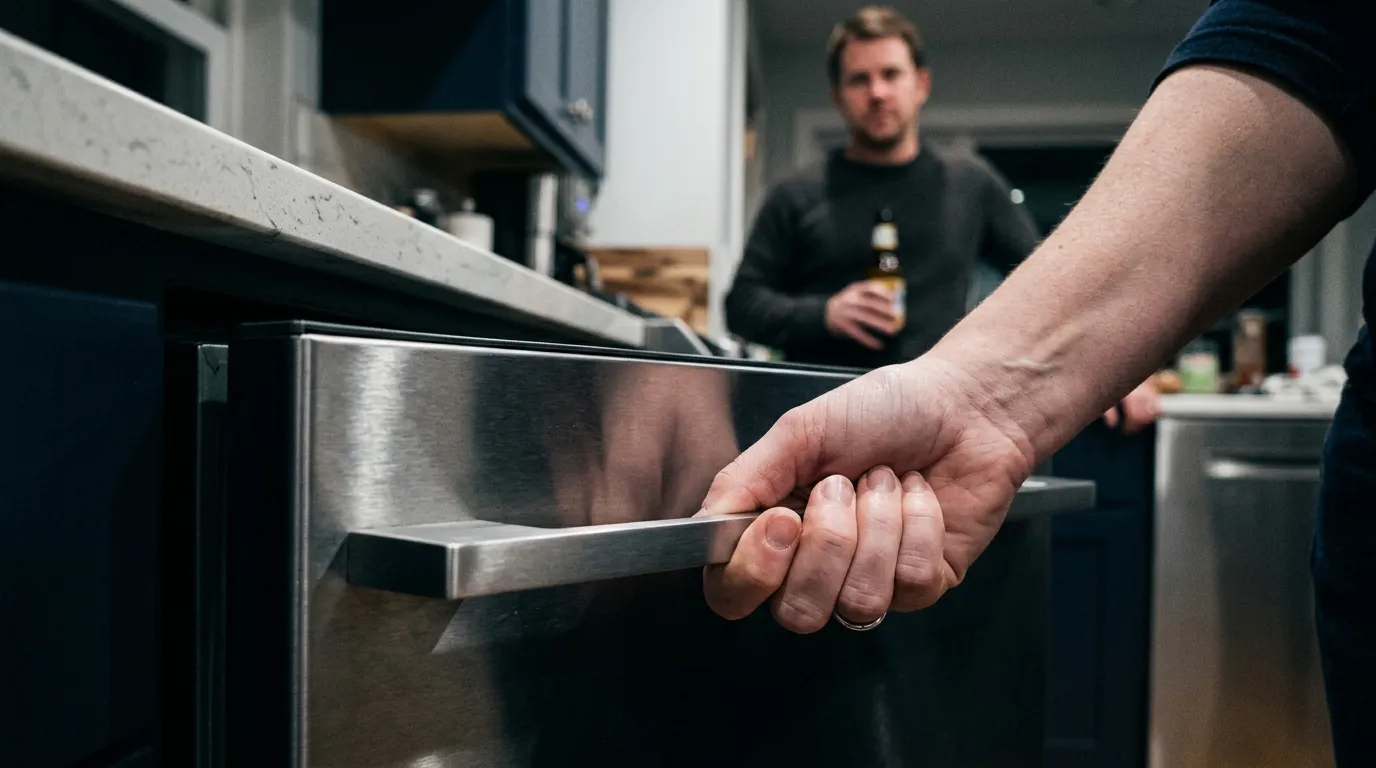
I stopped what I was doing. I was halfway through lining clean dish towels inside the kitchen drawer, and my hands simply froze.
“Your sister Lily?” I asked, turning to face him slowly. “The one who just got divorced last month?”
“She needs a fresh start,” Ethan replied without missing a beat. “Mom and Dad are getting older. We have more than enough room here.”
He wasn’t entirely wrong. The house did have room. It boasted a long, sweeping driveway, massive floor-to-ceiling windows, a resort-style backyard pool, and a walk-in closet larger than the first apartment I had ever rented. A small American flag, left behind by the previous owner, still hung neatly beside the front door.
But there was a distinct detail Ethan was casually glossing over: every single inch of that massive house had been paid for with my blood, sweat, and tears.
It represented ten grueling years of building a tech company from absolute zero. Ten years of surviving on cheap coffee, suffering through payroll panics, flying on red-eye flights, spending weekends in lonely hotel rooms, and enduring the kind of soul-crushing stress that makes your hair fall out in the shower. Ethan had arrived midway through those years. He had rubbed my shoulders and offered sweet words, but he hadn’t built the foundation.
I bought the house after selling my company. There was no mortgage. There was no family money. And there was absolutely no financial help from Ethan.
Yet, he loved telling our friends, “We finally bought our dream home.”
We.
Some people use that word as a declaration of love and partnership. Others use it like a receipt, claiming ownership over things they never earned.
“You didn’t discuss this with me,” I said, keeping my voice steady.
That was when Ethan finally looked directly at me. The charming, supportive-husband smile he wore at dinner parties vanished completely. His face went flat, almost bored, as though I was an employee stepping out of line.
“Don’t start with your drama, Claire.”
“I’m not being dramatic,” I countered. “I’m asking why you made a massive decision about my house without even speaking to me.”
He gave one short, ugly, dismissive laugh.
“Your house?”
The moment his mask slipped, everything changed.
The refrigerator hummed softly behind us. The ice maker clicked into the tray. I kept my hand on the open drawer, but my fingers tightened around the metal handle until the edge pressed painfully deep into my palm.
“Yes,” I said clearly. “My house.”
Ethan walked a few steps closer, the ice clinking in his bottle.
“Claire, this house is mine.”
I waited for the punchline. I waited for the smile that would tell me this was some twisted, terrible joke. It never came.
“You bought it after we got married,” he continued smoothly. “Everything you have belongs to me, too. My family is moving in today, and you need to get used to the fact that I’m the one in charge here.”
“I paid for it from my private account,” I reminded him. “With the money exclusively from selling my company.”
He shrugged, a gesture so loaded with arrogance it made my stomach drop.
“Then prove it.”
Those three words completely changed the temperature of the room. It wasn’t just greed talking. It was the terrifying confidence behind it—the smug certainty that he had rehearsed this exact moment in his head and fully expected me to fold, cry, and submit before I even opened my mouth.
For one hot, furious second, I imagined taking the cold beer from his hand and pouring it all across the pristine marble floor he admired so much.
But I didn’t.
Rage gives entitled people like Ethan something they can point at to call you “crazy.” Silence gives them absolutely nothing to work with.
That night, I lay perfectly still in bed beside him. As he slept heavily, I replayed every small, glaring red flag I had made excuses for over the years: the way he told our friends he had “guided” me through my company’s hard years; the way he casually referred to my money as “our safety net”; the irritated opinions he offered about transfers from accounts he had never contributed a single dime to.
At 1:43 a.m., I quietly slipped out of bed, carried my laptop downstairs, and sat in the dark at the kitchen island.
I opened the deed.
I opened the wire transfer confirmation from the company sale.
I opened the homeowner’s insurance policy, the tax account, the closing packet from the title company, and the county recorder receipt.
Every single legal document carried my name. My name alone.

Trust is easiest to weaponize when it looks like convenience.
Then, my heart pounding against my ribs, I opened the temporary household account I had allowed Ethan to use specifically for moving expenses and basic utilities. I expected to see payments to movers or hardware stores.
Instead, there were three massive transfers I had never seen, let alone approved.
$20,000.
$43,000.
$16,000.
The notes beside them were a punch to the gut: “Family support.” “Emergency.” “Help for Lily.”
A grand total of $79,000. Not groceries. Not repairs. Money systematically drained from me before his family had even crossed the threshold of the house.
I immediately downloaded the statements and photographed the screen with my phone. I emailed everything to an encrypted address Ethan didn’t know existed. I sat in the pale blue light of my laptop while the enormous house remained dead silent around me, realizing the man sleeping upstairs was a stranger.
At 6:12 a.m., Ethan came downstairs wearing his expensive watch and the deeply calm expression of a man who firmly believed the argument had already been won.
“I’m picking them up from the airport,” he said, jingling his keys. “By the time I get back, you better understand how things are going to work.”
He expected an emotional breakdown. He expected me to scream and throw things.
I just nodded once.
The exact second his SUV disappeared past the front mailbox, I sprang into action.
I didn’t cry. I made calls. I called a professional locksmith. I called the home security company. I called my powerhouse attorney. And finally, I called the private, rapid-response moving crew I had used when my company’s massive corporate office was staged for sale.
At 7:04 a.m., I photographed every room and painstakingly cataloged every single item I had purchased with my own money.
My assistant remotely pulled the account history into a clean, indisputable PDF while I rapidly packed my personal files, my clothes, my jewelry, my photographs, and the few meaningful objects that actually made the place feel like a home.
By 10:31 a.m., all of the massive walk-in closets were entirely empty.
By 11:18 a.m., nothing but bare wire hangers remained in the primary bedroom.
At 12:07 p.m., the professional movers carried the very last box down the front concrete steps.
I didn’t destroy anything. I left the neutral staging furniture that had originally come with the house purchase. I left the spotless countertops, the grand echoing staircase, and the polished marble floor Ethan had stood on while aggressively declaring himself my master.
On the kitchen island, pinned beneath a glass paperweight, I left a single manila folder. Inside were copies of the deed, the wire transfer, the access logs showing his theft, and a formal letter from my attorney demanding the return of the $79,000 and banning him from accessing any more funds.
Then I walked out, locking the door behind me.
At 2:26 p.m., sitting safely in a furnished rental miles away, my phone buzzed with a driveway-camera notification.
Ethan’s SUV rolled proudly toward the house.
His parents sat in the back seat beside a mountain of luggage. Lily was in the passenger seat, smiling brightly like a woman arriving at a luxurious, all-expenses-paid rescue she had been guaranteed.
The exact moment entitlement collided with reality.
Ethan climbed out first, lifting his chin triumphantly toward the gorgeous facade of the house. His mother pulled a heavy suitcase from the cargo area. His father adjusted the strap of a travel bag. Lily checked her reflection in the passenger window before happily following them up the front walk.
Ethan was still wearing that smug, arrogant smile when he confidently pushed open the front door.
And then, the massive, hollow emptiness of the house swallowed his voice.
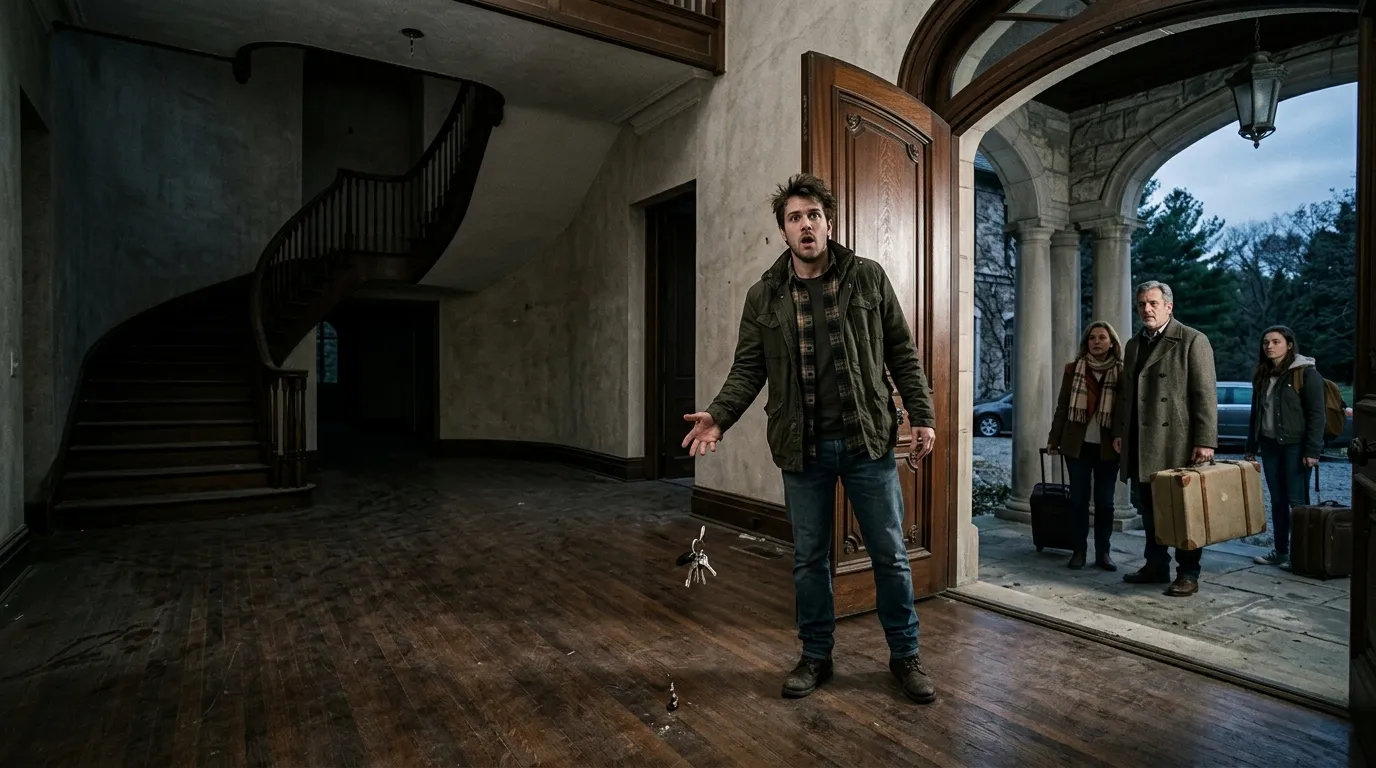
His mother froze dead in her tracks behind him, one hand white-knuckling her suitcase. His father stopped abruptly on the threshold. Lily stared blankly past Ethan at the utterly cleared entryway, the bare walls, and the echoing, empty space where a free ride was supposed to be.
Ethan stepped inside, his keys slipping from his fingers and clattering loudly against the marble.
He had told me to prove the house was mine. In the end, I proved something much larger. I proved exactly how much I had built before him, how dangerously he had underestimated me, and how quickly a dream home can vanish when an entitled person mistakes kindness for weakness.
I didn’t empty the house to punish him. I emptied it so I could finally see what remained of my life once his toxic entitlement was removed. And what remained was everything I needed.
Note:This work is inspired by real events and people, but it has been fictionalized for creative purposes. Names, characters, and details have been changed to protect privacy and enhance the narrative. Any resemblance to actual persons, living or dead, or actual events is purely coincidental and not intended by the author.
All images used in this article are AI-generated and intended for illustrative purposes only.
0 Comments