
When the foundation of your life crumbles, you expect a loud, earth-shattering noise. But when I lost my job, the collapse was suffocatingly quiet. Before the reality of my unemployment had even begun to properly sink in, my wife, Sienna, had packed a suitcase and walked out the front door.
Her parting words were a cold, sharp blade that I couldn’t pull out: “I married a provider, not a problem.”
Three agonizing days later, she came pounding on my front door clutching a folder she was never meant to find. She firmly believed the documents tucked inside were undeniable proof that I had been secretly plotting for our marriage to fall apart. But she had misunderstood absolutely everything. The truth was far more complicated, and it would force both of us to confront the uncomfortable reality of who we had become.
The Morning After the Fracture
The morning after Sienna left me, I still made her coffee. It didn’t happen out of hope; it happened out of deeply ingrained habit. At exactly 6:10 a.m., my alarm went off, and I shuffled into the dimly lit kitchen without actively thinking about what I was doing. I filled the kettle, opened the wooden cabinet, and reached for two familiar mugs.
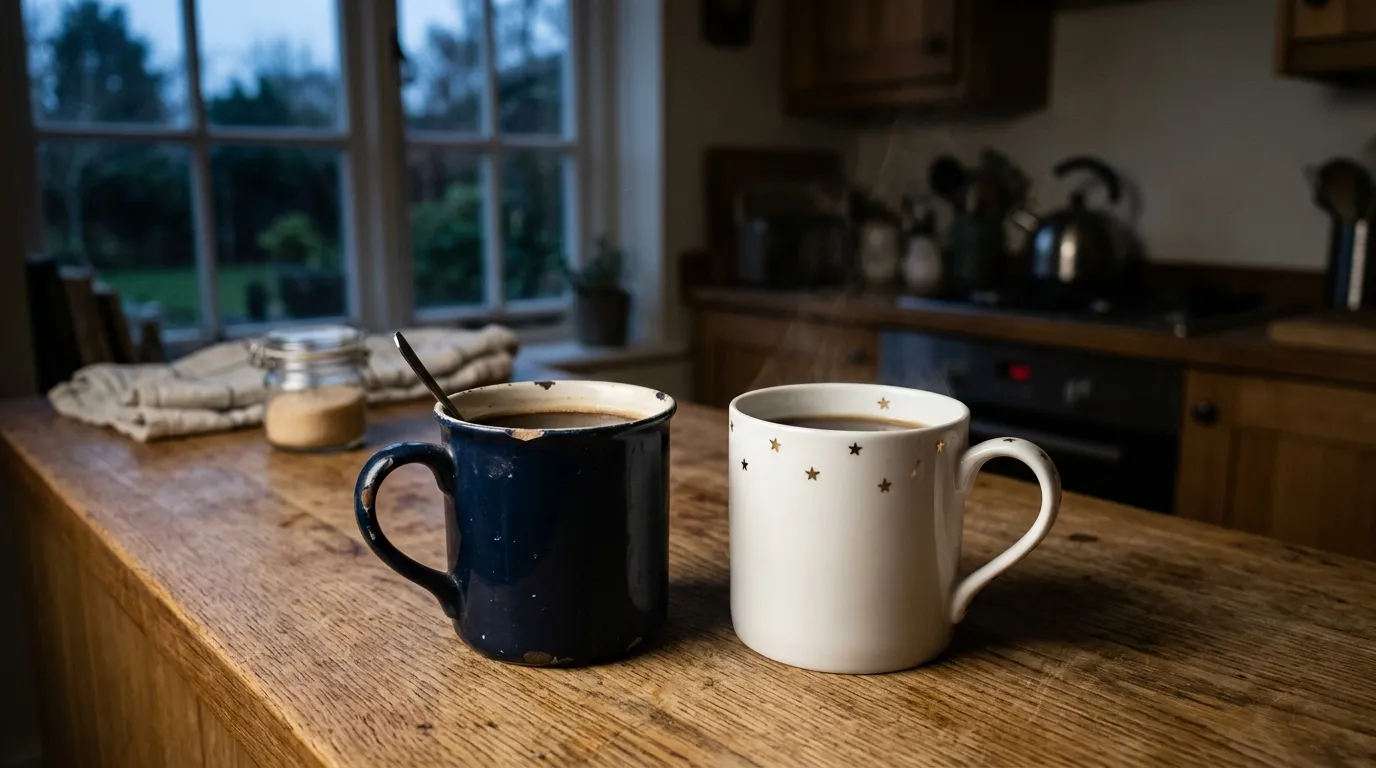
The chipped navy mug and the white one with gold stars—a daily routine that suddenly lost its meaning.
Mine was the chipped navy blue one I’d owned since my chaotic college days. Sienna’s was a delicate white ceramic, beautifully decorated with tiny, hand-painted gold stars around the rim. I placed both mugs side-by-side on the cool granite counter. Then, I froze.
I stood there and just stared at hers. Her large grey suitcase was gone. Her floral makeup bag was missing from the bathroom. Even the little ceramic dish by the sink, where she habitually dropped her earrings every single night, was entirely empty. And just twenty-four hours earlier, she’d looked me straight in the face, her expression void of empathy, and delivered the sentence that was now looping relentlessly in my mind.
I quietly put her mug back into the dark cabinet. I opened my laptop and started applying for jobs. Or, at least, I tried to.
Every few minutes, her voice echoed in my ears. The panic wasn’t because losing my job had left us destitute. It genuinely hadn’t. We had built up a healthy savings account. My generous severance package would easily cover our expenses for several months. I had fourteen years of solid management experience, impeccable references, and a network of colleagues who were already forwarding me promising job openings.
What I no longer had was the profound certainty I’d woken up with every morning for the past six years: the unwavering belief that my wife and I were an unbreakable team. We had money in the bank. We had a beautiful home. We had a financial safety net. What had vanished overnight wasn’t our financial security; it was my foolish belief that Sienna would stand shoulder-to-shoulder with me when the sky began to fall.
The Day the Office Closed
The day before my marriage imploded, my entire local office branch had been permanently shut down. Seventy-eight hardworking people lost their livelihoods in less than an hour. I’d spent the majority of that grim afternoon helping my devastated employees carry cardboard boxes to their cars, forwarding essential personal contacts, answering panicked questions, and making heartfelt promises to write glowing letters of recommendation for every single one of them.
When the building was finally empty, I sat completely alone in my parked car for nearly twenty minutes before I could summon the physical strength to turn the key in the ignition. I was terrified. Of course I was. But I wasn’t hopeless. I spent the drive home rehearsing what I would say to my wife to soften the blow.
“We’ll tighten things up for a while.”
“I’ll start applying tomorrow morning.”
“We’re going to be okay.”
I even stopped to pick up Sienna’s absolute favorite Thai takeout, knowing that neither of us would have the energy to cook after I dropped the news. When I walked through the front door, she was lounging comfortably on the living room couch.
“You’re early,” she noted, her eyes immediately dropping to the aromatic takeout bag. “Thai?”
I set the food on the kitchen island. “Sienna, I need to tell you something.”
That shift in my tone got her immediate attention. I sat across from her and laid it all out. The sudden corporate restructuring. The branch closure. The fact that my position—and everyone else’s—was simply gone.
For several agonizing seconds, Sienna just stared at me, processing the words. “You lost your job?”
“The whole branch closed,” I clarified.
“But you lost yours.”
“Yes.”
She stood up abruptly, without another word, and marched purposefully toward our bedroom. I followed her, my heart hammering against my ribs. “We’re okay for now,” I reassured her to her back. “We have the emergency fund, and my severance should hit the account next week. I’ll start calling my network first thing tomorrow.”
Sienna didn’t answer. Instead, she aggressively yanked our largest suitcase from the top shelf of the closet. At first, I honestly thought she was just looking for something hidden behind it. Then she threw it open on the mattress and began ripping clothes off hangers.
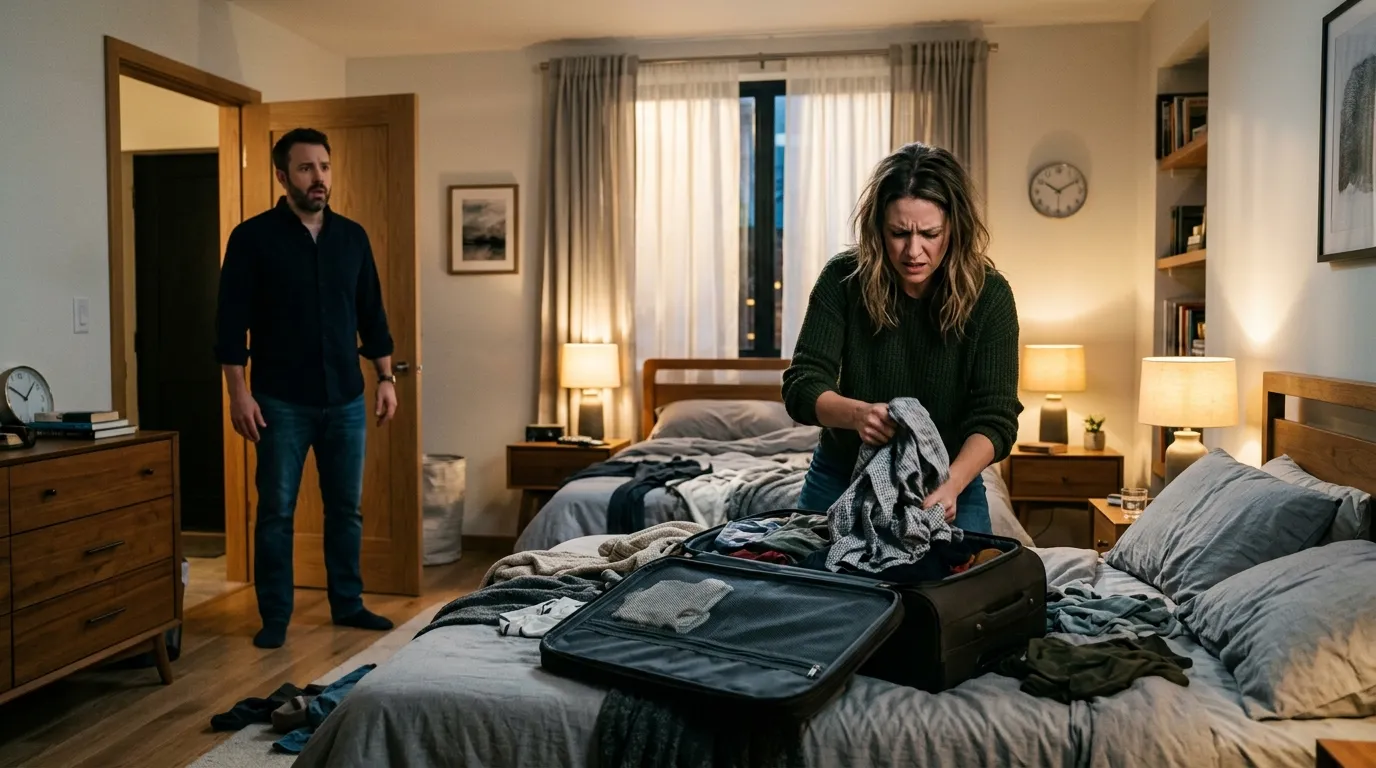
The panic I had braced myself for wasn’t there. In its place was only cold irritation.
“Sienna? What are you doing?” I asked, my voice wavering.
“I’m going to my parents’ house, Rowan.”
I let out a short, incredulous laugh because the alternative was accepting the terrifying reality of the moment. “For what? A night?”
She stopped folding a dress and looked dead at me. The panic I had prepared to soothe wasn’t in her eyes. There was only raw, unfiltered irritation. “I can’t do this.”
“Do what?”
“This.” She gestured vaguely toward me, as though my sudden unemployment was a contagious disease I had brought into our pristine home. “I didn’t sign up to worry about whether the mortgage gets paid or whether we can afford groceries.”
“We can afford groceries, Sienna!” I pleaded.
“That’s not the point.”
“Then what is the point?”
She zipped the suitcase halfway, the sound violently loud in the quiet room. “I married a provider, Rowan.” She paused, letting the silence stretch just long enough to ensure the next words would inflict maximum damage. “Not a problem.”
I didn’t answer. There were no words left in the world that wouldn’t make the moment infinitely uglier. She finished packing, rolled the suitcase past me, and walked out. A few seconds later, the rumble of her car engine faded down the street, leaving me entirely alone in a house that suddenly felt cavernous.
The Invisible Weight of Adulthood
That deafening silence followed me deep into the next morning. And once I finally stopped trying to decipher Sienna’s actions, I started noticing jarring things about our marriage that I had blindly accepted for years.
At 9:15 a.m., my phone chimed to remind me that her car insurance renewal was due. I opened the payment app out of sheer muscle memory. Then I stopped. She knew the login. At least, I assumed she did. I closed the app.
At 11:00 a.m., I remembered she had an important dentist appointment the following Tuesday. I typed out a quick text: Don’t forget Tuesday at 2. Then, I deleted it.
At noon, the local dry cleaner texted to say Sienna’s dresses were ready. I stared blankly at the notification. I’d been faithfully dropping off and collecting her dry cleaning for years because it was conveniently on my route home from the office. Except now, there was no route home. There was no office. There were no tailored suits waiting behind my desk chair. There was no wife waiting to ask if I’d remembered to run her errands.
By late afternoon, after firing off seven polished job applications, I realized something deeply uncomfortable about myself. I hadn’t merely been the financial engine in our marriage. I had, bit by bit, absorbed the responsibility for absolutely everything else, too. Insurance premiums. Property taxes. Vacation itineraries. Plumber appointments. Registration renewals. Retirement portfolios. Even the mundane water-filter replacement subscription.
I used to jokingly tell our friends that Sienna had successfully outsourced her adulthood to me. She used to playfully kiss my cheek in response and say, “That’s exactly why I married you.” Years ago, I loved hearing it. It made me feel essential. Now, the memory made me nauseous.
Six years prior, Sienna had been a completely different woman. When we first married, she was halfway through an intensive design program—interior drafting, space planning, computer-assisted design. She was brilliant at it. She could walk into an empty, lifeless room and passionately analyze the traffic flow and natural light. Then, I got my first big promotion. We relocated. Her college credits didn’t transfer cleanly to the new state. She promised she’d go back “later,” and I assured her there was no rush.
Then came another promotion. A larger salary. A sprawling house. Luxurious vacations. Fine dining. I genuinely loved giving her the world. And with every passing year, “later” became a much easier excuse. I honestly thought I was giving her a wonderfully comfortable life. But comfort has a dangerous way of turning into dependency before either person realizes who is carrying all the weight.
The Folder and the Accusation
On the second day, she still hadn’t called. Her mother had sent me a single, clipped text message: Sienna needs space. Please respect that.
On the third morning, at exactly 8:42 a.m., someone began violently hammering on the front door. Not politely knocking. Pounding.
I rushed to open it. “Sienna?”
She barged past me into the foyer before I could even get the door fully open. Her hair was a messy knot, and she was wearing the same black leggings she had likely slept in. But it was the thick, cream-colored folder clutched fiercely in her hand that made my blood run cold.
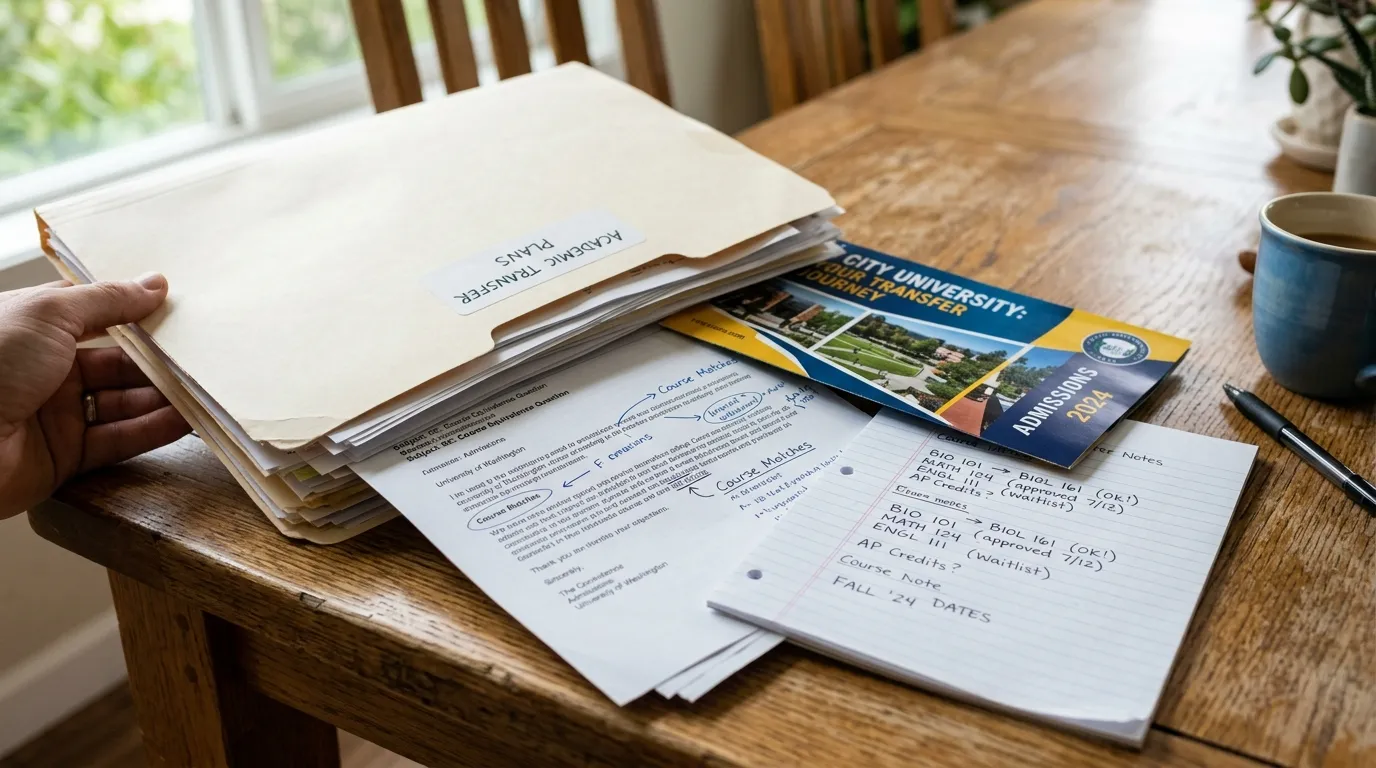
The folder held emails, tuition estimates, and course notes—evidence of a plan she entirely misunderstood.
“How long?” she demanded, her voice shaking with rage.
I slowly closed the front door. “Sienna—”
“How long were you planning to keep this from me?” She threw the folder forcefully onto the dining table. Pages slid out across the polished wood. Printed emails. A glossy college brochure. Course-transfer notes. Tuition estimates. And right on top, written in my unmistakable handwriting: SIENNA: PROGRAM OPTIONS + FINANCIAL PLAN.
She pointed an accusing finger at the date on the top email. “You were making an exit plan for me behind my back.”
“No, I wasn’t.”
“Don’t lie to me, Rowan!”
She snatched up one of the printed pages. “You contacted my old college. You asked which of my credits still counted. You asked what I’d need to do to finish my degree. And you never breathed a word of this to me?”
I looked at the scattered papers. “That part is true.”
Sienna glared at me, breathing heavily, looking at me as though she had finally unmasked a monster. “What was this? Some secret backup plan for when you eventually got tired of paying for my life?”
“No, Sienna. God, no.”
“Then what?”
I checked my watch. If the academic schedule hadn’t changed since I last checked, Professor Elaine would be on campus. I reached into the ceramic bowl by the door and grabbed my car keys.
“Where are you going?” she scoffed.
“To show you the part I should have told you fourteen months ago.”
The Reality Check
The drive was utterly silent. We didn’t speak until I pulled into a parking lot that Sienna immediately recognized. She leaned forward against her seatbelt, her eyes wide. “No.”
I put the car in park and killed the engine. We were sitting outside the community college she had attended before we got married.
“Rowan, what are we doing here?”
“You wanted to know the truth. Come inside.”
We walked up to the second floor, the domain of the design department. Sienna clutched the cream folder to her chest like a shield. As we approached the main office, an older woman stepped out of a doorway.
“Rowan?” the woman asked warmly. Then, her eyes shifted to my wife. She stopped dead in her tracks. “Sienna?”
My wife blinked, clearly confused. “Do I know you?”
Elaine offered a kind, nostalgic smile. “I taught your second-year drafting class. I still remember your final portfolio. It was exceptional.”
The sheer shock on Sienna’s face was unmistakable. Elaine ushered us into her cramped, blueprint-filled office and pulled up Sienna’s archived academic record on her computer. She explained the reality of the situation: the software had evolved massively, the core program had changed, and while some credits remained valid, a return would require serious refresher courses and a total portfolio overhaul. There was no magical fast-forward button. It would require hard work.
Sienna barely looked at the glowing monitor. Her eyes were fixed squarely on me. Finally, when Elaine stepped out to grab us some water, Sienna spoke. “Why did you come here fourteen months ago?”
I leaned back in the creaky office chair and let out a long breath. “Because of a guy named Derek. He worked alongside me for eleven years. Same exact management tier. Two young kids. A heavy mortgage. His wife hadn’t worked a day since their youngest child was born.”
I looked deeply into Sienna’s eyes. “Fourteen months ago, Derek got laid off during a minor corporate restructuring. I stood in the hallway and watched him carry a sad little cardboard box out to his car. And as I watched him, all I could think was: What on earth happens to Sienna if that ever becomes me?“
She slowly lowered herself into the chair opposite mine.
“I didn’t decide you needed a career just to get rid of you,” I said softly. “I realized with terrifying clarity that we had built your entire existence, your total security, around my fragile paycheck.”
She looked down at her hands.
“I tried to gently bring up you going back to school six months ago,” I reminded her. “Do you remember? You immediately asked if we were having money problems. When I assured you we weren’t, you laughed and asked why you’d even bother.”
Sienna’s face flushed with a heavy mix of shame and realization.
“I should’ve kept pushing the conversation,” I admitted. “But instead, I did what I always do in our marriage. I quietly took on the burden and tried to figure out a solution myself.”
“You should’ve told me,” she whispered.
“I should have. And you,” I said, my voice hardening just a fraction, “should have stayed in our home long enough for me to explain that I had lost one single job, not my intrinsic ability to be your husband.”
Silence hung heavy in the academic office. Outside the window, young students hurried across the sunny courtyard. Finally, Sienna gathered the courage to ask the question that had been burning inside her for three days.
“Are we… broke?”
“No.”
A massive wave of relief washed over her face before she could mask it. “We have substantial savings,” I reiterated. “And my severance. I told you all of this the night I came home with the Thai food.”
Sienna frowned, genuinely confused by her own memory. “You did?”
“I did. But you didn’t hear it. You heard that I’d lost my job, and you instantly decided I had lost my value.”
The Check
We left the college campus and ended up driving to the retro diner where we’d awkwardly stumbled through our very first date years ago. Halfway through our black coffees, Sienna suddenly let out a dry, humorless laugh.
“My debit card paid the bill that night,” she recalled.
I offered a faint smile. “Mine declined at the register. I was mortified.”
“You were so embarrassed,” she said softly. “And I told you that you could just get the next one.”
Her brief smile vanished, replaced by a profound sadness. She traced the rim of her coffee cup. “Rowan… when exactly did I become this person?”
I stared down into my dark coffee. “Probably around the exact same time I started taking pride in the fact that you needed me to survive.”
Sienna wiped a stray tear from beneath her eye. “Do you want me to come home today?”
“No.”
She physically flinched at the word.
“I don’t know if I want our marriage to end,” I told her honestly. “But I absolutely cannot let you move back into that house today just because you found out we’re financially secure.”
“What am I supposed to do?” she asked, looking utterly lost.
“You need to figure out whether you would have come back through that front door today if our bank accounts had been completely empty.”
She couldn’t answer me. And I didn’t push her to.
Two long, quiet weeks later, Sienna texted and asked me to meet her at the diner again. She looked tired, but grounded. She told me she had officially enrolled in one of Elaine’s refresher design courses, paying for it out of her own small personal savings account.
When the waitress dropped the check on the laminate table, I reached for it automatically. It was muscle memory. But so did she.
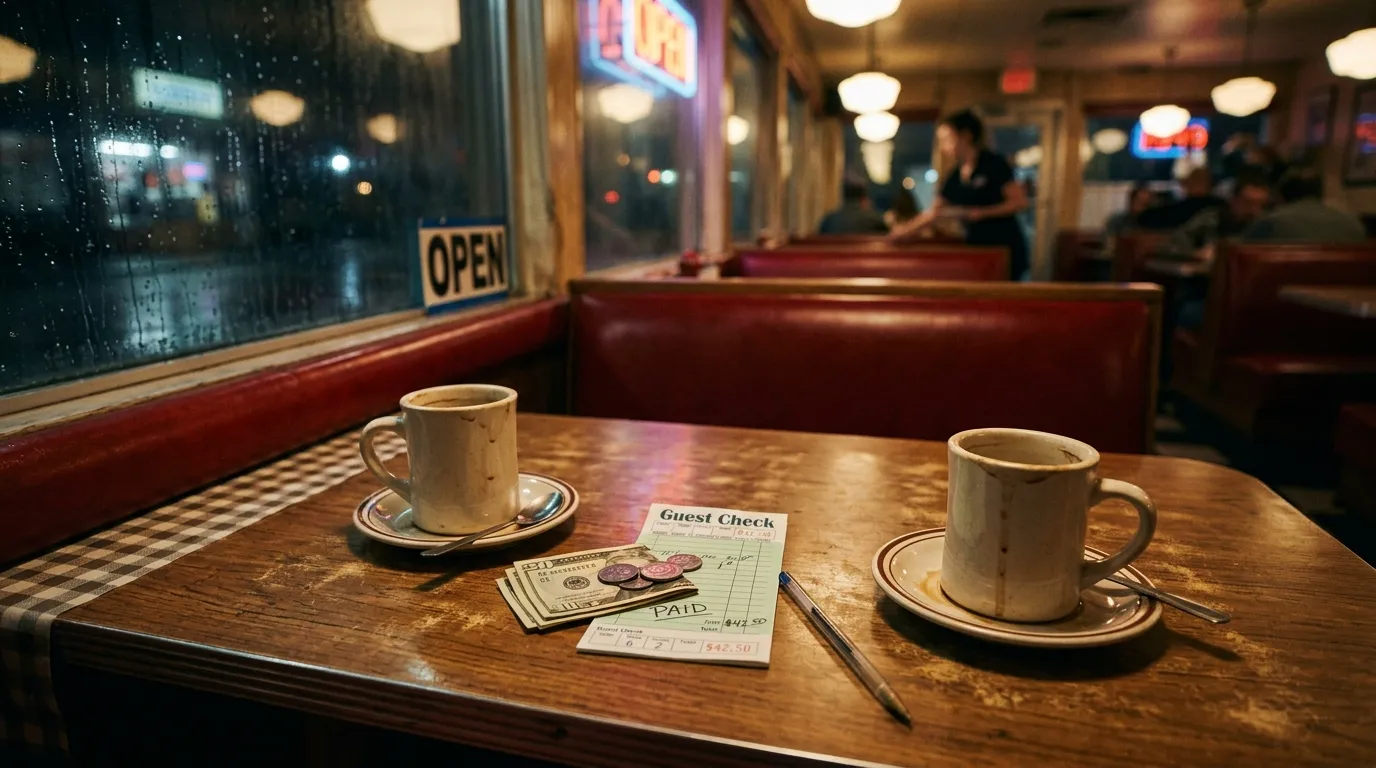
The diner table where it all started, now the place where we have to decide how it ends.
Our hands collided over the small piece of paper. We both stopped. Slowly, Sienna slid the paper out from under my fingers.
“I’ve got this one,” she said firmly.
I let my hand fall back to my lap. She offered me a tentative, genuine smile.
“You can get the next one,” she said quietly. Then, she caught herself, her eyes searching mine. “If… if there is one.”
Outside in the parking lot, we walked slowly toward our separate cars. The air felt lighter than it had in weeks.
“Good luck with your second-round interview tomorrow morning,” she called out.
“Thanks, Sienna.”
She hesitated, her hand lingering on her car door handle. “Do you… want me to call you afterward? Just to see how it went?”
I stood there in the afternoon sun and seriously considered it. I thought about the empty house, the chipped mug, and the woman standing in front of me who was finally trying to carry her own weight.
“Yeah,” I said finally. “I’d like that.
As I drove away, I glanced back at the diner. Inside, visible through the large glass window, our two empty coffee cups sat on completely opposite sides of the booth. But sitting squarely in the middle, bridging the gap between them, was the paid check.
“
Note:This work is inspired by real events and people, but it has been fictionalized for creative purposes. Names, characters, and details have been changed to protect privacy and enhance the narrative. Any resemblance to actual persons, living or dead, or actual events is purely coincidental and not intended by the author.
All images used in this article are AI-generated and intended for illustrative purposes only.
0 Comments