
The Night My World Stopped
When my twin daughters, Lily and Emily, were just five years old, Emily suddenly became violently ill. The world blurred into a panic of flashing ambulance lights, sterile hospital corridors, and the agonizing ticking of a clock. Only a few hours later, a doctor with a hollow expression stepped into the waiting room and delivered the words that shattered my reality: Emily hadn’t survived.
I couldn’t fathom how I was supposed to draw another breath, let alone keep living. But the universe wasn’t finished breaking me. Right after Emily’s funeral, as the rain washed over the fresh earth, my husband, Carl, approached me. His eyes were entirely empty—devoid of the man I had loved for years.
“I’m sorry, but I can’t do this anymore,” he whispered.
And just like that, he walked away. He abandoned me and our surviving daughter, Lily, to navigate the suffocating darkness alone. Grief consumed every corner of my existence. I had lost my little girl, and I had always clung to the belief that Carl and I would somehow weather this nightmare side-by-side. We never got the chance.
The only anchor in my violent storm was my father. Dad had always been there. He was there the moment the twins were born, babysitting them constantly, dropping by after work just to spend an hour making them giggle. Emily’s death had nearly destroyed him, too. We leaned on each other, surviving the unimaginable. Without his unwavering presence, I don’t know how I would have managed to raise Lily through those agonizing first years.
Thirteen Years of Silence
Thirteen years slipped through our fingers. In all that time, I never heard a single word from Carl. There were no phone calls, no letters, no fleeting appearances. It was absolute silence. Eventually, I stopped agonizing over how a father could simply abandon his surviving daughter. I boxed up the pain and focused on the girl who was still here.
Until yesterday.
Yesterday was Lily’s 18th birthday. We threw a wonderful celebration with our family. For the first time in what felt like a lifetime, the joy was genuine. Lily laughed out loud, tore open her presents, and we all ate far too much cake. For a few precious hours, I let myself forget everything we had lost.
Late that evening, after the house had quieted and Lily had gone to bed, I was standing at the kitchen sink washing dishes. My father walked in, and something about his ashen face made my stomach plummet.
“Dad, are you okay?” I asked, drying my hands.
He stared at the linoleum floor, unable to meet my eyes. “Honey, I’ve done something terrible to you. Please forgive me.”
I turned to face him fully, my heart picking up a frantic rhythm. “Dad, what are you talking about?”
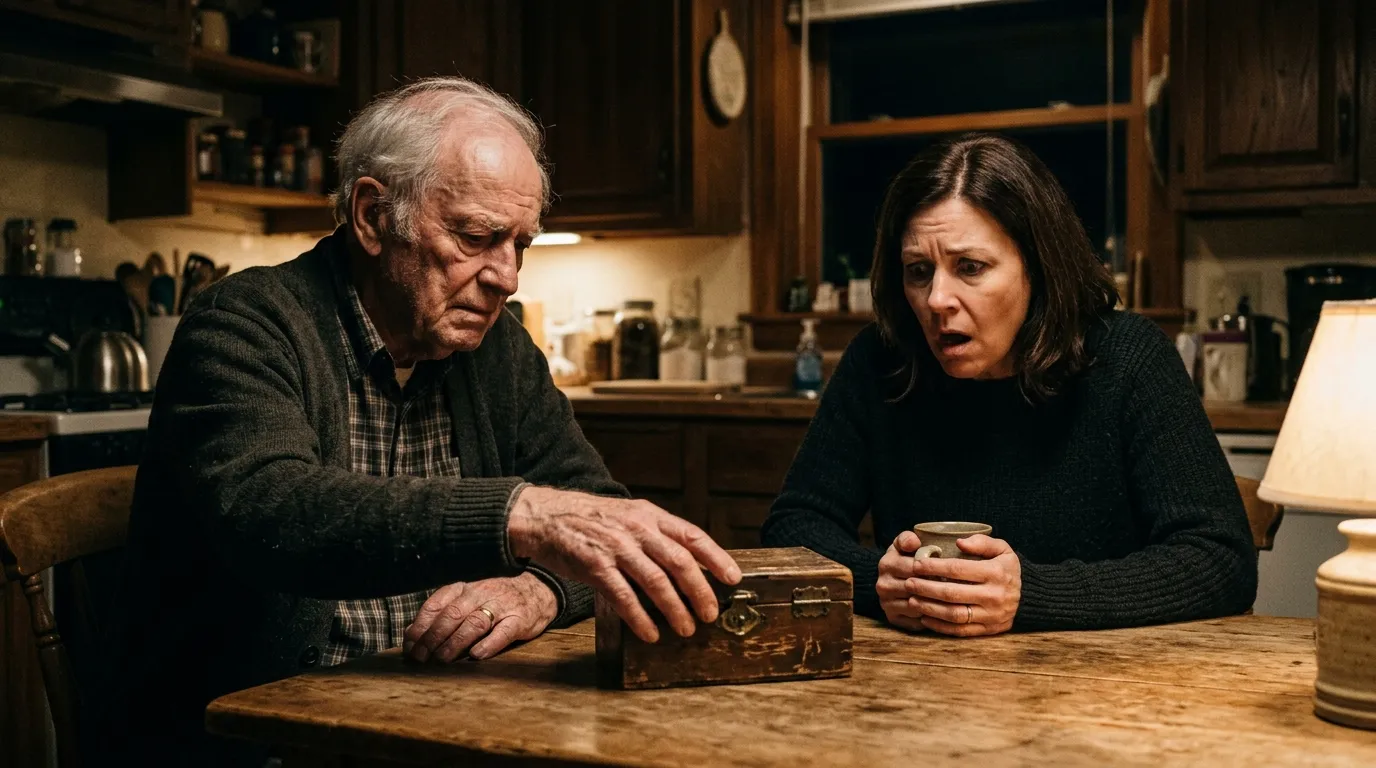
The secret that had been kept for thirteen long years finally saw the light.
His trembling hands placed a small, weathered box on the kitchen table. “Carl made me swear I wouldn’t tell you anything until today. Until Lily turned eighteen.”
My voice caught in my throat. Dad continued, his voice breaking, “Honey, Carl didn’t leave without a reason. There’s something you were never told.”
My knees gave out. I collapsed into a dining chair. “What is going on?”
Dad swallowed hard. “Open the box, and you’ll understand everything.” He paused, taking a ragged breath before delivering a sentence that froze my blood. “What happened to Emily wasn’t what you thought.”
The Box of Lies
For thirteen years, I had believed with agonizing certainty that I knew exactly how my daughter died. Dad simply pushed the box toward me. My shaking fingers lifted the lid. Inside lay a stack of documents, a photograph, and a sealed envelope with my name written in Carl’s familiar handwriting.
I reached for the photograph first. The moment my eyes focused on the image, the room spun. Tears were streaming down my father’s face. Suddenly, I understood why he had to wait until Lily was legally an adult.
The photograph showed two girls standing side-by-side. Both were eighteen. Both possessed Lily’s unmistakable eyes. One of them was my daughter, Lily.
The other was Emily. Older. Smiling. Alive.
“This is impossible,” I gasped, the photo nearly slipping from my grasp.
“No,” Dad whispered, burying his face in his hands.
“Where is she?” I demanded. Dad pointed a trembling finger at the envelope. I tore it open. The first line of Carl’s letter destroyed everything I thought I knew.
Emily did not die that night.
I stopped breathing. Forcing my eyes down the page, Carl explained the horrifying truth. Doctors had discovered Emily was deliberately given medication she was lethally allergic to. She had survived, but it was attempted murder by someone intimately close to our family. Terrified the perpetrator would strike again, Carl agreed to a nightmare: Emily was secretly moved into protective custody with distant relatives.
Only a handful of people knew. Carl. My father. Two detectives. But not me.
I sprang up, my chair crashing backward to the floor. “You let me bury an empty coffin?!”
Dad wept openly. “I thought it would only be temporary!”
“Thirteen years is not temporary!”
According to the letter, Carl hadn’t abandoned us. He disappeared because the person responsible had started asking questions about the surviving twin. He left to draw the danger away from Lily and me. He underlined the final sentence twice: Do not tell Lily until she turns eighteen, because that is when the sealed evidence legally becomes hers.
Inside the box was a small brass key and a safe-deposit receipt in Lily’s name. Dad whispered that the truth about who tried to kill Emily was locked inside.
Suddenly, soft footsteps echoed behind us. Lily stood in the kitchen doorway, her face drained of all color. She was looking at the photograph on the table.
“Mom,” she whispered, her voice trembling. “I know this girl. She came to my school last month… She told me her name was Emily. And she said Grandpa was the reason we could never be together.”
The Third Bassinet
The air in the kitchen felt heavy as lead. Dad gripped the back of a chair to steady himself. For eighteen years, I believed I had given birth to twins. Two hospital bracelets, two bassinets, two names.
But when Carl finally called us, his voice echoed through the speakerphone with a truth that defied logic. “Three newborn girls,” he said softly.
I stared at Lily. “That’s impossible.”
“I thought so too,” Carl replied. “Until Emily showed me a photograph from an archived hospital file. A complaint filed by a nurse named Margaret Shaw the morning after you gave birth.”
Dad’s head snapped up. “What nurse?”
The recognition on my father’s face was undeniable. He confessed that Margaret Shaw had called him the morning after the delivery, asking terrified questions about whether the ultrasound had ever shown three babies. Dad had assumed she was just confused. He never mentioned it to me.
“What happened to Margaret?” I asked, my voice terrifyingly calm.
“She disappeared six days after the birth,” Carl said. “People don’t just vanish.”
Carl revealed that Emily was currently driving to St. Matthew’s—the abandoned hospital where the girls had been born, and where Emily had supposedly died. Without a second thought, I grabbed my keys. Lily and my father insisted on coming. Despite the absolute betrayal radiating from my father, I needed him.
The Ghosts of St. Matthew’s
The rain lashed against the windshield during the excruciating thirty-seven-minute drive. St. Matthew’s was a decaying shell of its former self, its maternity wing closed for years. Emily’s car sat empty near the service entrance. We pushed through the unlocked doors into a corridor smelling of damp plaster and old disinfectant.
A loud crash echoed from deep inside, followed by a woman’s scream. We bolted toward an old records room. Boxes and papers were strewn everywhere. And there, standing near the back wall, was a young woman in a pale coat.
She turned around. She had my eyes. She had Carl’s mouth. A thin scar ran beneath her left ear. It was Emily.
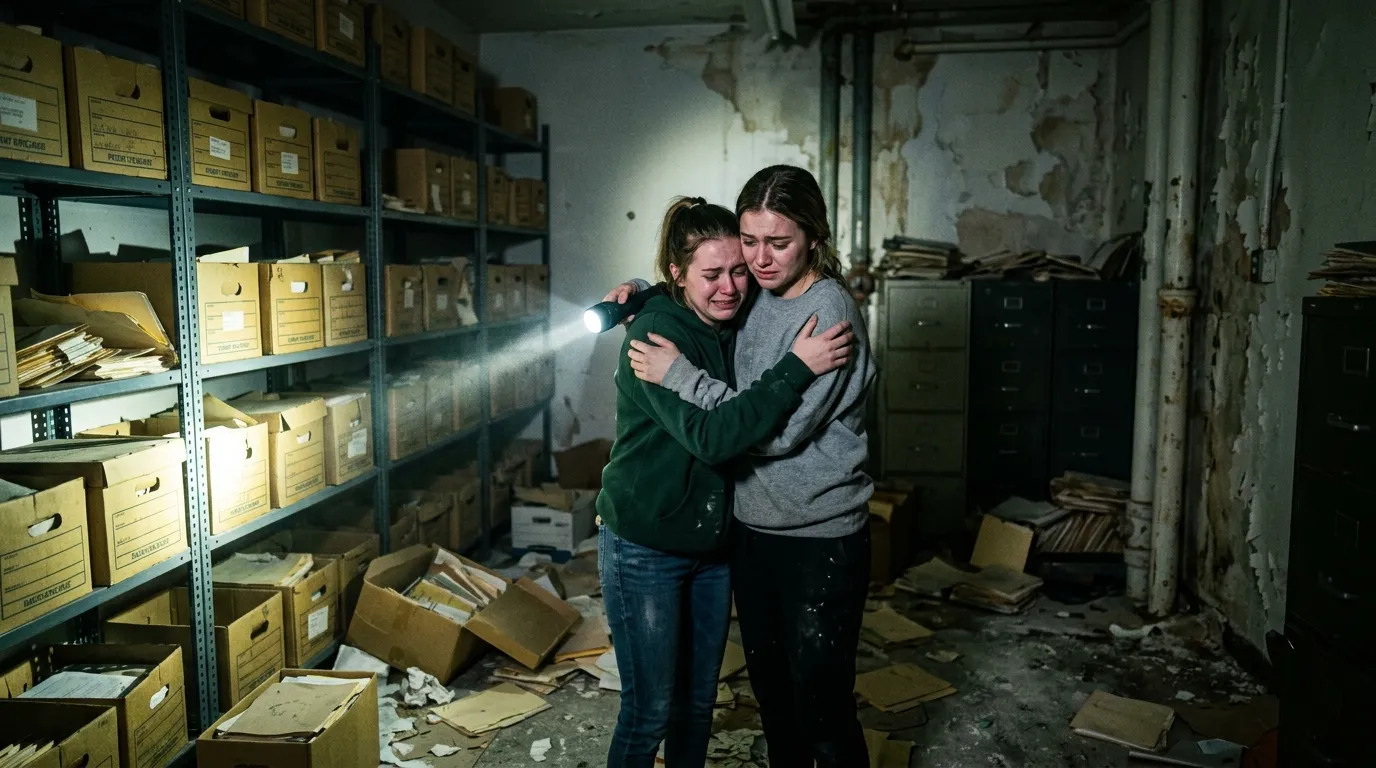
Thirteen years vanished in a single, desperate embrace.
“Mom?” she whispered.
We collided in the center of the room, holding each other so fiercely I couldn’t breathe. I touched her hair, her cheeks, verifying she was flesh and bone. Then Lily stepped into the light. The sisters stared at each other, the missing thirteen years dissolving in an instant. They cried, laughed, and held each other as if letting go would make the other vanish.
Emily wiped her eyes and pulled a photograph from the debris. It showed three bassinets. Baby Carter A. Baby Carter B. Baby Carter C.
She handed me a nursing report signed by Dr. Harold Mercer—the very man who had told me Emily was dead. The report stated that Infant C had been removed from the maternity ward without maternal consent, transferred to an unknown pediatric facility.
“Because she was never supposed to survive,” a gravelly voice echoed from the doorway.
Dr. Harold Mercer leaned heavily on a cane, looking frail but sharp-eyed. He admitted to falsifying the records and stealing a baby, terrified of a shadowy network that controlled the hospital. Before we could press him, headlights flashed outside. Footsteps echoed in the hall. Mercer shoved us into a hidden archive stairwell just as the intruders breached the room.
The DNA Dilemma
We met Carl behind a motel twenty miles away. Seeing him after thirteen years—grayer, lined with grief—shattered Lily. She hit him, cursed him, and then buried her face in his chest, sobbing that she missed him every single day. Carl wept, holding the daughter he had watched only from the shadows.
In the safety of the motel, Carl unpacked the monstrous truth. Dr. Mercer had manipulated records to convince a wealthy donor, Richard Vale, that Emily was his biological child to secure funding for her care. But medical files from my pregnancy held a darker secret: a handwritten note suggesting a monozygotic split of Fetus B. I had conceived twins, but one embryo split. Identical triplets.
The third baby was born dangerously premature with a severe heart defect. But why hide her?
Dad finally broke. He revealed that my mother—who I thought had died in a car crash when I was twelve—was actually alive. She had abandoned us, changed her name to Elaine Foster, and was working with a private adoption agency called Haven House. She had been at the hospital the night I gave birth. She was the one who took the third baby.
The Sister We Never Knew
Using Lily’s social media skills, we tracked down Elaine Foster in Oregon. In a recent photo, she stood proudly beside an eighteen-year-old girl named Hannah. The girl shared the exact same birthdate as Lily and Emily. She also shared a distinct, inward-curving pinky finger—a trait I shared with all my daughters.
I called the woman who gave birth to me. “You stole my baby,” I hissed into the phone.
“I saved her,” Elaine cried, explaining she had smuggled the sick baby out to save her from Mercer’s illicit insurance schemes, but grew too attached to ever return her.
Hours later, we were on a video call with Hannah. Despite different hairstyles and mannerisms, the moment she smiled, she was undeniably ours. She showed us a hidden ledger she had found in Elaine’s safe—a document detailing dozens of illegal transfers, healthy babies marked deceased, and massive payouts.
And at the bottom of the ledger was a signature that made Carl physically sick: Daniel Carter. His own father, who had supposedly died years before the girls were born.
The Architect of Lies
We tracked Daniel Carter to a secluded town. At eighty-two, he confessed that he had faked his death to escape the network he helped build—a network that trafficked vulnerable infants to wealthy donors. But Daniel had held onto a massive cache of evidence to eventually expose them.
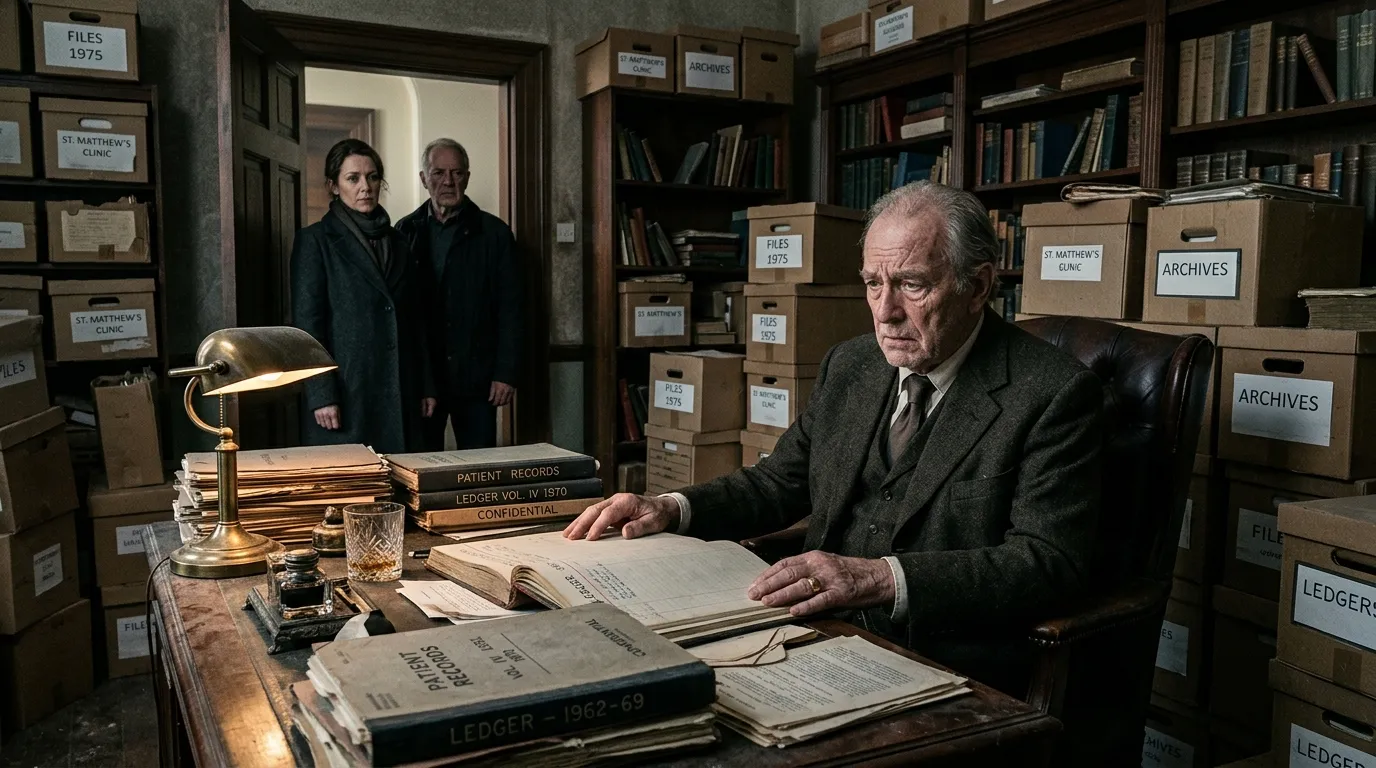
The sins of the father were documented in ink, destroying generations of trust.
He handed me a final, sealed envelope. Inside was a letter from Margaret Shaw, the nurse who had tried to expose the third baby’s disappearance. The letter held the ultimate, devastating twist.
“You were not born Susan Miller. You were born at St. Matthew’s too. And Daniel Carter helped arrange your adoption.”
I stared at my father. He wept, admitting he and Elaine had adopted me. My biological mother was Margaret Shaw. And my biological father? Dr. Harold Mercer.
The cruelty of the universe was staggering. The man who had falsified my daughter’s death was my own father. Margaret Shaw had been murdered in a staged accident because she tried to protect her own grandchild. Our entire family tree was a crime scene built on shame, fear, and secrecy.
I looked at my daughters, my husband, the men who had lied to me out of a twisted sense of protection. “No more,” I said, my voice finally steady. “We go public.”
The Open Door
The fallout was explosive. Federal investigators froze accounts, arrested former administrators, and subpoenaed decades of sealed records. Mercer accepted his prison sentence. Daniel handed over all his evidence. The network collapsed.
Margaret Shaw had left behind a massive trust fund, managed by Lily, Emily, and Hannah. They used it to create The Open Door Foundation, an organization dedicated to helping families separated by medical fraud reunite safely—putting the power of choice back into the hands of those who had it stolen.
Years passed, and life slowly morphed into something beautifully ordinary. Carl and I didn’t rush back into marriage. We started over—coffee dates, honest conversations, and learning how to love without the weight of secrets. When he finally offered me a ring again, he didn’t ask for forever. He just asked for tomorrow. And I said yes.
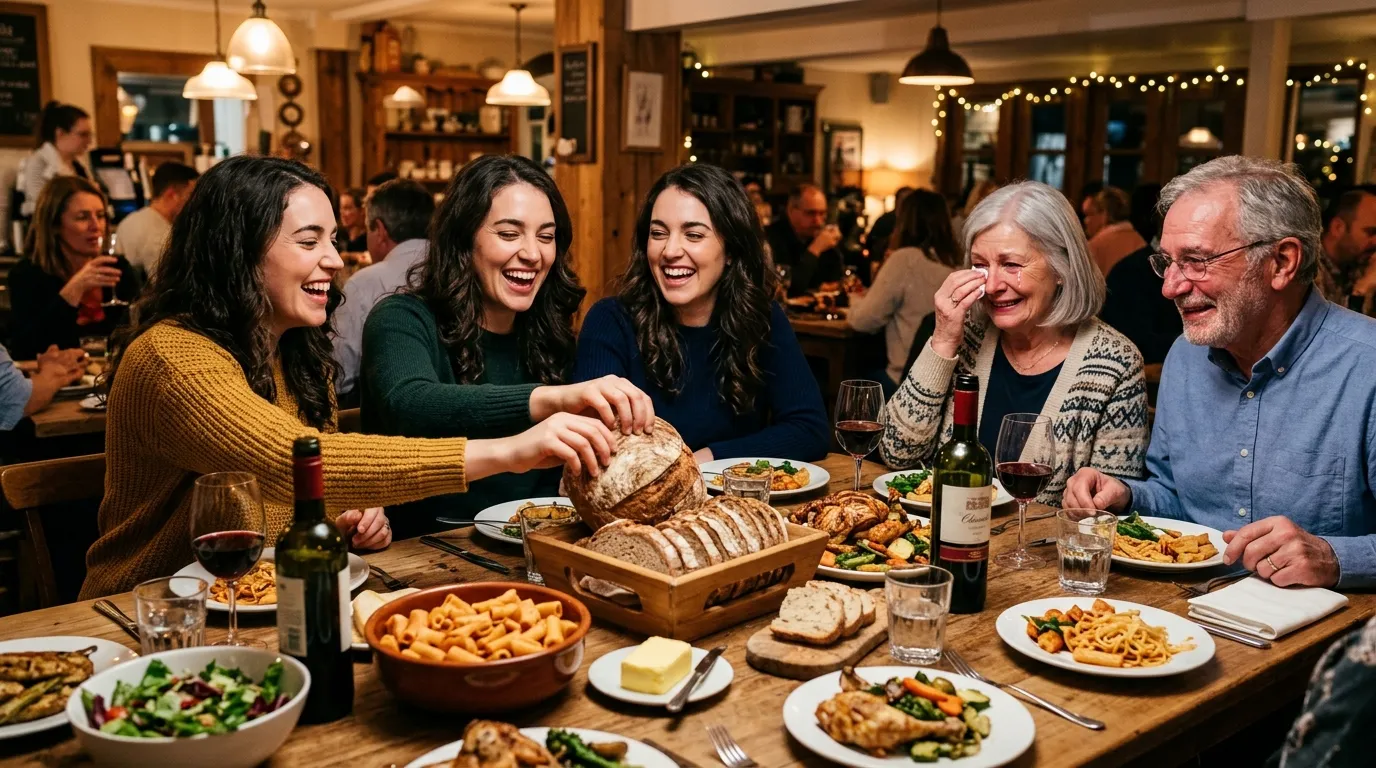
Family isn’t just blood. It’s the people who choose to stay at the table.
Five years after the truth broke, my house was loud. Lily, Emily, and Hannah were arguing over burned, heart-shaped pancakes. Dad and Daniel were bickering about baseball in the living room. Elaine was complaining about Hannah’s palate. Carl was pouring coffee, his hand gently brushing mine.
For decades, my family had been defined by departures. Everyone was always leaving someone. But tonight, nobody left. They stayed.
I looked around the table, realizing that family isn’t the story people tell about you, nor is it just a birth certificate. Family is the people who, once they finally know the absolute, devastating truth, still pull up a chair and choose to sit beside you.
The happiest sound in the world isn’t silence. It’s the sound of a table becoming too crowded. And this time, nobody was missing.
Note:This work is inspired by real events and people, but it has been fictionalized for creative purposes. Names, characters, and details have been changed to protect privacy and enhance the narrative. Any resemblance to actual persons, living or dead, or actual events is purely coincidental and not intended by the author.
All images used in this article are AI-generated and intended for illustrative purposes only.
0 Comments