
The Thanksgiving Note That Set Me Free at Seventy-Three
On Thanksgiving morning, the house in Scottsdale was so profoundly silent that I could actually hear the refrigerator humming in the kitchen. My son, Daniel, had flown his wife and two children to Hawaii for a luxury vacation, leaving his seventy-three-year-old mother behind with frozen soup and a hastily scribbled note on the refrigerator door.
“At your age, it’s probably better for you to stay home and rest,” the note read.
I didn’t cry. I didn’t pick up the phone to call him. Instead, by eight o’clock the very next morning, a heavy moving truck was backing into the driveway of the house I had helped pay for.
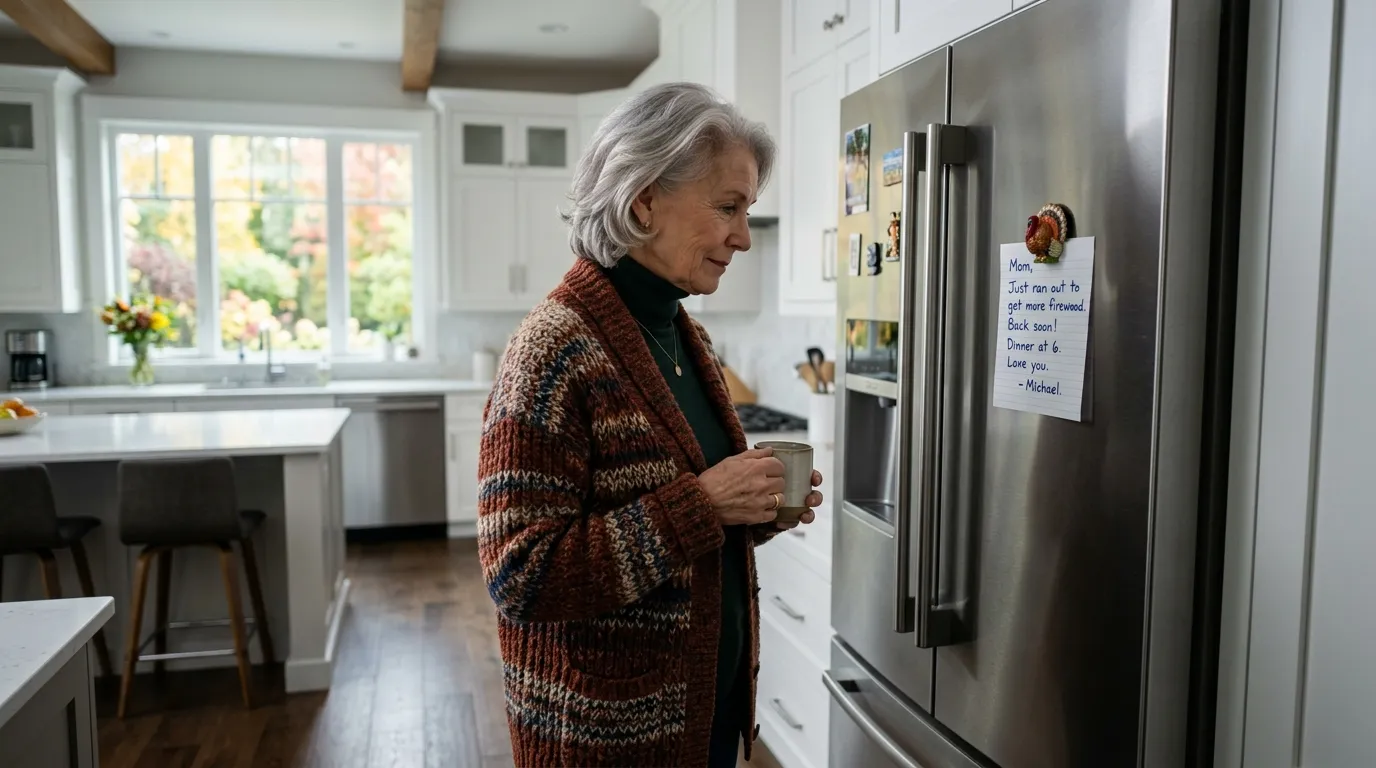
The note that broke my heart, and ultimately set me free.
Thanksgiving mornings were usually a symphony of chaos and warmth. They traditionally smelled like sharp cinnamon, freshly brewed coffee, and melted butter, accompanied by the thundering footsteps of my grandchildren, Emily and Jack, running through the hallway. But that morning, there was absolutely nothing. The air was still and cold.
“Emily?” I called out, my voice echoing slightly off the high ceilings.
Silence.
“Jack?”
A knot began to form in my stomach as I made my way upstairs. I pushed open the door to the kids’ rooms. Their beds were neatly made, perfectly tucked in, but their everyday backpacks and brightly colored jackets were notably absent. Frowning, I walked down the hall and checked Daniel and Rebecca’s master bedroom. Their large suitcases were missing from the corner. Panic edging into confusion, I hurried downstairs to the garage. I discovered the family SUV was gone. So was Rebecca’s sedan.
That was when I walked back into the kitchen and finally noticed the piece of paper pinned beneath a little turkey magnet on the fridge.
“We decided to spend Thanksgiving in Hawaii this year. We didn’t tell you because we knew you’d insist on coming. The flight is long, and you get tired so easily now. We’ll be back in a week. There’s soup in the freezer.”
I stared at the words until they blurred. My hands didn’t shake. Somehow, the total lack of physical reaction made the emotional blow hurt even more. I was seventy-three, not helpless. I was vibrant, capable, and alive. My son didn’t get to unilaterally decide whether I could board an airplane, navigate a bustling airport, or sit beside the ocean watching my grandchildren build sandcastles.
Four years earlier, after my beloved husband Arthur passed away, the grief had nearly consumed me. Daniel had begged me to move in with them.
“Mom, I don’t want you living alone,” he had pleaded, his eyes full of genuine concern. “The kids need their grandmother.”
Wanting to feel needed, wanting to feel the warmth of family again, I sold my beautiful apartment in Oak Park, Illinois, packed up my life, and moved across the country to Arizona. I generously helped with the hefty down payment on their new house. Once we moved in, I paid for the new refrigerator, the plush sofas, the solid wood dining set, the washer, the dryer, the curtains, the massive television, the patio furniture, and the incredibly expensive Italian coffee maker that Rebecca absolutely loved showing off to her friends.
At first, they called me a blessing. They told everyone how lucky they were.
But eventually, slowly and insidiously, I became free childcare attached to a convenient bank account.
If I mentioned wanting to have lunch with a friend, Rebecca would casually ask who was going to pick up the children from school. If my back ached from standing on the tile floor, Daniel would sigh and gently remind me that cooking dinner “wasn’t really that much work.”
Then, six months earlier, the illusion shattered entirely. I had been walking toward the patio with a tray of iced tea when I overheard Rebecca talking to her friend Claire.
“We can’t ask her to leave. She watches the kids, buys groceries, and pays for things. It’s not really her we need. It’s her money.”
I had backed away quietly, my heart pounding in my ears. I carried those devastating words silently in my chest ever since, making endless excuses for them. But standing alone in that cavernous kitchen on Thanksgiving morning, I finally stopped making excuses.
I calmly poured myself a cup of coffee and sat down at the heavy oak dining table that I had paid for. Then, moving with purpose, I walked upstairs and pulled a thick blue folder from the bottom drawer of my nightstand. Every single receipt was still perfectly filed inside.
Arthur used to playfully tease me about my obsessive habit of saving receipts. “Maggie, you’d keep the receipt for a loaf of bread if they let you,” he’d laugh.
For the first time that cold morning, a genuine smile touched my lips.
“Thank you, old man,” I whispered to the empty room.
I opened a blank notebook, clicked my pen, and wrote at the top of the page:
Things That Belong to Me.
Refrigerator. Washer. Dryer. Television. Dining table. Sofas. Guest beds. Curtains. Lamps. Dinnerware. Patio furniture. Coffee maker.
With every item I meticulously wrote down, my breathing became easier. The invisible weight pressing on my chest began to lift. I picked up my phone and called a local moving company.
“Ma’am, it’s Thanksgiving weekend,” the dispatcher warned, his voice heavy with fatigue. “There’ll be a significant extra charge.”
“That’s perfectly fine,” I replied without hesitation.
“When do you need us?”
I looked over the balcony railing, my eyes finding the note still clinging to the refrigerator below. “Tomorrow. Eight in the morning.”
That night, I methodically packed my clothes into two large suitcases. I gathered all my important documents, wrapped Arthur’s framed photograph carefully in a thick towel, and placed the blue folder securely inside my leather handbag. Before finally heading upstairs to sleep, I returned to the kitchen.
I left Rebecca’s note exactly where it was. But across the top, in bold black ink, I wrote:
Thank you for showing me who my real family truly is.
Then I turned off the kitchen light. When Daniel returned from his tropical vacation, he wouldn’t be coming home to the same house. And he certainly wouldn’t find the same compliant mother waiting patiently for him.
There was soup in the freezer. The lingering guilt I felt disappeared. Perhaps not completely, but enough to let me sleep.
The Great Unpacking
The next morning, a burly man climbed out of the rumbling moving truck and walked toward me, carrying a battered clipboard.
“Margaret Sullivan?” he asked.
“That’s me.”
“I’m Luis.” He paused, glancing skeptically at the large, sprawling two-story house behind me. “Where exactly are we going?”
I handed him a crisp sheet of paper. It listed the address of a nicely furnished, short-term apartment in Old Town Scottsdale. I had rented it online the previous afternoon for a period of one month. One month. That was all the future I had been mentally prepared to decide upon right now.

Taking back what belonged to me, one piece of furniture at a time.
Luis studied the detailed list of furniture I had written out. “You’ve marked very specific items?”
“I have the receipts for all of them,” I stated firmly.
He smiled politely, a glint of amusement in his eyes. “Then you’re a lot more organized than most people we move, Mrs. Sullivan.”
“My late husband used to say organization was my absolute favorite form of entertainment.”
Luis laughed out loud. For the first time in twenty-four hours, the warm sound of another person laughing near me felt strangely, deeply comforting.
I walked him slowly through the house, pointing out my belongings. “The blue sofa in the living room. Both of those armchairs. The massive television in the family room. The dining table and all six chairs.”
Luis paused and glanced toward the kitchen. “The refrigerator?”
I hesitated. It was absolutely mine. I had paid nearly four thousand dollars for it because Rebecca had insisted she needed the specific model with two freezer drawers and a smart interior water dispenser. But there were groceries inside. Food for the children when they came home tired and hungry.
“Leave it,” I commanded softly.
Luis looked down at my list. “You have it marked right here.”
“I changed my mind.”
The washer and dryer stayed too. So did the guest beds upstairs. I realized, as we walked from room to quiet room, that ownership and belonging were not always the exact same thing. Yes, I had paid for those beds. But little Emily had slept in the guest room during terrifying thunderstorms, seeking comfort. Jack sometimes sprawled across one on lazy Sunday afternoons, endlessly reading his comic books. Taking absolutely everything simply because I had the legal right to do so would not make me feel freer. It would only make the house feel emptier for the children.
In the end, I took the heavy wooden furniture from my bedroom, the beautiful antique sideboard that had belonged to Arthur’s mother, two elegant lamps, my writing desk, one plush sofa, one armchair, a small television, several heavy boxes of kitchenware I had originally brought from Illinois, my grandmother’s delicate china dishes, and the expensive Italian coffee maker.
I stood in front of that gleaming espresso machine longer than I probably should have. Then I slapped a bright red moving sticker directly on it.
Luis raised an eyebrow. “That one matters?”
“More than it should,” I nodded.
By ten thirty in the morning, the heavy truck was full. The sprawling house looked remarkably different, but not entirely stripped bare. There were noticeable empty spaces. That was all. Just spaces where my life used to be.
I walked through each room one final time. Daniel’s framed family photograph remained proudly on the mantel. The children’s smiling school pictures stayed securely on the staircase wall. Rebecca’s pristine cookbooks sat neatly lined up beside the stove. Nothing had been purposefully damaged. Nothing had been childishly hidden. Nothing had been done in a fit of rage.
I placed my shiny brass house key on the smooth dining counter, right beside Rebecca’s flippant note. Underneath it, I left another carefully written page.
Daniel,
I am perfectly safe. I have moved into a temporary apartment and will contact you after you return from your trip. I have taken only property that belongs to me and I have left receipts for everything removed. I love you and the children very much. But I will no longer live in a home where major decisions about my life are made without me. We will talk when you are home.
Mom
I read the words three times to ensure my tone was right. Then I picked up my pen and added one final, crucial sentence:
Please do not tell the children I left because of them. I did not.
That mattered to me more than anything else in the world.
I locked the heavy front door from the inside, walked out through the garage, pressed the humming button, and stepped out beneath the lowering door. Four years of my life slowly disappeared behind those beige metal panels.
Finding My Footing
I followed the lumbering moving truck in a compact rental car. Halfway to the new apartment, my cell phone rang sharply. For one wild, panic-stricken moment, I thought Daniel had somehow discovered what I was doing from a continent away. But the glowing screen showed a different name. Linda Herrera.
I nearly laughed in relief. Linda had been my absolute closest friend since I first moved to Arizona. We met at a chaotic community art class where it quickly became apparent that neither of us possessed any artistic talent whatsoever.
I answered on the speakerphone. “Happy day after Thanksgiving.”
“That completely depends,” Linda’s dry voice crackled. “Did you survive yesterday dealing with Rebecca’s infamous sweet potatoes?”
“There were no sweet potatoes, Linda.”
“What happened?” Her tone shifted instantly.
I drove silently, watching the desert landscape roll by for several seconds. Then I told her. Not absolutely everything. Just enough to paint the picture.
When I finally finished speaking, Linda said nothing at all. That was one of the many reasons I loved her so much. She understood that silence could be vastly more respectful than offering instant, unearned advice. Finally, she asked softly, “Where are you right now?”
“Following a moving truck down the highway.”
“A moving truck?”
“I moved out, Linda.”
Another long pause. “Maggie.”
“Yes?”
“Where exactly are you sleeping tonight?”
“I rented an apartment in Old Town.”
“Do you want some company?”
I looked ahead through the windshield at the large truck carrying the remaining pieces of my old life toward a destination I had never actually seen in person. “Yes,” I breathed out. “I think I really do.”
The short-term apartment was noticeably smaller than it had looked in the online listing. Of course it was. Real estate photographs share the exact same relationship with reality that boastful family Christmas letters do—everything appears brighter, wider, and endlessly happier. Still, the cozy place had large, inviting windows, a small private balcony, and a lovely view of swaying palm trees across a sun-drenched courtyard.
Luis and his hardworking crew carried in my heavy furniture while I stood in the center of the room and directed traffic. The blue armchair went perfectly near the large window. Arthur’s mother’s heavy sideboard fit beautifully against the blank dining wall. My writing desk went into the sunny second bedroom. And the Italian coffee maker occupied the absolute most important position of honor on the kitchen counter.
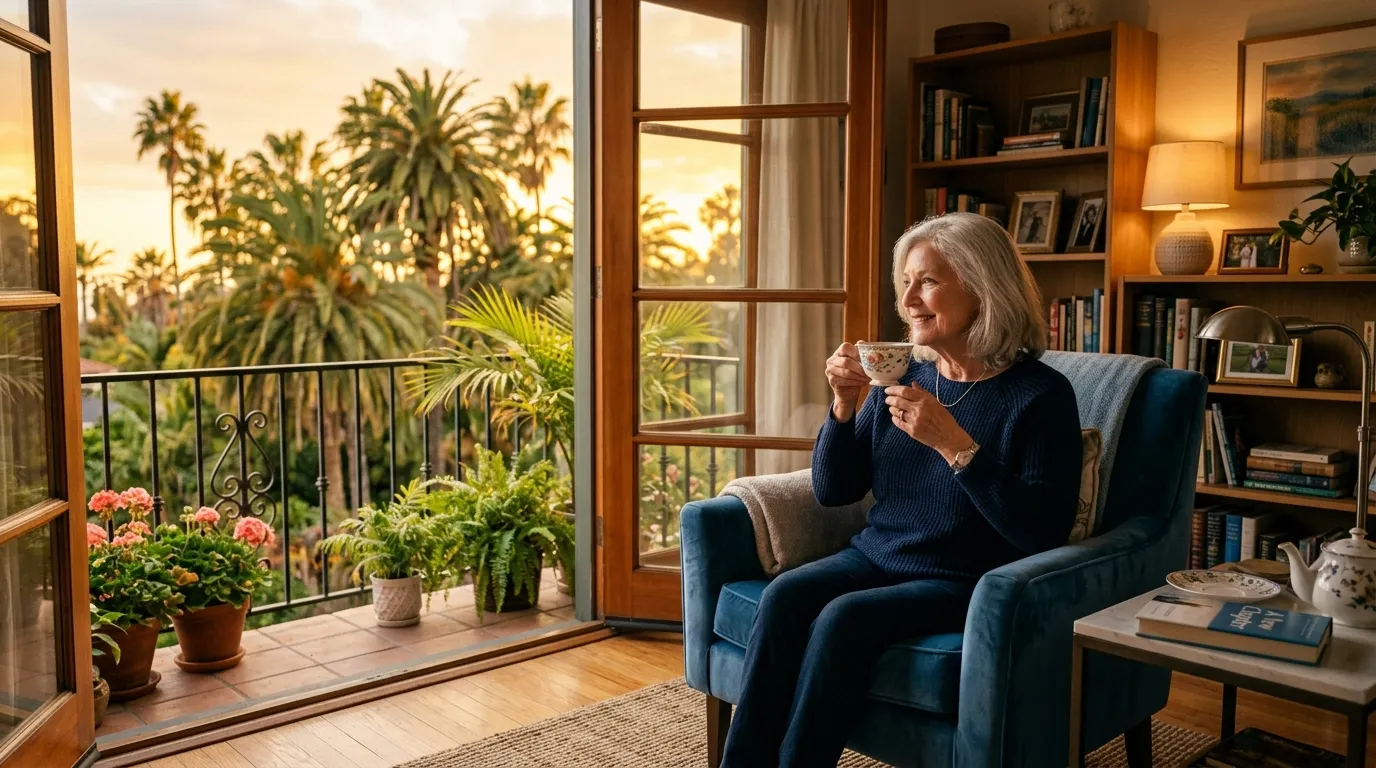
For the first time in years, the silence didn’t feel lonely. It felt like peace.
Linda arrived exactly at noon carrying a bag of fresh deli sandwiches, two enormous iced teas, and a vibrant purple orchid.
“What on earth is that for?” I asked, gesturing to the plant.
“Civilized people bring living plants when someone they love starts a brand new chapter,” she stated matter-of-factly.
“I’m only renting this place for thirty days.”
“Then it’s a very short chapter, but a chapter nonetheless.” She walked purposefully into the living room, placed her hands on her hips, and surveyed the towering stacks of cardboard boxes. “So.”
“So.”
“Are you absolutely terrified?”
“Yes.”
“Do you regret it?”
I genuinely considered the heavy question for a moment. “No.”
Linda nodded approvingly. “Good. Then sit down and eat your turkey sandwich.”
That afternoon we unpacked endless boxes of dishes while I finally told her the full, unvarnished story. I told her about the surprise Hawaii trip. I told her about the condescending note left on the fridge. And finally, my voice trembling slightly, I told her exactly what I had heard Rebecca say on the patio six long months earlier.
It’s not really her we need. It’s her money.
Linda froze, stopping mid-motion while unwrapping a delicate wine glass. “You never told me that part, Maggie.”
“I was deeply embarrassed.”
“Why on earth would you be embarrassed?”
“Because I had spent the last three years telling everyone I knew how absolutely wonderful it was living with my loving family.”
“It can have been genuinely wonderful in the beginning and still evolve into something else entirely,” Linda said softly.
I sat down heavily on one of the dining chairs. That simple, profound sentence settled somewhere deep inside my chest. For months I had been actively rewriting my own precious memories, tainting them with my current pain. If Rebecca was behaving ungratefully now, my mind argued that perhaps she had always been secretly ungrateful. If Daniel was ignoring my feelings now, perhaps he had never loved me properly at all.
But that simply wasn’t the truth.
When Arthur had died, Daniel had dropped everything and flown to Chicago the very same night. He had slept in an uncomfortable chair right beside my bed for days because I had been terrified of waking up alone in the dark. He had efficiently handled all the complicated funeral arrangements when I was so consumed by grief I could barely remember my own telephone number. Rebecca had lovingly packed up my entire Illinois kitchen when I finally moved. The grandchildren had spent hours meticulously taping a handmade sign above my new Arizona bedroom door that read: WELCOME HOME GRANDMA.
Those beautiful, loving things had happened too. They were real.
Maybe the most painful truth in the world was that love could be entirely genuine and yet still slowly become careless over time.
That night, long after Linda left, I sat completely alone out on the small balcony. The vibrant city below glowed in warm, inviting pools of golden light. Faint, rhythmic music drifted up from an outdoor restaurant down the street. Somewhere in the courtyard below, someone let out a joyful laugh. I had fully expected to feel crushing loneliness.
Instead, I just felt tired. Wonderfully, peacefully, deeply tired.
There were no school lunches to carefully pack for tomorrow. No endless piles of laundry waiting to be sorted. No one asking me what I was planning to cook for dinner.
At ten fifteen, I made a soothing cup of chamomile tea and opened my laptop. There was a single email sitting in my inbox from Daniel. The subject line practically shouted at me in all caps: YOU’RE NOT ANSWERING.
My heart gave a sudden, painful jump. I took a breath and clicked it open.
Mom,
We’ve called your cell several times. I just wanted to make absolutely sure you were okay. I know you’re probably angry about the trip, but please don’t turn this into something bigger than it actually is. The kids are having a truly great time. We’ll talk when we get back home.
Love,
Daniel
I stared hard at the second paragraph. Please don’t turn this into something bigger than it actually is.
For four years, I had quietly used almost that exact same sentence on myself to keep the peace. Don’t make trouble, Maggie. Don’t take their thoughtlessness personally. They’re just so busy. All families have to make compromises.
I calmly closed the laptop lid. I did not reply.
The True Cost of Independence
The very next morning, I woke at six o’clock out of pure, ingrained habit. My body lay still, waiting for the familiar thud of Jack’s footsteps overhead. There were none. I waited for the distinct squeak of a bedroom door opening down the hall. Nothing but silence.
Then I finally remembered. I was totally alone. And for the very first time in several decades, I could actively choose exactly what happened next in my day.
I put on a light sweater and walked out to a bustling café three blocks away. I ate my eggs peacefully outside beneath a brightly striped umbrella, watching people walk their dogs. After a slow, indulgent breakfast, I wandered through an open-air art market and bought a wonderfully ridiculous, bright turquoise scarf that Arthur would have absolutely hated.
At eleven, Linda called me.
“Are you incredibly busy?” she asked.
“I’m currently buying things I don’t actually need.”
“Excellent news. You’re recovering beautifully.”
We met for a long lunch. Afterward, she insisted on driving me to a manicured neighborhood in north Scottsdale that I had passed hundreds of times but never actually entered.
A low, elegant stone sign near the entrance read: SAGUARO RIDGE — ACTIVE ADULT COMMUNITY.
I frowned, narrowing my eyes at her. “What exactly are we doing here, Linda?”
“We are looking.”
“At what?”
“Options.”
“I don’t need to be gently put somewhere.”
Linda stopped the car and looked at me, her voice incredibly gentle. “Maggie, no one is putting you anywhere. That is precisely the point.”
We quietly toured a stunning two-bedroom townhouse with crisp white walls, a beautifully shaded private patio, and a cozy small den. The enthusiastic real estate agent talked endlessly about the community walking clubs, the active book groups, morning yoga, woodworking shops, organized day trips, and the sprawling community garden.
I barely listened to her pitch. I was completely captivated, looking at the kitchen.
Not because it was massively impressive or featured state-of-the-art appliances. Because it was entirely mine to imagine. I pictured my favorite coffee cup sitting peacefully by that sunlit window. I imagined Arthur’s framed photograph resting proudly on that floating shelf. I could see myself making a simple dinner for one if I wanted it. Or an elaborate dinner for twelve if I chose to invite people over. No one would ever need permission from anyone else in this space.
“So, what do you think?” the agent finally asked, breaking my reverie.
“I think I’m not quite ready,” I answered honestly.
“Of course,” she smiled, handing me a glossy brochure. “Please, keep it anyway.”
I tucked it carefully into my leather handbag.
Two days later, Daniel called again. This time, I finally pressed answer.
“Mom.” His immense relief was immediate and palpable through the speaker. “Where on earth have you been? We were all so worried.”
“I’m perfectly fine, Daniel.”
“Did you get my email?”
“I did.”
A heavy pause settled over the line. “Are you angry?”
“I’m thinking.”
“About Thanksgiving?”
“No, Daniel. About the last four years.”
Silence came rushing through the phone. In the far background, I could hear the faint sound of my grandchildren laughing and ocean waves breaking against the shore. It sounded like a different world.
“Mom, Hawaii was really Rebecca’s idea. We found a great last-minute package deal online and—”
“You do not need to immediately blame your wife,” I interrupted.
“I’m not blaming her.”
“Yes, you actually are.”
Another tense pause. Then Daniel lowered his voice to a hushed tone. “Mom, we honestly, truly thought the long flight would be too hard on you.”
“Did you ever actually ask me?”
“No.”
“Did you even think about asking me?”
He didn’t have an answer for that. I looked around my quiet apartment. My cardboard boxes were still neatly stacked against the living room wall. “Daniel, the core problem isn’t Hawaii.”
“Then what is the problem?”
“You completely stopped seeing me as a vibrant person who makes her own choices.”
“That’s really not fair, Mom.”
“It may not feel fair to you right now.”
“You live with us because we deeply care about you.”
“No, I moved in because you explicitly asked me to.”
“We all agreed it made total sense at the time.”
“It did make sense. Then.”
His voice became noticeably more strained, a frantic edge creeping in. “Why are you talking right now like you’re actually leaving?”
I took a deep, steadying breath. “Because I already did, Daniel.”
For several agonizing seconds, I heard absolutely nothing but the faint sound of the Hawaiian breeze over the line. Then: “What?”
“I moved out on Friday morning.”
“Moved where?!”
“Into a temporary apartment in Scottsdale.”
“You moved out of our house while we were thousands of miles away?!”
“Yes.”
“Mom, you can’t just—” He stopped himself abruptly, swallowing his anger.
I waited patiently.
When he spoke again, his voice was significantly quieter, almost fearful. “What exactly did you take from the house?”
“Only things that legally belong to me.”
“What does that mean?”
“The blue living room sofa. My complete bedroom furniture. The antique sideboard. My grandmother’s dishes. Some other personal things.”
“…The coffee maker?”
Despite the heaviness of the moment, I couldn’t help but smile. “Yes, Daniel. The coffee maker.”
“Oh, for God’s sake, Mom.”
“It was mine.”
“You gave it to Rebecca as a gift!”
“No, I bought it for the household to use.”
“That’s basically the exact same thing.”
“No, Daniel. The fact that you think it is explains vastly more than you realize.”
He exhaled loudly into the receiver. “Can we please just talk about all of this when we get home on Sunday?”
“Yes, we can.”
“Will you come back to the house?”
“To talk? Yes.”
“No, Mom. To live.”
“I honestly don’t know.”
That genuine uncertainty terrified him. I could hear the panic rattling in his chest. And I fully understood why. My abrupt leaving did not simply create an emotional, interpersonal problem for them. It created massive practical ones.
Who would cheerfully pick up Jack on Tuesday afternoons? Who would stay home with Emily when the school unexpectedly closed for a teacher workday? Who would willingly cook elaborate dinners three nights a week? Who would restock the groceries when Rebecca forgot to go to the store? Who would sit endlessly with the children so Daniel and Rebecca could enjoy a quiet dinner alone?
I wondered, with a sharp pang in my heart, whether my son was actively mourning losing his mother, or simply mourning losing the easy life his mother had provided for him. Perhaps it was a messy combination of both. That was the hardest possibility of all to swallow. People are rarely ever only one simple thing.
“Mom?”
“Yes?”
“There’s… something else we really need to talk about when I get home.”
“What is it?”
“The house.”
My fingers tightened instinctively around the phone. “What about the house?”
“Just… the money you gave us when we first bought it.”
“What about the money, Daniel?”
He hesitated, the silence stretching uncomfortably. “Rebecca and I just… we don’t remember it the exact same way you do.”
My stomach instantly turned to ice. “How exactly do you think I remember it?”
“As a formal loan.”
“It was a formal loan, Daniel.”
Daniel was terrifyingly quiet. “Rebecca always thought it was a gift.”
I closed my eyes tightly, feeling slightly dizzy. Eighty-five thousand dollars. That was the exact amount I had wired over after selling my beloved Oak Park apartment. Daniel had looked me in the eye and said they would repay me when their finances improved. At least, that was exactly what I clearly remembered.
“Daniel, you specifically told me—”
“Mom, I know what I said.”
“Then what exactly are we discussing right now?”
“There was official paperwork.”
“What paperwork?”
“I really don’t want to do this over the phone while I’m here.”
The bright apartment suddenly felt far too quiet and claustrophobic. “Daniel.”
“We’ll sort it out and talk on Sunday, Mom.”
“Were there legal documents I signed?”
“Yes.”
I stood up, pacing the small living room. “What did the documents say?”
“I need to find them and look at them.”
He sounded genuinely, deeply uncertain now. That frightened me significantly more than his defensiveness would have. After we finally hung up, I sat heavily at my desk and frantically tore open the blue folder. Receipts. Endless bank statements. Old furniture invoices. Moving documents. But there was absolutely nothing inside concerning the eighty-five thousand dollars.
I clearly remembered the bank transfer. I vividly remembered Daniel sitting across from me at the old apartment in Chicago. I remembered Arthur’s sharp-minded accountant, a pragmatic man named Peter Cohen, sternly telling me not to ever mix family and money without putting things clearly in writing.
Had I actually listened to him?
At seventy-three years old, there is a very particular, terrifying kind of panic that sets in when you cannot immediately find a crucial document you vividly remember existing. You question the paper. Then you frantically question the drawer. Then, eventually, you begin to question your own aging mind.
I spent three exhausting hours tearing the apartment apart, searching. Nothing.
Finally, desperate, I called Peter. He had happily retired two years earlier, but I still had his personal number saved in my contacts.
“Maggie Sullivan,” he boomed warmly when he answered the call. “Well, there’s a lovely voice I haven’t heard lately.”
“Peter, do you happen to remember when I moved to Arizona?”
“Of course I do.”
“Do you remember the large sum of money I gave Daniel for their house?”
Silence. Then his jovial tone shifted into something entirely professional. “Yes, Maggie.”
“Was it a gift?”
“No.”
Relief washed through my veins so quickly I nearly sobbed out a laugh. “You’re absolutely certain?”
“I’m a retired accountant, Maggie. Absolute certainty is the only remotely interesting thing about me.”
I sat down, my knees weak. “Do you happen to have anything in writing to prove it?”
“I might.”
“Might?”
“I closed the physical office. Most of my client records were digitized and archived.”
My pulse began pounding loudly in my ears again. “Peter, Daniel just told me on the phone that there was paperwork, and they think it was a gift.”
“There was definitely paperwork.”
“What kind of paperwork?”
“I don’t want to answer definitively from memory. Let me look.”
I stared blankly out the window at the palm trees moving softly in the evening wind, my heart racing. “When can you check?”
“Right now.” I heard a heavy chair scrape across a wooden floor. Then the sound of footsteps. A door opening. The jingle of keys. Peter had always been exactly like that. If a pressing question could be answered, he saw absolutely no logical reason to leave it unanswered.
He returned to the phone several minutes later, his breathing slightly heavier. “I have the digital file pulled up.”
My mouth went bone dry. “And?”
“It’s interesting.”
I almost laughed aloud from sheer raw nerves. “Peter, at my age, the word ‘interesting’ from a financial professional is not a reassuring word.”
“Your eighty-five thousand dollars was explicitly documented as a family loan, Maggie.”
I squeezed my eyes shut. “Thank God.”
“But there’s a bit more to it.”
I snapped my eyes open. “What?”
“You didn’t loan the money only to Daniel.”
“What exactly do you mean by that?”
“The legal agreement lists both Daniel and Rebecca jointly responsible.”
“Well, that makes perfect sense. They bought the house together.”
“Yes. But there’s a specific addendum attached to the back.”
I frowned, confused. “What addendum?”
“You signed it three months after the initial transfer.”
“I honestly don’t remember doing that.”
“I can email it to you right now.”
“Just tell me what it says, Peter.”
Peter took a heavy breath. “It explicitly changes when the repayment is due.”
My hand tightened painfully around the phone case. “To when?”
“When the property is sold, refinanced…” He paused, his voice softening. “Or when you officially cease using the residence as your primary home.”
For several long seconds, the legal words made absolutely no sense in my brain. Then they finally clicked.
“When I move out,” I whispered into the receiver.
Peter was deadly quiet. “Yes, Maggie.”
My chest tightened violently. Not with a sense of triumph or vindication. But with sheer, cold dread. Daniel and Rebecca had a massive mortgage. They had growing school expenses. Two car payments. A comfortable life they had built entirely around the foundational assumption that I would remain living inside that house forever.
“Send me absolutely everything,” I managed to say.
“I will.”
“And Peter?”
“Yes?”
“Do not, under any circumstances, contact Daniel.”
“I wouldn’t dream of it without your explicit permission, Maggie.”
After we hung up, I remained frozen at the desk. Five minutes later, the dreaded documents arrived in my email. I clicked them open. There, glaring back at me, was my signature. There was Daniel’s messy scrawl. There was Rebecca’s neat cursive. And right beneath the typed addendum was something I had completely, totally forgotten.
A handwritten sentence jotted beside Rebecca’s initials:
Loan repayment will protect Maggie’s future housing needs if she ever chooses to live independently again.
I read it twice. Rebecca had initialed it. Daniel had initialed it. So had I. They had known. At least at one point four years ago, they had fully known and acknowledged it. The question was not whether the legal loan existed. The devastating question was how all three of us had managed to live for four years as though my independence never would.
I closed the digital document and stared blankly into the darkening room. Daniel had said we needed to talk about the house. Now I finally knew exactly why.
But one agonizing question remained unresolved in my heart: If Rebecca had once actively signed a promise meant to fiercely protect my independence, when exactly had she started believing my independence no longer mattered?
The Confrontation
Daniel’s tanned family returned to Arizona on Sunday afternoon. I knew because sweet Emily called me excitedly from the airport terminal.
“Grandma!” Her bright voice filled my quiet apartment before I had any time to prepare myself emotionally.
“Hello, sweetheart.”
“We brought you something from the island!”
“Well, that was incredibly kind of you.”
“It’s not food, because Daddy said airport food costs way too much money and Mommy said not everything in Hawaii counts as airport food anyway.”
In the background, I heard Rebecca’s tired voice scold softly, “Emily.”
I smiled despite myself, the heavy tension breaking slightly. “What did you bring me, honey?”
“It’s a big surprise.”
“Then you definitely shouldn’t tell me.”
“I didn’t tell you!”
“You called me just to tell me you had a surprise.”
“That totally doesn’t count.”
I could hear Jack laughing in the background. Something inside me softened significantly. The children knew absolutely nothing about the turmoil waiting at home. To them, Hawaii had simply been sunny beaches, endless hotel buffets, sticky sunscreen, and a glorious week without math homework. Good. That was exactly how it should remain.
“Will you be home at the house when we get there?” Emily asked innocently.
The innocent question caught me off guard. “No, sweetheart.”
“Where are you?”
“I have my own apartment for a little while.”
Silence on the other end. “Why?”
I chose my words with intense care. “Because sometimes grown-ups realize they need to change something in their lives to be happy.”
“Did we do something bad?”
“No.” I answered so fiercely and quickly that there could be no doubt in her little mind. “You and Jack did absolutely nothing wrong. I love you both exactly the same as I did before your trip.”
“Are you still coming to my school winter concert?”
“Front row, if they let me.”
“They won’t let you. Parents have to sit in the back rows.”
“Then the absolute best row available, I promise.”
That satisfied her. After we finally hung up, I sat back on my new sofa and cried for the very first time since Thanksgiving morning. Not because Daniel had cruelly left me home. Not because of the crushing realization about the money. I cried because an innocent eight-year-old child had immediately wondered whether an adult’s departure was somehow her fault.
I had promised myself years ago I would never let that happen.
At four thirty, Daniel texted briefly.
We’re home. Can you come over at six?
I replied.
Yes.
Then, after thinking for a moment, I added:
I would prefer that we talk after the children are settled upstairs.
Agreed.
At six o’clock sharp, I drove back to the familiar suburban house. My former house. Their house. I wasn’t entirely sure what to even call it anymore. Jack enthusiastically opened the front door before I even rang the bell.
“Grandma!” He was eleven now and had recently begun believing himself far too old for enthusiastic public affection, but he entirely forgot his own rule and hugged me tightly. Emily appeared right behind him holding a crumpled paper bag.
“This is all yours,” she beamed.
Inside the bag was a small, beautifully carved wooden sea turtle painted ocean blue and vibrant green. “I picked it out myself,” she declared proudly.
“It’s absolutely beautiful, Emily.”
“You can put it in your new apartment.”
Rebecca stood awkwardly several feet away in the foyer. She looked exhausted from the long flight, her skin glowing with a fresh tan but her eyes shadowed. “Hi, Maggie.”
“Hello, Rebecca.”
There was no burning anger. There was no warm embrace. Just two women standing cautiously inside a beautiful home they had once built together in very different ways.
Daniel came walking down the hallway, rubbing his neck. “Kids, go upstairs and unpack your bags. Grandma and I are going to talk later.”
When the children were finally gone, the three of us stood in heavy silence. The stark absence of my furniture was highly noticeable, though not entirely dramatic. The blue sofa was gone, leaving a bright, unfaded rectangle of lighter carpet behind. My beautiful sideboard had left an empty, echoing wall. The Italian coffee maker was gone from the counter.
Rebecca looked sadly toward its former place. “I bought a cheap new one at the store this morning.” Her tone wasn’t sarcastic or angry. Just factual.
“I’m glad,” I said quietly.
Daniel gestured tiredly toward the dining table. “Can we sit down?”
We did. For four years, I had lovingly served meals at that exact table. Giant birthday cakes. Elaborate Thanksgiving turkeys. Messy Tuesday spaghetti nights. Lazy Sunday pancakes. Now, a stark manila folder sat between us. Daniel had brought his printed copy. I had brought mine.
He looked grimly at the pages. “So Peter had them all along.”
“Yes.”
“You called him.”
“Yes, Daniel. I did.”
Daniel nodded slowly, accepting defeat. “I tore apart the office and found our copy after we got back today.”
Rebecca folded her hands tightly in her lap. “I had entirely forgotten about the addendum.”
“So had I,” I admitted truthfully.
Her tired eyes lifted, meeting mine. That seemed to genuinely surprise her. “You did?”
“I remembered the core loan. I honestly didn’t remember that it became immediately due the moment I moved out.”
Daniel leaned back in his chair, running a hand through his hair. “Mom, this creates a massive problem for us.”
“I understand.”
“Eighty-five thousand dollars is not something we can just magically produce next week.”
“I am not asking you to, Daniel.”
Rebecca looked at me carefully, assessing the situation. “But legally… you could.”
“Peter says the legal agreement allows ninety days.”
Daniel gave a short, humorless laugh. “That doesn’t make it much easier to swallow.”
“No, it doesn’t.”
He rubbed his temples in frustration. “Why didn’t you just tell us this before you suddenly moved out?”
“Because I truly didn’t remember the clause.”
“And if you had remembered?”
I considered the question carefully, refusing to lie. “I still would have moved out.”
His face tightened defensively. “But you might have at least warned us.”
“Yes. That is true.” He looked taken aback by my honest answer. I had absolutely no interest in pretending I had behaved perfectly gracefully simply because I had been deeply hurt first. “I should have sat down and told you I was leaving before I ever hired the movers,” I admitted calmly. “I made that rash decision while I was blindingly angry.”
“You didn’t seem angry on the phone.”
“I was.”
Rebecca looked down at the folder. “You were hurt.”
“Yes, Rebecca. I was deeply hurt.”
She nodded slowly, absorbing the weight of my words. For the very first time since I arrived, something profound in her expression shifted. The icy defensiveness finally faded away. “I am so incredibly sorry about the Hawaii trip.”
Daniel glanced sharply toward his wife, surprised.
Rebecca continued, her voice trembling. “Not just because you moved out. Not because of the terrifying loan. I’m sorry because we should have asked you. We should have given you the choice.”
I had vividly imagined receiving an apology many times over the previous turbulent days. In all of my fantasies, I felt immediate, washing relief. Reality was entirely different. It felt heavy.
“I appreciate that,” I said softly.
She looked crestfallen. Perhaps she had expected full forgiveness to arrive faster. Perhaps I had too. Daniel chimed in, “I’m sorry too, Mom.”
“I know.”
“No, Mom. I really mean it.”
“I believe you, Daniel.”
“Then why does it feel like you’re still furious with us?”
“Because a ten-second apology does not magically erase four years of behavior.”
He looked down, appropriately chastised. The room became thick with quiet tension. Finally, Rebecca took a shaky breath and spoke.
“You heard me, didn’t you.”
I looked at her, my heart rate spiking. “On the patio.”
For one long moment, none of us dared to move. Daniel turned to his wife, his brow furrowed in deep confusion. “What? What is she talking about?”
Rebecca’s face had gone completely pale, devoid of all her vacation color. “She heard me talking to Claire.”
Daniel looked frantically between us. “What did you say to Claire?”
Rebecca closed her eyes briefly, as if bracing for a physical blow. Then she looked directly at me. “I said that we couldn’t ask you to leave because you watched the kids, bought the groceries, and paid for things.”
Daniel stared at her in utter disbelief. “And?”
Her voice became very soft, barely above a whisper. “And I said that it wasn’t really her we needed. It was her money.”
Daniel stood up so fast his chair scraped violently against the floor. “Rebecca!”
“Sit down, Daniel,” I commanded sharply, surprising all three of us.
He looked down at me, his face red with sudden rage. “Mom, I don’t need you defending her right now.”
“I am not defending her. But I know the rest of the story now. Sit down anyway.”
Slowly, reluctantly, he did. Rebecca pressed her trembling hands tightly together on the tabletop.
“I said those terrible words,” she admitted, tears welling in her eyes.
“Yes, you did.”
“It was a terrible thing to say.”
“Yes.”
She swallowed hard. “But… there was more to the conversation, Maggie.”
I felt my entire body go still. “What more could there be?”
“I said, ‘That’s what it’s slowly starting to feel like.’”
I frowned, trying to piece it together. She continued, her voice gaining a desperate strength. “I wasn’t maliciously telling Claire that I only wanted your money. I was telling her I was terrified that was what our beautiful family had devolved into.”
I stared at her, stunned. “No.”
“Yes.”
“I heard you, Rebecca.”
“You only heard the first part of it, Maggie.”
I frantically searched my memory. The patio glass door had been open slightly. Rebecca’s voice drifting inside. We can’t ask her to leave… It’s not really her we need. It’s her money. I had walked away immediately. Stung, devastated, I had not stayed to hear a single other word.
“What exactly did you say next?” I asked, my voice barely audible.
Rebecca answered immediately, tears finally spilling over. “I told Claire that I absolutely hated that we depended on you so much. That we were taking your generosity for granted.”
Daniel’s brow tightened in fresh confusion. “You never told me any of that.”
“I tried, Daniel! I tried twice last spring!” She looked back at me imploringly. “You quietly paid for groceries even when I expressly told you not to. Then, eventually, I just got lazy and stopped telling you not to. You automatically picked up the kids because it was easier for our schedules. Then we just stopped asking if you were even available. You cooked beautiful meals because you were infinitely better at it than I am. Then somehow, without anyone noticing, dinner became your sole responsibility.”
Daniel stared blankly at the table, reality crashing down on him.
“One day,” Rebecca whispered, her voice breaking, “Emily asked me what Grandma’s actual job was. And Jack looked right at her and said, ‘She takes care of us.’”
My chest tightened painfully. “I love taking care of them.”
“I know you do.”
“It wasn’t a burden, Rebecca.”
“It wasn’t a burden at first.” The words were incredibly gentle. They were not accusing. And because of that pure honesty, they landed much, much harder.
I looked at Daniel. “You thought because I deeply loved doing something, I must want to do it forever.”
He looked down again, ashamed. I suddenly thought of my late husband, Arthur. For forty-eight years, Arthur had faithfully taken out the heavy trash bins every single Tuesday and Friday. He never complained. He never minded. That is, until painful arthritis settled deep into his aging knees. One freezing winter morning, I found him standing helplessly beside the garbage cans in the deep snow, physically unable to drag them down the icy driveway. He was furious when I eventually hired a neighborhood boy to do it. Not because he possessed a deep love for garbage. Because he absolutely hated needing help.
People change. Capabilities change. Wants change. True love is supposed to notice those changes.
“I believe you,” I finally told Rebecca, my voice steady.
Her expression broke completely. “About the patio conversation?”
“Yes.” Relief crossed her tear-stained face, followed swiftly by something else. “But acknowledging that doesn’t instantly fix everything,” I added.
“I know.”
I reached into my leather handbag and pulled out the glossy Saguaro Ridge brochure, placing it deliberately on the table. “I’m seriously thinking about buying my own place.”
Daniel stared at the colorful pamphlet. “You’re entirely serious.”
“Yes.”
“You really don’t have to do this.”
“That isn’t the point anymore.”
He picked up the brochure gingerly. “An active-adult community? Mom, you could buy somewhere much closer to us.”
“It’s exactly fourteen minutes away, Daniel.”
“Without traffic.”
“In Arizona, there is literally always traffic.”
Rebecca gently took the brochure from his hands. “This private patio is really nice.”
“It is.”
Daniel looked wounded, like a small boy. “You planned all this in a single week?”
“No. I started *considering* it in a week. I haven’t made a final decision.”
He nodded slowly. I tapped the loan documents sitting between us. “There is still the massive issue of the money.”
Daniel folded his arms defensively. “We can refinance the house.”
“Should you?”
“What do you mean?”
“What would a new mortgage do to your monthly payments in this economy?”
He hesitated, trapped. “They’d go up.”
Rebecca said quietly, staring at her hands, “They would go up probably more than we can comfortably manage.”
Daniel shot her a look. “We could make it work, Becca.”
“That phrase deeply worries me, Daniel,” I interjected. “You have two young children, their college savings, your own retirement accounts, and a large house. I do not want you making a foolish, desperate financial decision simply because I moved out and you feel guilty.”
Rebecca looked up, hope glimmering in her eyes. “Would you… would you ever consider officially extending the loan?”
“Yes.”
Daniel’s head snapped up. I held up my hand firmly. “But under very different, strict terms.”
“What kind of terms?”
“I don’t know yet.”
His frustration quickly returned. “Then what are we even doing here, Mom?”
“We are talking. Like adults.”
He looked at me as though this were the least satisfying, most infuriating answer imaginable. Perhaps because for most of his adult life, I had simply solved things for him. Dinner. Lost school forms. Doctor appointments. Money. After Arthur died, I solved my own grief by moving to Arizona to serve them. Now I was firmly asking him to remain inside the uncomfortable uncertainty of adulthood. It was necessary.
I stood up, smoothing my sweater. “I’m going back to my apartment.”
Daniel looked toward the stairs, panic returning. “The kids really wanted to have dessert with you.”
“Then I will happily stay for dessert.”
Rebecca stood up too, wiping her eyes. “I made an apple pie.”
“You?”
“Yes.”
“From scratch?”
She frowned, crossing her arms playfully. “I am entirely capable of using an oven, Maggie.”
“I have four solid years of evidence to the contrary.”
For one tense second she stared at me. Then, she burst out laughing. It was small, genuine, and surprised. So was my answering chuckle. Daniel looked blankly between us, looking as if he had completely missed an important meeting.
Building New Foundations
The following months were not perfectly, seamlessly smooth. Genuine, lasting change rarely is.
The first time Rebecca called and casually asked, “Can you pick up Emily this afternoon?” I automatically opened my mouth to say yes. Then I remembered I had a pottery class. I nearly canceled it out of habit. Instead, I gripped the phone and said, “I actually can’t today. I have plans.”
There was a beat of silence. Then Rebecca replied easily, “Okay. No problem, I’ll arrange something else.”
No disappointment. No subtle guilt trip. I spent the entire afternoon joyfully creating a ceramic bowl so spectacularly crooked that Linda later called it “a structural warning.” I displayed it proudly on my new kitchen counter.
The family business—a consulting firm Daniel had secretly been pouring money into—improved. Not overnight, but gradually. He and his partner landed two major long-term clients. Daniel stopped randomly texting to ask if I needed anything from Costco. He began calling just to ask ordinary, lovely questions. Had I watched the recent baseball game? Did I remember the exact name of his fifth-grade science teacher? Would I like to come over for dinner on Sunday?
Come for dinner. Not cook dinner. That subtle distinction pleased me vastly more than it should have.
In May, Daniel invited me out to a nice lunch, just the two of us. Halfway through the meal, he slid a crisp white envelope across the table.
“Open it,” he smiled.
Inside was a cashier’s check for ten thousand dollars. I looked up at him, shocked. “This is significantly more than our agreed monthly payment.”
“We had a really fantastic quarter at the firm.”
“Daniel, you need to keep cash reserves.”
“We have healthy reserves, Mom. The business loan is down to thirty-eight thousand.”
I placed the check carefully in my handbag, a surge of profound pride welling up. “Thank you.”
He lifted his water glass. “You’re welcome.” Then he hesitated, reaching into his pocket. “Mom? I actually found something when we were deep-cleaning the garage this weekend.”
He handed me a yellowed, folded piece of notebook paper. Arthur’s familiar, messy handwriting covered one side.
Maggie,
If you are reading this, you are probably trying to decide whether to throw something away. Throw it away. Except this note. Keep this because I know you better than anyone. You spend your whole entire life making places feel like home for other people. Remember to keep one place for yourself.
Love,
A.
I stopped breathing for a moment. My eyes blurred with hot tears. This grief was entirely different from the crushing grief I felt right after Arthur died. That initial grief had felt like violently falling through a trap door. This was softer. A beautiful door opening unexpectedly onto a sunny room I thought I would never see again.
“He wrote this?”
“Apparently. It was in a box of receipts from 1989.”
I laughed through my tears. I took Arthur’s note home that afternoon and placed it gently beside his photograph on my mantel.
That Thanksgiving, exactly one year after the disastrous Hawaii trip, we gathered at my new townhouse in Saguaro Ridge. It was entirely too small for seven boisterous people once Linda joined us. It was absolutely perfect.

Finding our way back to each other, on entirely new terms.
Daniel brought creamy mashed potatoes. Rebecca ambitiously made sweet potatoes. They were burnt and terrible. We cheerfully ate them anyway.
Before dinner, Daniel stood up and raised his wine glass. “I’m not making a speech.”
“That definitely sounds exactly like the beginning of a long speech, Dad,” Jack noted dryly.
Daniel looked directly at me. “Last Thanksgiving, we made a terrible decision for someone else because we arrogantly told ourselves we knew what was best for her. We were completely wrong.” He paused, his eyes shining. “This year, I’m thankful that my Mom taught us that truly loving somebody means leaving room for their own choices.”
Rebecca raised her glass high. “To Maggie.”
Linda raised hers. “To healthy boundaries.”
Jack looked thoroughly confused by the adults. “To the turkey!”
Emily shouted happily, “To Hawaii!”
Everyone laughed heartily. Even me. Especially me.
Later that night, after everyone had hugged me and finally left, I found a plastic container shoved in my refrigerator. Rebecca had neatly labeled it with masking tape: SOUP.
Underneath, she had jokingly added: Only if you actually want it.
I stood completely alone in my beautiful, quiet kitchen, laughing out loud. Then I took a black marker and wrote directly beneath her message: I’ll decide tomorrow.
I placed the container back on the brightly lit shelf. On the refrigerator door, securely held beneath a little blue sea-turtle magnet, was Arthur’s yellowed note.
Remember to keep one place for yourself.
I had. And somehow, by fiercely creating a place that belonged entirely to me, I had not lost my family at all. I had simply found a much healthier, more beautiful way back to them.
Note:This work is inspired by real events and people, but it has been fictionalized for creative purposes. Names, characters, and details have been changed to protect privacy and enhance the narrative. Any resemblance to actual persons, living or dead, or actual events is purely coincidental and not intended by the author.
All images used in this article are AI-generated and intended for illustrative purposes only.
0 Comments