
The Pattern of Silence
That was the pattern of my entire life: Delphine attacked, and I retreated. Delphine performed for an audience, and I stayed quiet. Delphine told everyone in our sprawling family that I thought I was better than them because I had joined the Navy at eighteen and never came back home.
And for decades, I let her tell that story. Correcting it would have required explaining exactly why I never came home, and I was simply not willing to explain my survival tactics to people who had already made up their minds.
But on June 3rd, 2025, at exactly 0947 hours, that lifelong pattern finally shattered.
Footsteps on the Pier
I was standing near the brow of a colossal destroyer with my clipboard, methodically going through the initial safety walk with Master Chief Ivo Kettleman and a civilian project manager named Rosalind Vega. The salty, humid air clung to us as we discussed the corrosion on a specific mooring cleat. Then, I heard the sharp, frantic clicking of heels on the concrete behind me.
Heels on a working naval pier are unusual. Heels moving that fast are alarming.
I turned around just as Master Chief Kettleman’s eyes went wide, his hand instinctively drifting toward his radio. My older sister, Delphine, was marching toward me, wearing the exact expression she used when we were children and she had decided I possessed something that belonged to her.
Her hair was blown wildly back from the Virginia humidity, and her mouth was already moving before she even reached my side.
“You have got to be kidding me,” she projected, loud enough that two contractors fifty yards down the pier paused and turned to look. “You actually showed up here. You actually did it.”
I set my clipboard down on a nearby equipment crate with slow, deliberate care. In nineteen years of military service, I had learned that the first thing you do in a volatile, unexpected situation is remove anything breakable from your hands.
“Delphine,” I answered, maintaining a perfectly level tone. “This is a secured work area. You need to step back.”
“Don’t you Delphine me.”
She was dangerously close now. Close enough that the ocean breeze carried her perfume—the exact same jasmine scent she had been wearing since high school.
“Bram told me you would try something like this,” she spat. “He said you couldn’t stand that I was working the Kellerman retirement event today. He said you would find a way to insert yourself and ruin it.”
I had absolutely no idea who Kellerman was. I had never heard the name in my life. But I could see, with crystal clarity, that Delphine had constructed an entire fictional narrative in her head during the drive over. She had arrived at Pier 12 fully prepared to execute her performance.
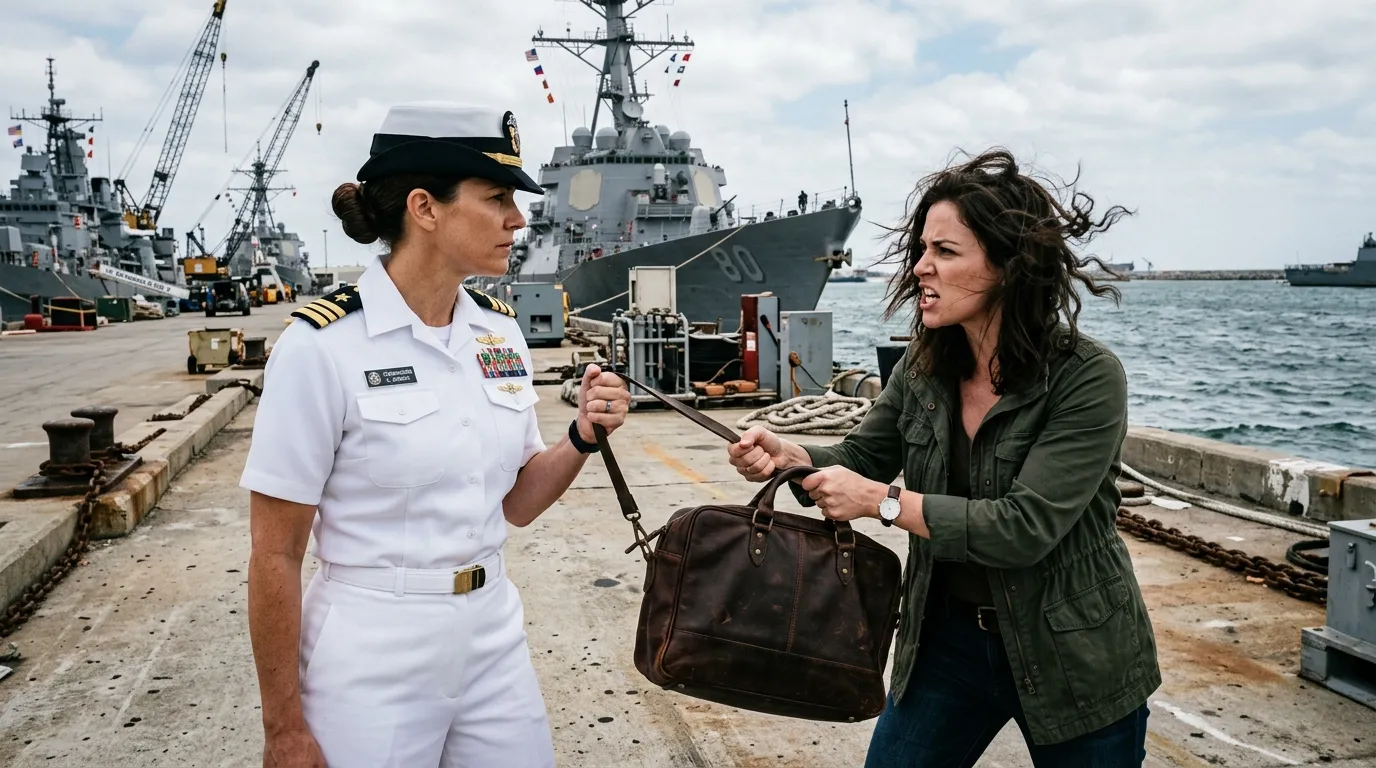
The collision of two entirely different worlds on Pier 12.
“I’m working,” I told her quietly. “I need you to leave the pier now.”
“Working?” She let out a laugh—that same bright, brittle, theatrical laugh she used at family dinners when she wanted the whole table to know she was about to say something relentlessly cruel.
“Working in your little costume with your little clipboard in front of my clients? You couldn’t just let me have one day, could you, Marlo? You couldn’t just stay in your lane.”
Beside me, Master Chief Kettleman took a subtle step forward. I gave him the smallest, almost imperceptible shake of my head.
Not yet. She was my sister. I would handle it.
“Delphine, I am giving you one more chance to walk back to your vehicle.”
That was the exact moment she lunged for my bag.
The Drop
It happened faster than my training anticipated. My heavy leather work bag was sitting atop the crate next to my clipboard. She snatched the strap with the practiced, lightning-fast quickness of an older sister who had spent a childhood commandeering my belongings.
She held it up like a trophy, spun on her heel, and marched dangerously close to the edge of the pier.
“Delphine, do not—”
“Do not what, Marlo? Do not embarrass you? Isn’t that exactly what you came here to do to me?”
“That bag contains federal property. Put it down.”
She looked at me over her shoulder, a triumphant, malicious smile spreading across her face. I knew before her arm even tensed what she was about to do. She wanted tears. She wanted shouting. She wanted the helpless, shrinking version of me she had spent thirty-seven years building in her imagination.
The heavy leather bag arced through the bright morning air. It hit the dark water completely flat, making a sound like a vicious slap, and began to sink immediately under the weight of the classified tablet inside.
Somewhere behind me, a young sailor whispered, “Oh my God.”
An NCIS agent standing nearby—whose name I would soon learn was Special Agent Corbin Ashford—quietly slipped a small notebook from his jacket.
Delphine turned back to face me, her chin tilted up, eagerly waiting for my reaction. I did not give her one.
I looked at Master Chief Kettleman, my voice steady. “Master Chief, please contact the harbor patrol and request dive recovery for a lost item containing sensitive material. Also, contact the base security office and request an escort.”
“Aye, Commander,” he replied firmly.
Delphine’s face physically changed when she heard the word Commander. It was just a flicker, a tiny tectonic crack in her grand performance.
I watched her eyes drop to the silver oak leaf pinned to my collar, trace the name tape over my right pocket, and finally flick back up to my face. She had never actually looked at my uniform before. Not at my promotions, not at ceremonies, not even at our mother’s funeral. Looking would have meant acknowledging my reality.
“What did he just call you?” her voice thinned out, suddenly lacking its prior bravado.
“He called me by my rank.”
“Your rank?”
“Commander, United States Navy. I am the officer in charge of this inspection. Every person on this pier—every contractor, every sailor, every civilian—is here because I authorized them to be here. And you just committed a federal offense in front of all of them.”
The color drained out of her face in dramatic stages. First her lips, then her flushed cheeks, and finally her forehead.
Special Agent Ashford stepped forward, clearing his throat gently. “Commander Prescott, with your permission, I’d like to have a conversation with this individual.”
“She’s my sister,” I said.
“Understood, ma’am. My question stands.”
I looked at Delphine. She was staring at me like I was a complete stranger—and in a very real sense, I was. The little sister she had thrown a bag at no longer existed. The woman standing before her did, and that woman was about to become the worst problem of her entire life.
“Permission granted.”
The Aftermath
The morning blurred into a highly regulated sequence of events. Special Agent Ashford escorted a very loud, very resistant Delphine to the pier office. She threatened to sue the entire U.S. government, a protest that dropped in volume significantly when two armed masters-at-arms appeared behind her.
I didn’t watch her go. I had a job to do. With Rosalind Vega’s digital cloud backups, we finished the morning inspection six minutes ahead of schedule.
By lunch, my bag was recovered from eighteen feet of water. The leather was destroyed. The tablet was ruined. The documents were pulped. I sat in my quiet office eating a commissary tuna sandwich, a headache pressing relentlessly behind my right eye, typing up a factual incident report for my commanding officer, Captain Odel Bramwell.

The quiet isolation of holding boundaries in an empty apartment.
Soon, the texts began pouring in. My brother Corwin, the family peacekeeper, messaged me in a panic. I told him the facts. Then came the barrage from Aunt Maragold and my estranged cousins, accusing me of having Delphine arrested out of spite. Delphine was spinning a wild tale of harassment, claiming I had snapped and ruined her catering career in front of her clients.
At 1400 hours, I sat in Captain Bramwell’s office alongside a JAG lawyer, Lieutenant Commander Ojan Per. They laid out the brutal reality: Delphine was facing serious federal charges for destruction of federal property.
“She committed the act in front of federal law enforcement,” Agent Ashford explained. “However, your input will be considered. What do you want to do?”
I thought about my mother. I thought about Corwin. I thought about the fabricated, toxic narrative Delphine had forced me into for my entire existence. I was so bone-tired of letting her write my story.
“Let’s document the truth,” I answered.
The Unraveling
For the next week, the family erupted. There were emergency meetings in our hometown of Rowan Oak. There was a smear campaign published in a local Virginia Beach blog, fueled by Delphine’s lies. But as the Navy firmly (and factually) confirmed the ongoing federal investigation, Delphine’s story began to spectacularly unravel.
The surveillance video from Pier 12 was unambiguous. The truth was an immovable object, and Delphine had finally crashed into it.
On June 11th, Delphine was formally charged by the U.S. Attorney’s Office. The local news updated its coverage, and suddenly, the public comment sections turned viciously against her. She was facing up to a decade in prison and over $14,000 in restitution for the destroyed federal tablet.
My brother-in-law, Bram, left a handwritten note taped to my apartment door. He apologized for years of believing his wife’s lies. He confessed that Delphine had been spiraling for years, running from therapists who told her hard truths about our relationship.
“What she did to you on the pier was not a moment of anger,” Bram wrote. “It was the culmination of a pattern.”
The Mediation Room
In July, prior to her hearing, the prosecutor asked if I would be willing to sit down for a formal, mediated conversation with my sister. I spent a week thinking about it. I hired a therapist. I read through sixteen years of Delphine’s manipulative text messages. I realized my overwhelming feeling wasn’t anger; it was a profound, exhausting grief.
I agreed to the mediation.
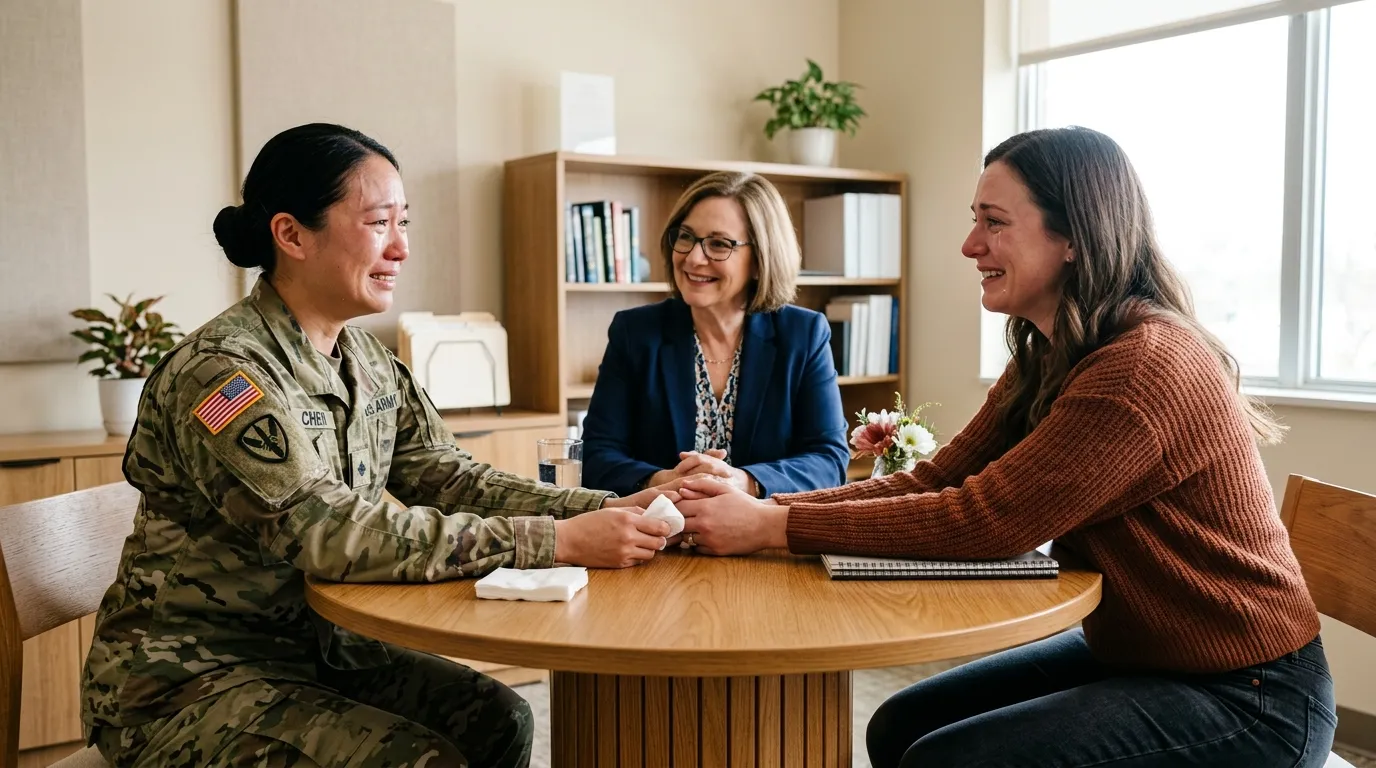
Thirty-seven years of unspoken truths finally filling the silence.
When we sat across from each other in that sterile room, I spoke uninterrupted for seventeen minutes. I laid out a lifetime of casual cruelty: the destroyed dresses, the stolen money, the vicious rumors she spread when I was accepted into the Naval Academy, the way she blamed me for our father’s death.
I told her I had stayed away to survive her.
And for the first time in her life, Delphine didn’t fight back. She wept. She confessed to her deeply rooted, poisonous jealousy. She admitted that our mother had secretly been proudest of me. She apologized, wholly and completely.
I left that room feeling like a thousand-pound weight had been lifted from my chest.
A New Foundation
Delphine took a plea deal. She agreed to pay $14,600 in restitution, serve probation, complete community service, and most importantly—at her own voluntary request—attend mandatory weekly therapy.
At her sentencing, she stood up in federal court and publicly apologized to me.
We didn’t magically become best friends. Healing from decades of emotional abuse doesn’t happen in a montage. But a slow, delicate thaw began. In October, I wrote her a letter, leaving the door to a relationship slightly open. By Christmas, I got a warm card from Bram. By spring, I had been promoted to Captain.
In May, Bram brought my niece and nephew to the naval base for a tour. Delphine didn’t come—she respected the boundary we were slowly navigating. I spent the day answering my nephew’s questions about ocean currents and letting my six-year-old niece, Piper, wear my officer’s hat.
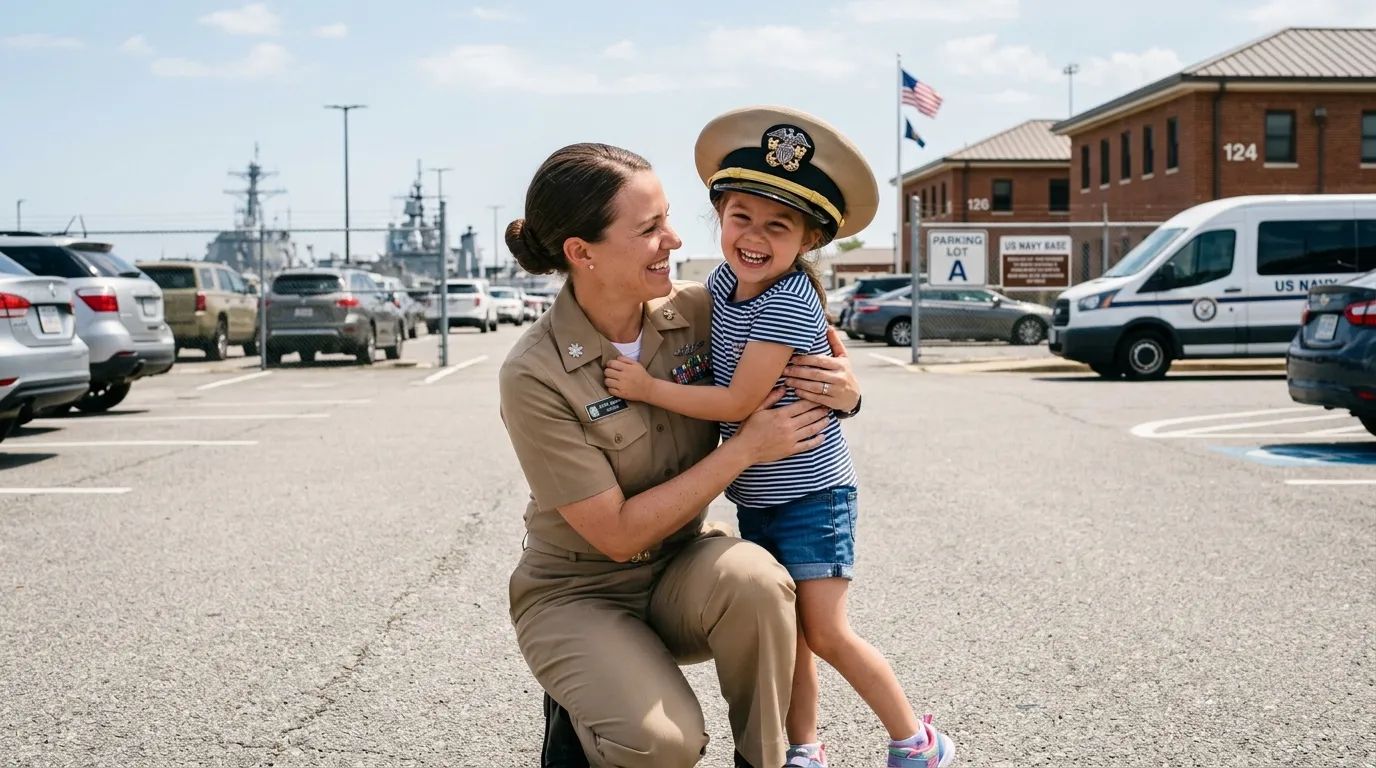
Building something entirely new from the wreckage of the past.
When they left, Piper hugged my waist and said she loved me. I said it back. It was the first time I had said those words to anyone in my family since my mother died.
Bram looked at me over the roof of his car before driving away. “She hasn’t missed a therapy session in fourteen months,” he told me. “She’s different. She wanted you to know.”
The Power of Speaking Up
I spent thirty-seven years believing that the strongest thing I could do was remain quiet. I told myself that silence was the mature response, that walking away was my armor. And for a long time, it was. Walking away kept me safe enough to build a life I was deeply proud of.
But eventually, silence stops being strength and morphs into avoidance. My refusal to speak wasn’t protecting me anymore—it was protecting her. It was allowing her to operate without consequences.
When she finally forced my hand on that pier, I discovered that speaking the truth was harder, but infinitely more freeing, than the silence I had hidden behind.
You don’t have to explode to be heard. You don’t have to be cruel to be honest. You don’t have to burn down a relationship to set a firm boundary. But eventually, you do have to speak up. The people who are unkind to you are banking on your silence. They build their false narratives around your willingness to say nothing.
The moment you speak—even calmly, even with love—their false story starts to fall apart.
I don’t know what my relationship with my sister will look like in five years. But I know that we are talking now. Carefully. Honestly. And both of us are entirely different people than we were on that June morning.
If you have someone in your life who has spent years telling a false story about who you are, know this: You do not have to keep letting them tell it. You just have to be willing to speak the truth when the moment comes.
And the moment always comes.
Thank you for listening to my story. If it resonated with you, please leave a comment below. Have you ever had to set a painful family boundary? What happened the moment you finally spoke up? Your voice and your story matter.
Note:This work is inspired by real events and people, but it has been fictionalized for creative purposes. Names, characters, and details have been changed to protect privacy and enhance the narrative. Any resemblance to actual persons, living or dead, or actual events is purely coincidental and not intended by the author.
All images used in this article are AI-generated and intended for illustrative purposes only.
0 Comments