
My name is Jenna, and I am nineteen years old. For nearly two decades, my entire world began and ended within the four walls of a modest suburban house. And in that world, there was only one constant: my grandmother.
My mother disappeared from my life before I even had the chance to form a memory of her. The story I grew up with was simple, clinical, and devastating: she left the hospital when I was born and never looked back. My father was barely a footnote. He and my mother had split up long before I arrived, and once I was born, he made virtually no attempt to be in my life. Eventually, he remarried, built a brand-new family, and moved on. I became little more than a distant, awkward acquaintance—the daughter who received an obligatory birthday text every six months if he remembered at all.
I learned early on not to hold my breath waiting by the door for him. Disappointment is a harsh teacher, but she teaches quickly. I stopped expecting cards, calls, or visits. I didn’t need them, because I had Grandma.
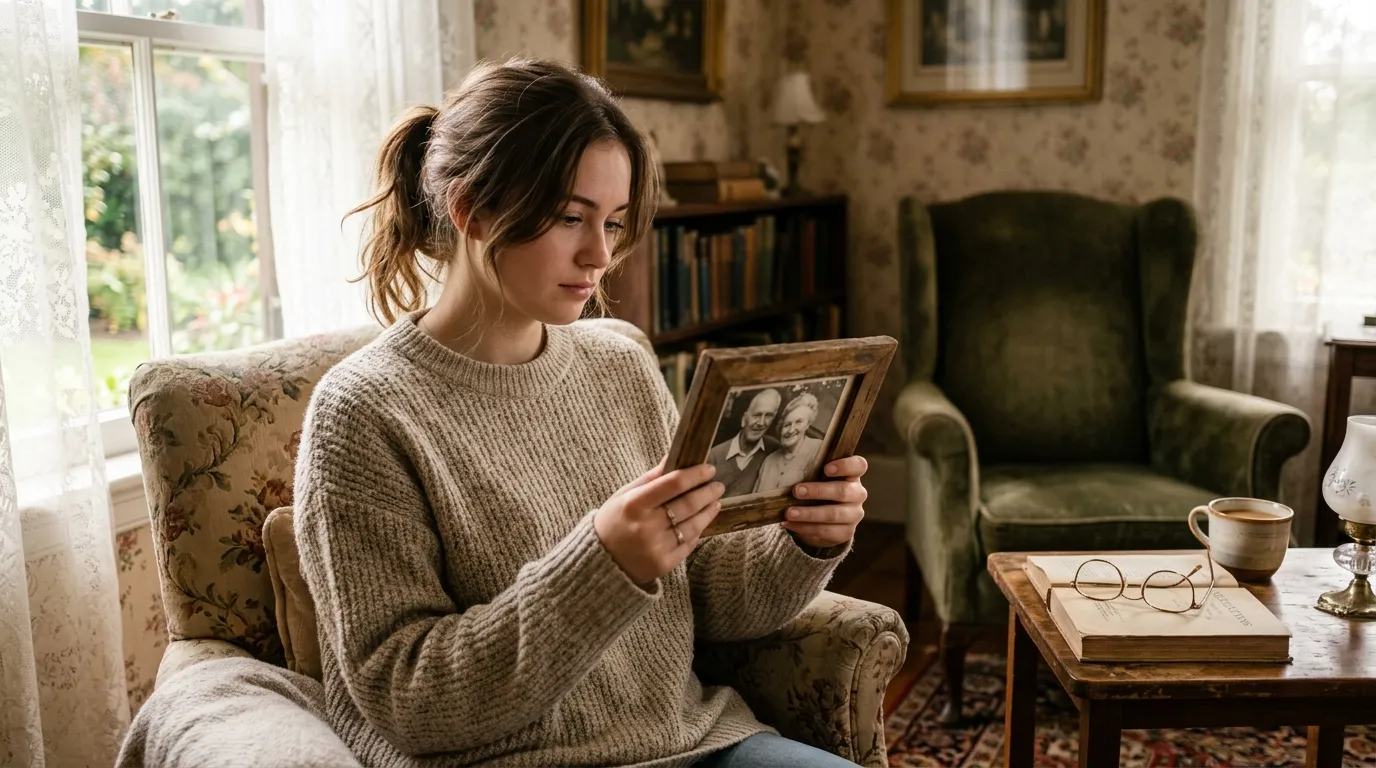
The quiet house was filled with memories, but every familiar room suddenly felt unfamiliar.
Grandma was my entire universe. She was in the front row for every school play, every parent-teacher conference, and every milestone. When I ran high fevers as a child, she stayed beside my bed with cold washcloths and warm tea. When kids at school asked why my parents never came to pick me up, she wrapped me in her arms and reminded me that quality mattered far more than quantity. She was my protector, my confidante, and the anchor that kept me grounded.
Whenever the ache of my mother’s absence became too heavy to carry, Grandma gave me the same explanation. I remember sitting on her lap around the age of seven, asking through tears, “Grandma, why didn’t Mom want me? Was I bad?”
She would sigh deeply, stroke my hair, and pull me close to her chest. “Some people just aren’t meant to be parents, sweetheart,” she would whisper softly. “She didn’t want the responsibility. But you have me, and I will always want you.”
I accepted it. Why wouldn’t I? She was the woman who fed me, tucked me in, and shielded me from the world. I grew up internalizing that quiet poison—the belief that I had been born unlovable to the woman who gave me life. It carved an invisible hollow into my chest, but Grandma filled it with so much affection that the wound eventually went numb.
Then, three months ago, my entire foundation crumbled. Grandma passed away in her sleep.
Grief is a strange, paralyzing thing. The silence that settled over the house was deafening. Her reading glasses still rested on the edge of the kitchen table. Her floral cardigan remained draped over the back of her favorite rocking chair. Framed photos of the two of us lined every wall and mantelpiece. I walked through the rooms like a ghost, terrified to touch anything, as if moving a single teacup would erase her existence entirely.
Two weeks later, the family estate attorney called. Grandma hadn’t just made a will; she had meticulously updated it. She left everything to me: the fully paid-off house and her entire life savings. I was stunned. I hadn’t expected an inheritance, and I certainly never anticipated being the sole beneficiary.
The ink on the paperwork was barely dry before my phone began to buzz off the table.
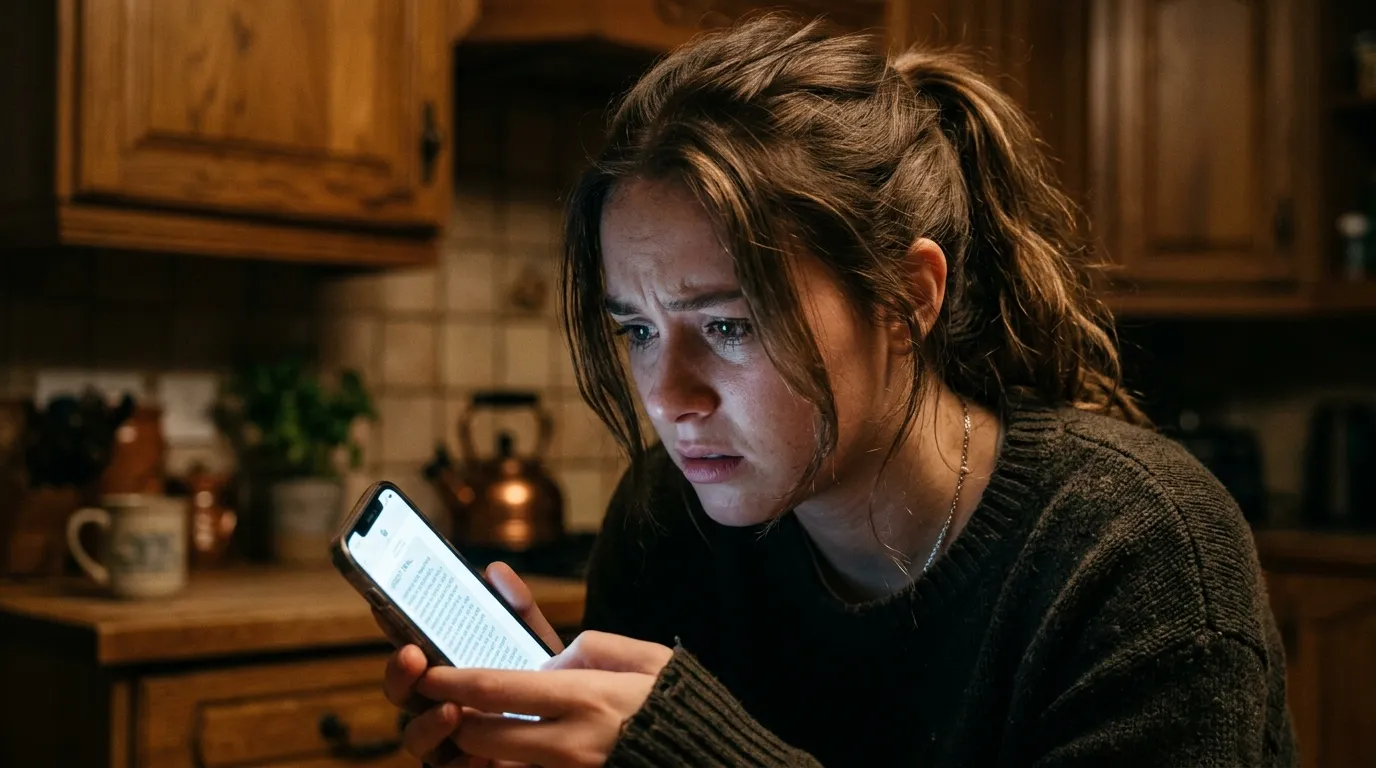
The family who had ignored my grief suddenly had plenty to say once money entered the picture.
It started with a trickle of notifications and quickly turned into a flood. My father’s other children—stepsiblings who had never once invited me to dinner or asked how I was coping—were suddenly furious. My inbox filled with passive-aggressive paragraphs and outright demands.
“You need to split the money, Jenna.”
“It’s selfish to keep the entire house for yourself when Dad is struggling.”
“Dad is her son. It’s only right that the family shares what she left behind.”
Not one of them asked if I had eaten that day. Not one asked if I was sleeping, or if the house felt too empty. They didn’t see my grief; they only saw a balance sheet. Disgusted, I turned my phone face down. I had no intention of bowing to pressure from people who had treated me like a ghost my whole life.
Two days later, there was a knock at the door. It was my father.
I braced myself for an argument. I expected him to demand his cut of his mother’s estate, to play the card of the overlooked son. But when he stepped inside, he didn’t shout. He looked worn out, his shoulders slumped as he sat down across from me at the kitchen table.
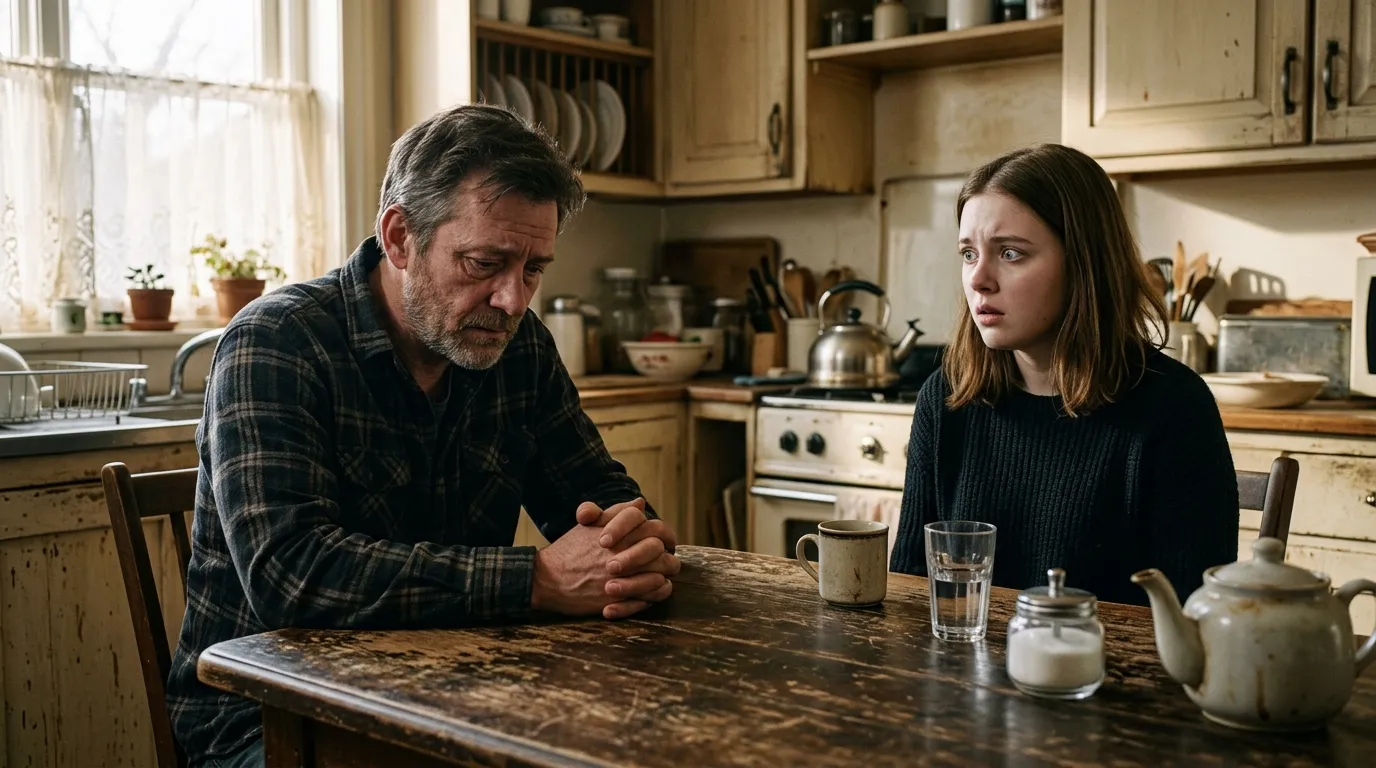
My father broke nineteen years of silence with a revelation that upended everything I knew.
“Jenna,” he began, his voice hoarse. “There’s something you need to hear about your mother. Something you should have known years ago.”
A chill crept down my spine. “What about her?”
He rubbed his temples, staring at his calloused knuckles. “Your grandmother lied to you. She lied to everyone.”
The air in the room seemed to vanish. “What are you talking about?”
“Your mother didn’t run away because she didn’t want you,” he whispered. “She wanted you more than anything.”
For nineteen years, my entire self-image had been built upon the premise that my mother abandoned me. Hearing those words felt like being knocked off my feet. “What do you mean?”
According to my father, my mother was barely twenty when she discovered she was pregnant. Terrified, penniless, and unsupported, she had turned to his family for shelter. My father admitted he was too immature and reckless back then to be the partner she needed. But his mother—my grandmother—saw an opportunity.
“Your grandmother knew how vulnerable she was,” my father said, refusing to meet my eyes. “She told your mother that raising a child alone would ruin both of your lives. She told her she had no education, no career, and no money, and that keeping you would drag you both into poverty. She played on every single one of her fears.”
My throat tightened. “And Mom just believed her?”
“She was a frightened girl, Jenna. Your grandmother convinced her that stepping away wasn’t abandonment—she framed it as an act of maternal sacrifice. She told your mother that if she truly loved you, she would let an established, financially secure woman raise you while she went out and built a life.”
I looked around the room. The vintage lace curtains, the porcelain plates, the warm floral prints. This was the sanctuary where I had been raised. The sanctuary run by a woman who, according to my father, had methodically dismantled a young mother’s confidence and convinced her to give up her child.
“So she didn’t leave because she hated me?” Tears blurred my vision.
“No,” he said softly. “She wept for days.”
I pushed back my chair and walked toward the window, my thoughts racing in circles. If this was true, nineteen years of heartache were founded on a deliberate deception. But as relief attempted to break through, a sharper, more painful question surfaced.
I turned back around. “If she loved me so much… why didn’t she come back?”
My father went quiet.
“Why didn’t she send a postcard? A letter? Why didn’t she call? Why didn’t she ever show up at that door?” My voice cracked. “Nineteen years, Dad. That’s not a temporary sacrifice. That’s a lifetime.”
“I don’t have all the answers,” he said, looking away.
“And how do I know you’re telling the truth right now?” I demanded, anger finally surging through the shock. “You weren’t there when I grew up. You weren’t there when Grandma got sick. You never visited. And now, the moment Grandma dies and leaves me this house, you show up with a tragedy about my mother? Why now?”
“Because your grandmother is gone,” he said quietly. “As long as she was alive, she held all the leverage. I couldn’t confront her.”
“Or you waited until she wasn’t here to defend herself,” I shot back.
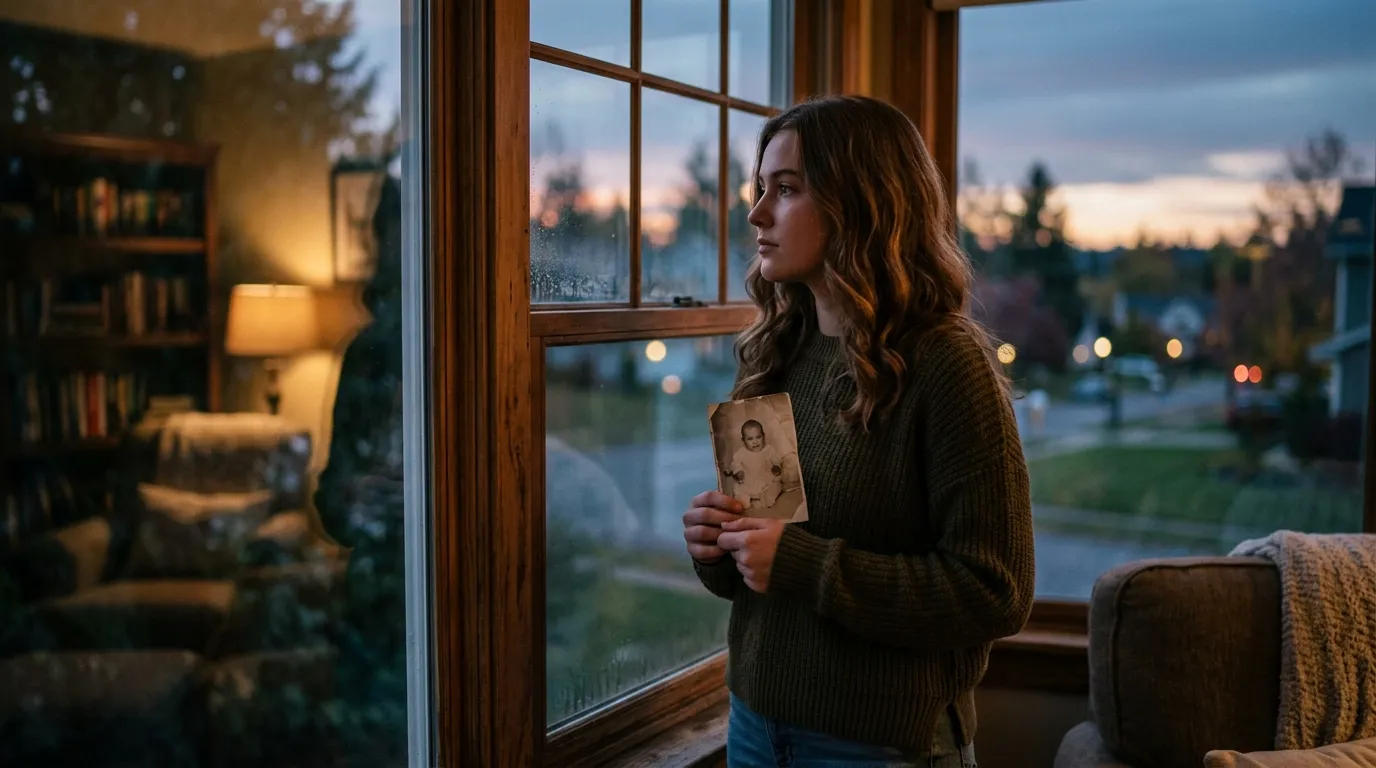
Caught between competing versions of the past, finding the truth is my only way forward.
Within days of that conversation, the messages from my stepsiblings took on a sickening new angle. They were no longer just asking for money—they were weaponizing my father’s confession against me. They texted that Grandma had been a manipulative monster, that the inheritance was tainted, and that if I had any decency, I would surrender the estate to “make things right for the family.”
Their logic was entirely self-serving. If Grandma had wronged my mother, how did giving Grandma’s money to my father’s new family right any wrongs? It didn’t. It was an opportunistic attempt to exploit family trauma for financial gain.
Late that night, I sat on the floor of the hallway, holding a framed photograph taken when I was five. In the picture, Grandma is sitting on a wooden bench, holding me tightly against her chest. I was grinning from ear to ear.
I stared at her face, searching for clues. Was that fierce embrace an expression of selfless love? Was it possessiveness? Was it guilt? Or was it a complicated, messy mixture of all three?
I wanted to hate her for what my father said she did. But I couldn’t erase nineteen years of gentle care. She was the one who bandaged my scraped knees, read me bedtime stories, and showed up when the rest of the world looked away. How could someone be my savior and someone else’s villain?
And then there was my mother. Was she truly a victim of psychological manipulation, intimidated into staying away? Did she believe I was genuinely better off without her? Or did my father fabricate parts of the story to undermine Grandma’s legacy and pressure me into giving up the estate?
I don’t have the answers yet. But one thing is clear: I won’t sell the house, I won’t divide the savings, and I won’t sign a single paper based on secondhand stories and guilt trips.
Before I make any decisions about forgiveness, family, or the inheritance, there is only one conversation left to have. I need to track down my mother. I need to look into her eyes and hear the truth from the only person who hasn’t tried to speak for her.
Note:This work is inspired by real events and people, but it has been fictionalized for creative purposes. Names, characters, and details have been changed to protect privacy and enhance the narrative. Any resemblance to actual persons, living or dead, or actual events is purely coincidental and not intended by the author.
All images used in this article are AI-generated and intended for illustrative purposes only.
0 Comments