
On November 22, 1963, the world as we knew it violently paused. President John F. Kennedy was assassinated on the sunlit streets of Dallas, Texas, sending an unprecedented shockwave across the United States and rippling outward to every corner of the globe. In the span of a few chaotic hours, Jacqueline Kennedy was violently thrust from her role as a glamorous, beloved First Lady into the position of a grieving widow, forced to navigate an unimaginable tragedy under the glaring spotlight of public attention.
The dark days that followed were a blur of state ceremonies, endless condolences, and a nation draped in black. Millions of people around the world sat glued to their television screens, watching as she walked, veiled and stoic, beside her husband’s horse-drawn coffin during the funeral procession. Her calm, unbreakable exterior became a symbol of national resilience, yet it concealed a private, agonizing pain that very few people could ever truly comprehend.
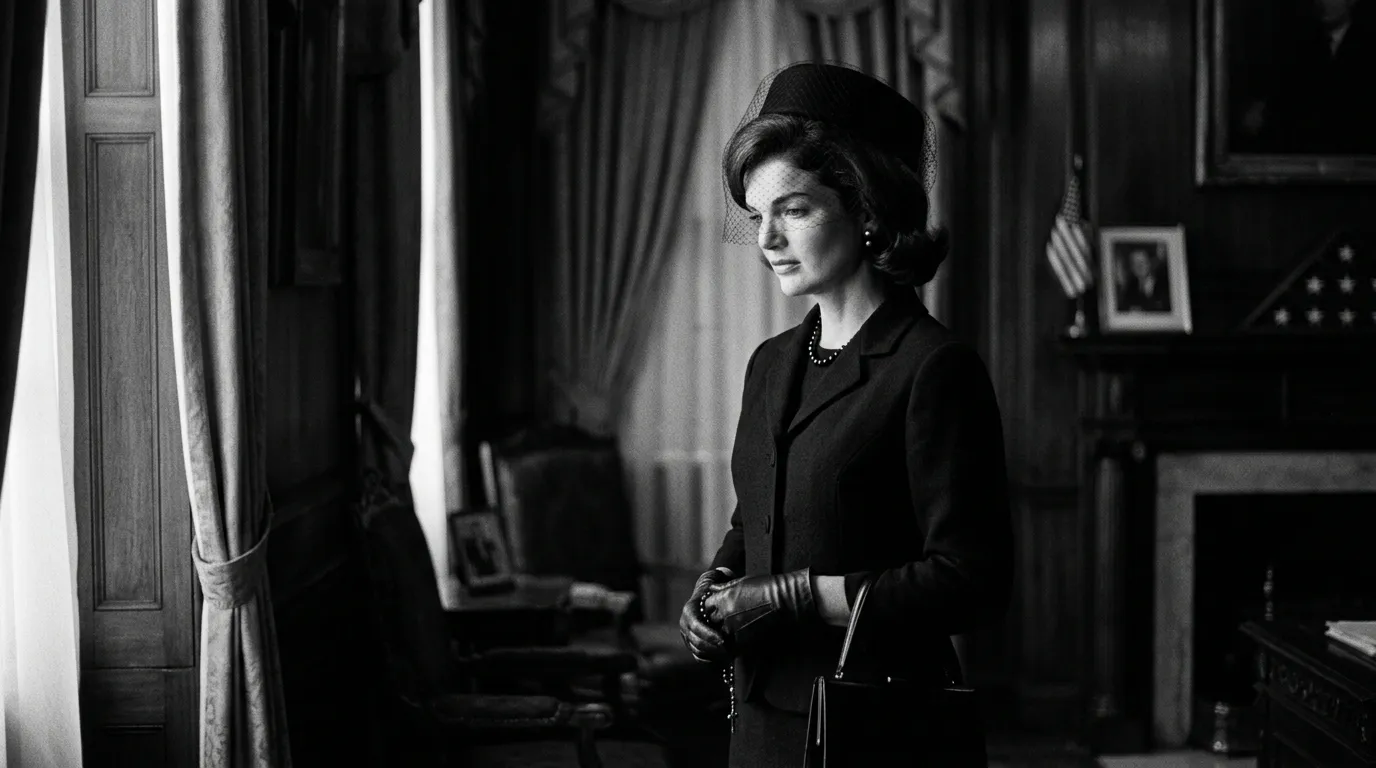
A nation mourned, but Jacqueline Kennedy carried the quiet, heavy burden of private grief under a global spotlight.
Condolences poured in from allies and adversaries alike. Among the many world leaders who reached out in the wake of Kennedy’s death was Nikita Khrushchev, the formidable Premier of the Soviet Union. To understand the gravity of this, one must remember that these two men had been fierce political opponents, locked in a bitter ideological struggle during one of the most volatile and dangerous chapters of the Cold War.
Just a year prior, President Kennedy and Premier Khrushchev had stood on completely opposite sides of a terrifying geopolitical chessboard known as the Cuban Missile Crisis. It was a confrontation that brought the entire world dangerously, terrifyingly close to the brink of nuclear annihilation. Yet, behind the rigid political posturing and the threat of mutually assured destruction, there were two very real human beings who understood the dark, apocalyptic consequences of diplomatic failure.
It was this quiet, mutual understanding that ultimately became the emotional foundation of one of history’s most remarkable letters.
A Message to the Man Her Husband Had Faced
On December 1, 1963, as the harsh reality of her new life set in, Jacqueline Kennedy sat down and wrote a deeply personal, handwritten letter to Nikita Khrushchev. She wrote it on small White House stationery during one of her final, lonely nights living in the executive mansion before moving out.
The letter did not begin with politics; it began with profound gratitude.
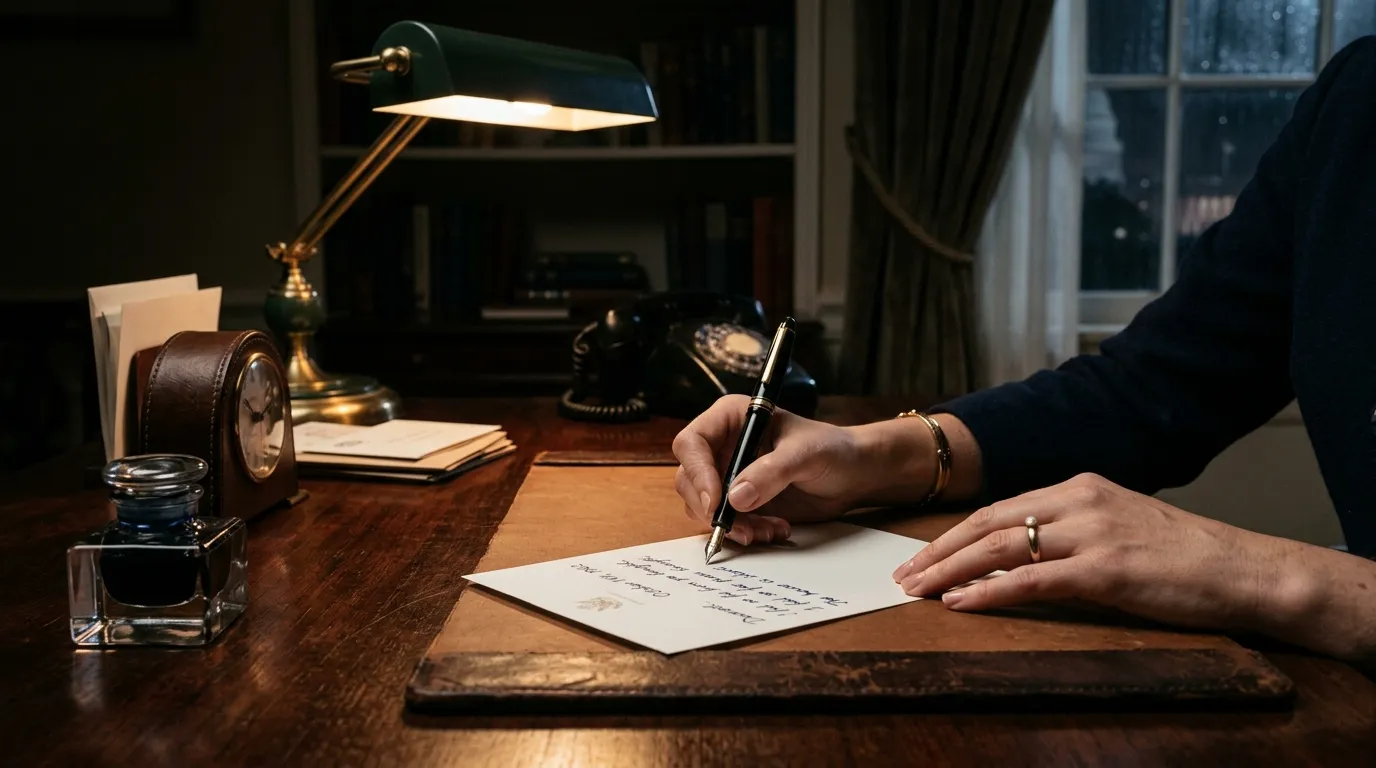
In the quiet hours of her final nights at the White House, Jackie chose a handwritten letter over formal diplomatic channels.
She sincerely thanked Khrushchev for sending Soviet statesman Anastas Mikoyan to represent him at President Kennedy’s funeral. Jackie recalled locking eyes with Mikoyan during the solemn ceremony and noted that the Soviet representative appeared genuinely and deeply affected by the devastating moment. For Jackie, this simple, silent gesture mattered immensely.
In a deeply fractured era where politics and paranoia aggressively divided nations, she recognized a fleeting, beautiful moment of human sympathy. She explained to the Soviet leader that she had tried to communicate a message of thanks through Mikoyan on the day of the funeral, but the crushing emotional weight of the day made it nearly impossible for her to articulate her thoughts clearly. She openly admitted that it had been such a terrible, blinding day that she wasn’t sure if her spoken words had truly captured what was in her heart.
That striking honesty is exactly what made her letter so profoundly different from ordinary, sterile diplomatic communication. It wasn’t drafted by speechwriters or scrubbed by government officials. It read like a quiet, personal conversation between two people who shared a unique burden.
The Haunting Memory of the Cuban Missile Crisis
Deep within the letter, Jacqueline Kennedy reflected on a chilling sentiment her husband had often repeated behind closed doors during his presidency. She reminded Khrushchev of a haunting phrase he himself had once quoted in a speech:
“In the next war, the survivors will envy the dead.”
Those heavy words reflected the terrifying, existential reality of the nuclear age. Both Kennedy and Khrushchev fully understood that a hot conflict between their two massive nations wouldn’t just mean a loss of territory; it would create a scale of destruction completely unlike anything humanity had ever witnessed.
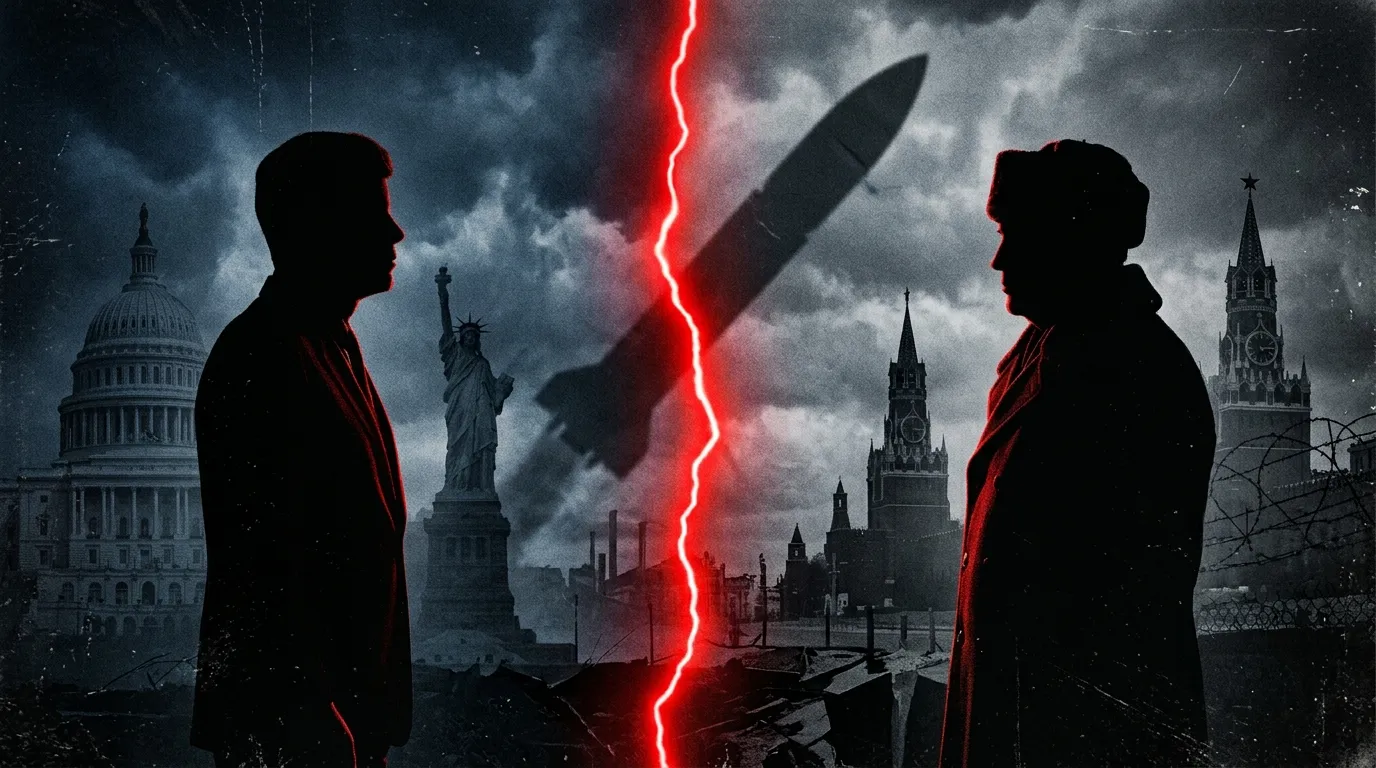
The Cuban Missile Crisis cast a long, terrifying shadow, forcing both leaders to confront the reality of nuclear devastation.
During the Cuban Missile Crisis in October 1962, the two leaders had been dangerously deadlocked over the placement of Soviet ballistic missiles in Cuba. For thirteen agonizing days, the world held its collective breath, watching anxiously as the grim possibility of nuclear war transitioned from a hypothetical fear to an imminent reality. But the crisis ended without the world catching fire. Behind the public threats, both governments desperately searched the shadows for a way to compromise and avoid catastrophic escalation.
Jackie Kennedy’s letter gracefully recognized that incredibly complicated reality. She wrote that although the two men had been fierce global adversaries, they were eternally connected by a shared, desperate determination that the world should not be destroyed on their watch. It was a remarkably profound observation coming from a woman whose own world had just been shattered by an act of senseless violence.
The True Danger: Fear and Pride
Perhaps one of the most powerful and timeless passages of Jackie Kennedy’s letter was her philosophical reflection on exactly how wars begin. She expressed a deep-seated fear that world-ending conflicts might not always be initiated by the most powerful, calculated leaders, but sometimes by lesser men who are driven blindly by fear, pride, or tragic misunderstandings.
Her poignant words perfectly echoed a concern that had shaped the core of her husband’s presidency. John F. Kennedy firmly believed that world leaders carried a god-like responsibility because their fleeting decisions could instantly extinguish millions of lives. The dawn of the nuclear age had permanently altered the very definition of conflict.
A simple mistake. A brief misunderstanding. A fleeting moment of arrogant anger. Any of these could trigger consequences far beyond the original intentions of those involved. Therefore, Jackie’s letter was far more than a personal thank-you note to a political rival. It was a desperate plea for restraint. It was a beautiful reminder of our shared humanity. And it was a clear declaration that even the world’s most powerful, impenetrable nations were ultimately made up of ordinary people who simply wanted to wake up and see tomorrow.
A Private Message Navigating Diplomatic Channels
Because of its highly sensitive nature, the letter had to be handled with extreme care. It was discreetly transmitted through top-level diplomatic channels, specifically involving National Security Advisor McGeorge Bundy and U.S. Ambassador to the Soviet Union, Llewellyn Thompson. Even the newly sworn-in President, Lyndon B. Johnson, was only informed that the letter existed—he was purposefully not told the intimate details of its contents.
This careful, secretive handling perfectly reflected the icy, complicated relationship between Washington and Moscow. A personal, handwritten message from the grieving widow of the slain American president directly to the Soviet Premier carried an immense amount of symbolic weight. It was not merely state correspondence; it represented a breathtakingly rare moment of raw compassion between two heavily armed nations that had spent years viewing each other through a lens of deep suspicion and espionage.
The Soviet ambassador in Washington reportedly recognized the handwritten letter as a profound sign of particular respect. At a time when powerful governments almost exclusively communicated through rigid, formal, and often threatening statements, Jackie Kennedy bravely chose something much more vulnerable. She chose to be human.
Two Families Bound by Grief
As she drew her emotional letter to a close, Jacqueline Kennedy asked Khrushchev to pass along a message to his wife. She asked him to thank Nina Khrushcheva for her deeply emotional, tearful response after she signed the official book of mourning at the American embassy in Moscow.
That specific, tender detail revealed another vital layer of Jackie’s message. She was not just communicating with a hardened political opponent; she was speaking directly, mother-to-mother and wife-to-wife, to another family that understood the crushing weight of history.
Both families lived their lives under a microscope of enormous public attention. Both intimately understood the gnawing fear, the sleepless nights, and the immense pressure that inherently came with global leadership. Both women knew that behind the rigid official titles, the motorcades, and the podiums, there were fragile human beings who experienced deep sadness, crippling uncertainty, and tragic loss.
The genuine gesture of sorrow from Nina Khrushcheva had stayed with Jackie. In the darkest depths of her own blinding grief, she clung to that memory of kindness.
A Timeless Symbol of Humanity
Jacqueline Kennedy’s letter to Nikita Khrushchev was never meant to be read in history books, nor was it meant to be a public speech. It was a fiercely private message, penned in the silence of the night, during one of the absolute darkest moments of her entire life.
Though never meant for the public eye, her words endure as a powerful testament to empathy over ideology.
But its profound meaning has lasted through the decades because it illuminated something much larger than politics. It proved that pure compassion could easily exist between people separated by thousands of miles and opposing ideologies. It proved that shared grief could forge genuine understanding. It proved that behind history’s greatest, most terrifying conflicts, there were individuals highly capable of radical empathy.
Jacqueline Kennedy lost her husband in a brutal, public manner during a time of enormous national panic and uncertainty. Yet, instead of lashing out with the anger or fear that would have been entirely justified, she reached across the globe with a quiet, dignified message about peace, responsibility, and mutual respect.
Her letter did not magically erase the stark differences between the United States and the Soviet Union. It certainly did not end the Cold War. But it managed to capture a powerful, enduring idea: That even those who are forced to stand on opposite sides of history can still recognize the inherent value of a single human life.
In a tumultuous century largely defined by bloody conflict and bitter division, Jackie Kennedy’s handwritten words remain a quiet, steadfast reminder that sometimes, the most important messages are not delivered from grand podiums or through nuclear threats. Sometimes they are written simply by hand, in moments of unbearable grief, by someone who refuses to give up hope—someone who still believes that the future can be better than the past.
If you found this article interesting, please SHARE it with your friends and family!
Note: All images used in this article are AI-generated and intended for illustrative purposes only.
0 Comments