
The Unexpected Visitor
The knock came at exactly 11:00 p.m., striking the wooden door hard enough to make Mark freeze in the kitchen. He stood there with a half-washed plate dripping soapy water into the sink, listening.
He wasn’t expecting anyone. He lived entirely alone in a small, rented house on the quiet edge of Dayton. He worked early morning shifts, kept his evenings blissfully quiet, and had built a very serious, very committed relationship with silence ever since his explosive breakup with his ex-girlfriend, Jenna.
Silence was safe. Silence did not roll its eyes at him. Silence did not start screaming arguments in the middle of crowded grocery store parking lots. Silence certainly didn’t tell him he was “too stable,” spitting the word out as though stability were a terminal medical condition.
The knock came again. Louder this time. More desperate.
Mark dried his hands on a dish towel, walked cautiously to the front door, and pressed his eye against the peephole. For a second, he thought the distorted glass was playing tricks on him.

Standing in the pouring rain, she looked like a ghost of the past.
Sarah Whitman stood on his porch in the pouring rain. One hand gripped the heavy handle of a rolling suitcase. The other clutched her trench coat tightly closed, as though the thin fabric was the only thing keeping her standing upright.
Sarah was Jenna’s mother.
Mark hadn’t seen her in almost a year. She was forty-five, a woman who was usually effortlessly graceful even in the most difficult circumstances. She was the kind of person who could make an entire room feel calmer simply by stepping into it. But tonight, she didn’t look graceful. She looked wrecked.
Mark threw the deadbolt and pulled the door open.
“Sarah?”
Her lips parted, trembling slightly from the cold, but no sound came out at first. She looked at him with eyes that were utterly exhausted.
“Mark,” she finally managed, her voice cracking. “I’m so sorry. I didn’t know where else to go.”
He noticed two more heavy bags sitting near the bottom of the porch steps, getting absolutely soaked. Rain fell relentlessly across everything, pooling around her shoes.
Mark didn’t hesitate. He immediately stepped aside, holding the door wide. “Get inside.”
Sarah shook her head quickly, a jerky movement, as though she had rehearsed refusing his help on the cab ride over. “No. I just need to use your phone. Maybe just sit on the porch out of the rain for a few minutes. I shouldn’t have come here.”
“Sarah, you’re standing on my porch at eleven o’clock at night in a thunderstorm with your luggage. We passed ‘strange’ about ten miles back. Come inside.”
She blinked once, a tear mingling with the rain on her cheek. Then, defeated, she rolled the heavy suitcase over the threshold.
The Ultimate Betrayal
Mark shut the door against the storm and quickly brought her a thick, dry towel from the hall closet.
“Here.”
“Thank you.” She accepted it with both trembling hands, pressing it against her wet face. “I’m sorry. I know this is incredibly strange.”
“That’s certainly one word for it,” he replied, and for a fleeting second, he almost made her smile. Almost.
Mark jogged out into the rain to grab the remaining bags. When he returned, Sarah was still standing rigidly near the entryway, dripping rainwater onto the floor, looking around as though she didn’t have permission to exist in his space. That hesitant, broken posture bothered him far more than he expected it to.
“Sit down,” he urged gently. “The kitchen’s warmer.”
“I’m too wet. I’ll ruin the floor.”
“It’s tile. It’ll survive. It’s a very brave material.”
She finally followed him, taking a seat at the small wooden kitchen table. Her hands were shaking violently. Mark put the kettle on for tea, mostly because the routine motion gave him something to do besides stare at how devastated she looked.
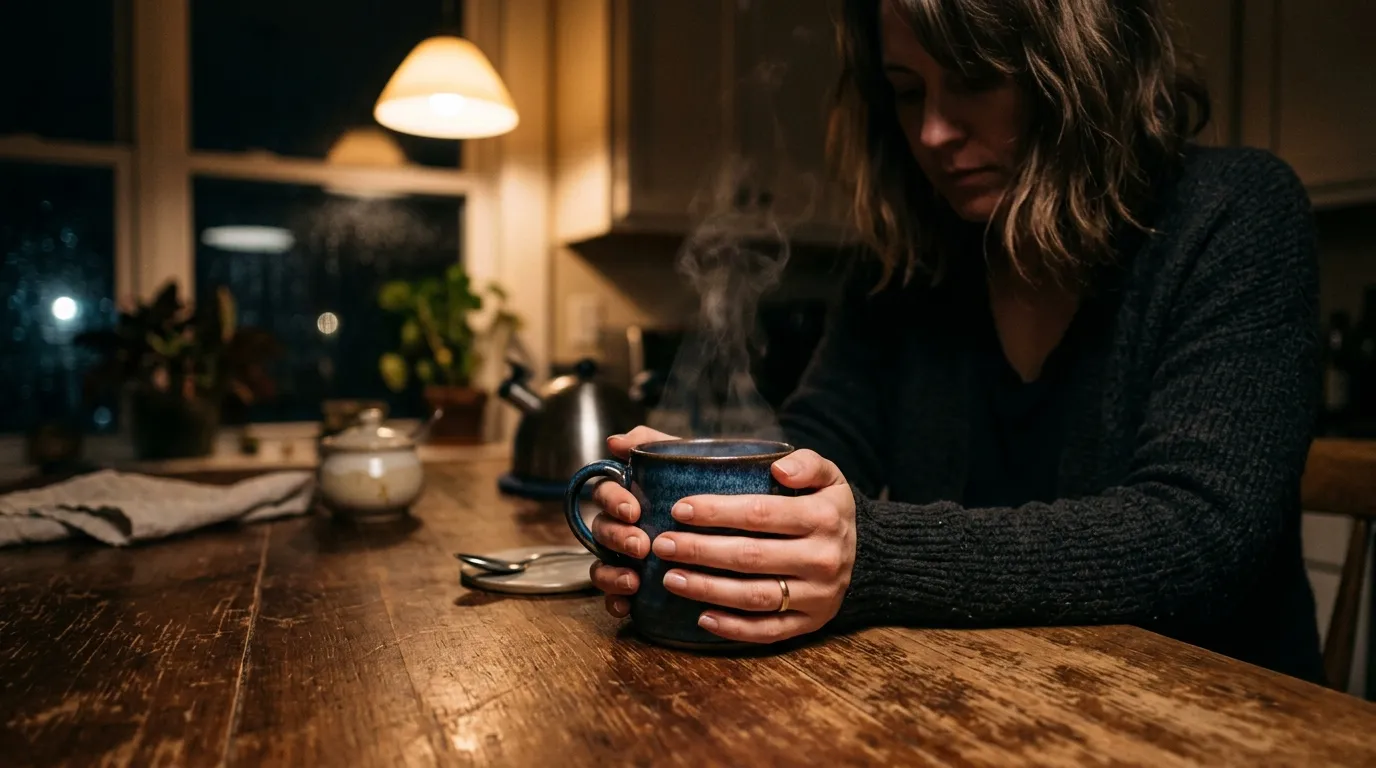
Sometimes a hot cup of tea is the only comfort left in a chaotic world.
When he placed a steaming mug in front of her, she wrapped both hands around the warm ceramic but didn’t take a sip.
“What happened, Sarah?”
She stared down into the dark amber liquid. “Jenna sold my house.”
Mark waited for a punchline that didn’t come. The sentence made absolutely no sense to him.
“She did what?”
“She sold my house. Or… she tried to. I don’t even know what words to use anymore.” Sarah swallowed hard, her throat bobbing. “I found out today when a man came to the front door and said the final transfer had already been processed. He had official paperwork. He told me I had thirty days, but then…”
She stopped, closing her eyes as a fresh wave of pain washed over her.
“The locks were changed on the side entrance this evening. My bank accounts are completely empty. My phone plan was disconnected without warning. I had just enough cash in my purse for a cab.”
Mark slowly set down his own mug, his jaw tight. “Sarah, how on earth could Jenna sell your house?”
“She had access. Legal documents. Old signatures. Power of attorney paperwork I trusted her with when I was trying to help her get her own life organized.” Sarah let out a small, incredibly bitter laugh that broke Mark’s heart. “That sounds so stupid out loud.”
“No,” Mark said firmly. “It sounds like you trusted your daughter, and she knew exactly how to weaponize that trust.”
She looked up at him. Her eyes were red-rimmed. Humiliated. Deeply exhausted. But beneath all the ruin, he saw she wasn’t completely helpless.
“I shouldn’t put this on you, Mark. You and Jenna ended horribly.”
“Jenna ended horribly with reality,” Mark corrected. “I just happened to be standing nearby when it happened.”
A breath escaped Sarah that was half-laugh, half-sob. Mark leaned against the kitchen counter, crossing his arms.
“Do you have anywhere else you can go?”
She didn’t answer. And in the silence, that was the loudest answer she could have given.
“The spare room’s yours,” Mark said.
“No.”
“Yes.”
“Mark, listen to me. This is not appropriate.”
“Neither is leaving you outside in a thunderstorm because my ex-girlfriend has the moral structure of wet cardboard.”
“Don’t joke.”
“I’m not joking. I’m just editing the truth.”
Sarah lowered her eyes to the table. “I can’t pay you rent tonight.”
“I didn’t ask for rent.”
“I can’t promise when I’ll be able to leave.”
“I didn’t ask that either.”
Her voice tightened, thick with anxiety. “People will talk if they find out I’m staying with you.”
“People talk when the weather changes, Sarah. I don’t arrange my life around bored mouths.”
That made her look directly into his eyes. Something in her expression finally shifted. It wasn’t relief just yet, but it was the very first crack in her wall of panic.
“You really mean it?” she whispered.
“I do.”
“Why?”
Mark had a smart answer ready. Something easy and deflective. Something that preserved a safe distance between them. But Sarah was sitting at his kitchen table, stripped of her dignity, trying not to collapse in front of a man connected to the absolute worst part of her daughter’s life. He couldn’t give her a cheap answer.
“Because you came to my door,” he said softly. “And because I know exactly what Jenna is capable of doing when somebody stops being useful to her.”
Sarah looked away, her shoulders finally dropping.
And that was exactly how it began. It wasn’t a spark of romance. It wasn’t a grand, sweeping emotional moment. It was a soaked trench coat, a quiet kitchen table, and a decision Mark made long before he had the time to protect himself from it.
Building a New Normal
The first week was strictly practical. Sarah used Mark’s phone to make endless calls. She wrote down names, collected legal information, and tried desperately to untangle the web of exactly what Jenna had done. Most of those calls ended with Sarah sitting silently at the table, staring at piles of paperwork she no longer trusted herself to understand.
Mark made a point not to hover. He went to his electrical jobs. He came home. He asked if she needed anything, and he backed off the second she said no. That was the arrangement he made with his own conscience: Help her. Don’t crowd her. Be decent. Above all, don’t make it complicated.
Then, Sarah started cooking.
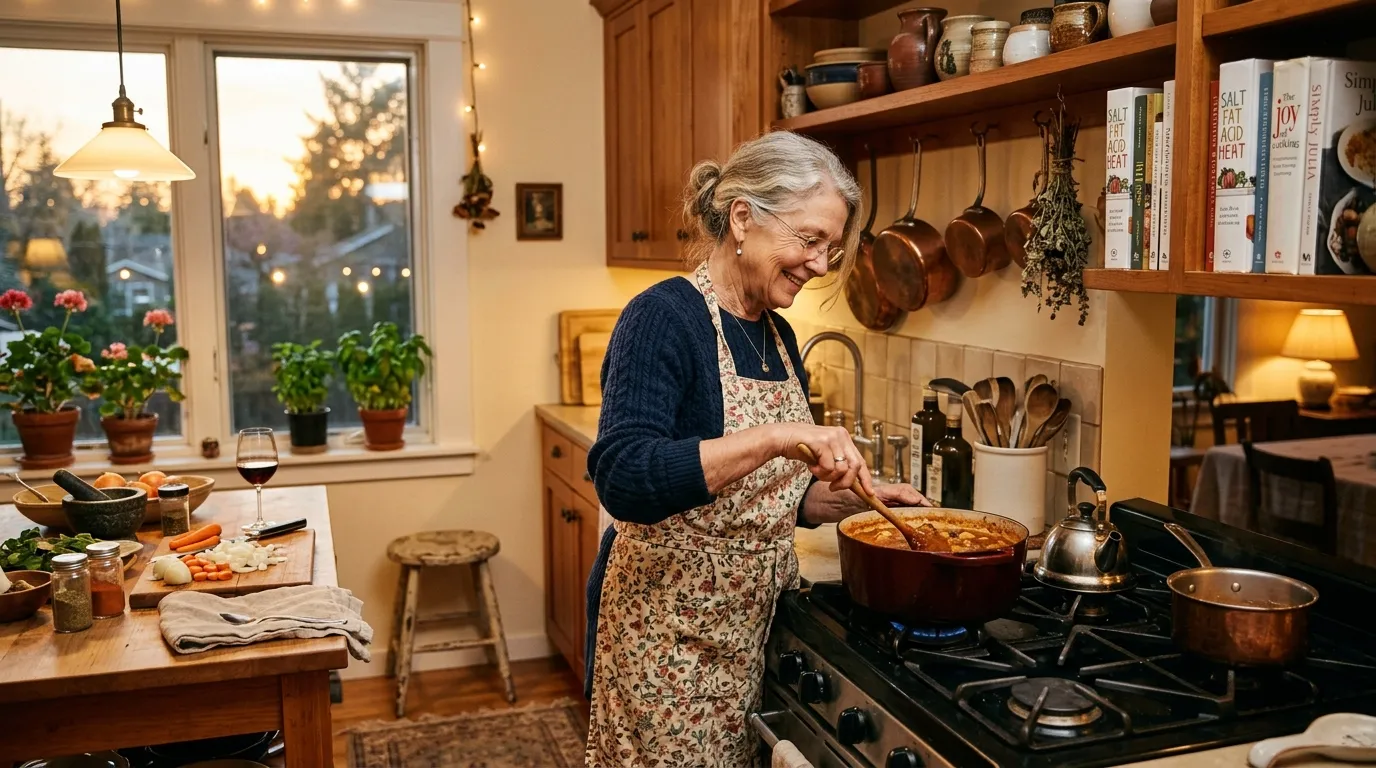
Slowly, the sterile rented house began to feel like a real home.
The first time Mark came home to the rich, mouth-watering smell of an actual roasted meal instead of his usual microwave survival food, Sarah was standing by the stove, wiping her hands on an apron she’d found in a drawer.
“I made way too much,” she said quickly.
“You made too much on purpose,” he replied, dropping his keys in the bowl.
“I needed something to do with my hands.”
“That’s fair. My refrigerator has been filing formal complaints about the lack of real food for months.”
She set a beautiful, steaming plate down at his spot. “You don’t have to eat it if you don’t want to.”
“Sarah, I’m not an idiot.”
She sat across from him with a nervous energy that seemed entirely inconsistent with her usual poised composure. Mark took one bite of the chicken. He closed his eyes.
“Okay,” he breathed.
Her eyebrows rose in concern. “Just okay?”
“I’m actively trying not to propose to you over a piece of chicken. ‘Okay’ is me being restrained.”
She looked down at her lap quickly, but he caught it. She was smiling. A real, genuine smile. “Don’t be ridiculous,” she scolded softly.
Dinner quickly became a routine before either of them formally acknowledged it. Mark would come home and find Sarah cooking—not because she felt she owed him for the room, but because she desperately needed the house to feel less like a borrowed shelter and more like a space she belonged in. When she grew restless, she cleaned. She reorganized neglected cabinets. She bought groceries with her limited remaining cash, budgeting carefully.
Slowly, seamlessly, she made Mark’s sterile rented house feel fully inhabited.
Over these dinners, the awkwardness began to wear away like sand under water. Sarah asked about his work, and Mark told her about dangerous electrical jobs, frayed wiring, and stubborn homeowners who described three-day hazards as “quick fixes.” In return, Sarah talked about the bustling bakery where she had managed massive orders before her life imploded. She described frantic customers who treated wedding cake frosting as a matter of national security.
“You were really good at it, weren’t you?” Mark noted one evening.
“I was good at keeping other people calm,” she corrected.
“That’s a very useful skill.”
“I’m totally out of practice.”
“No, you really aren’t.”
Sarah looked at him over the rim of her water glass. “You think I’m calm right now?”
“I think you’re terrified, your whole life is up in the air, and yet you’re still making a perfect dinner for two. That isn’t nothing, Sarah.”
Her eyes remained locked on his for just a fraction of a second too long. Then she hurriedly reached for her napkin. “You notice way too much.”
“Occupational hazard. I look for bad wiring. Loose switches. Emotional disasters sitting at my table.”
“Oh, I see. So I’m just a project to you?”
“Definitely not. Projects are simple. They come with instruction manuals.”
Sarah laughed out loud, a rich, genuine sound that filled the room. And Mark realized, with a sudden jolt of panic, that he liked the sound of her laugh much more than he should have.
Crossing the Line
That was the first thing that truly worried him. It wasn’t simply that Sarah was beautiful, though she undeniably was. She wasn’t flashy. She carried a quiet warmth, a fierce control, and a mature confidence that didn’t constantly demand attention to prove it existed. Even when she was exhausted, she had a gravitational pull that made Mark hyper-aware of exactly where he was standing in relation to her.
What unsettled him even more was how effortless talking to her had become. Having a conversation with Jenna had always felt like walking blindfolded through a room full of open knife drawers—something was always waiting to catch you and make you bleed. But with Sarah, silence wasn’t a weapon. Questions were just questions. If she was upset, she articulated it. If she needed space, she simply asked.
The first time Mark intentionally crossed the invisible boundary between them came after a grueling Saturday. He had driven Sarah to a dusty old storage unit across town so she could dig up copies of old tax documents. She had spent three agonizing hours reading legal paperwork that weaponized her own name against her.
When they finally returned to his driveway, the sky had opened up into a slow, steady rain. Sarah remained sitting rigidly in the passenger seat.
“I feel so stupid,” she whispered into the quiet car.
Mark turned off the engine. The sound of rain drumming against the roof filled the silence. “You aren’t stupid, Sarah.”
“I signed things I didn’t fully understand.”
“You trusted someone you loved and cared about.”
“That sounds much nicer.”
“It’s also the truth.”
Sarah rubbed her temples, looking drained. “You don’t have to keep trying so hard to make me feel better, Mark.”
“I’m not doing it as a community public service.”
She turned her head to look at him, her brow furrowed. “What exactly does that mean?”

Some truths are easier to speak when the rest of the world is locked outside.
Mark could have retreated. He could have thrown up a wall of sarcasm or made a self-deprecating joke. Instead, he let his hands fall from the steering wheel and looked directly into her eyes.
“It means I actually care what happens to you.”
Her lips parted in surprise. “Mark…”
“I know. The age difference. The Jenna factor. The whole weird, messy parade of it all.”
“This isn’t just weird,” she said, her voice dropping to a whisper. “This is…”
“I’m aware.”
“You should be careful.”
“I am being careful.”
“No,” she corrected, shaking her head. “You’re being kind. There is a very big difference.”
“Yes, there is.”
Her voice softened, laced with a vulnerability that made his chest ache. “Kindness can happen without wanting anything in return.”
Mark held her gaze, refusing to let her look away. “And what if I do want something?”
The air in the car became thick and completely still. The rhythmic thumping of the rain seemed to fade into the background. Sarah looked out the window toward the safety of the house, then slowly back at him.
“You shouldn’t say things like that to me.”
“But I did.”
“You may regret it later.”
“Sarah, I’ve regretted plenty of things in my twenty-four years on this earth. This doesn’t feel like one of them.”
Her hand rested on the door handle, but she made no move to pull it. “You’re just lonely, Mark.”
Mark gave a short, breathless laugh. “Sarah, I’ve been lonely for months. I didn’t suddenly start looking at you like this because I ran out of hobbies on a Saturday.”
A tiny, betraying smile appeared on her lips before she strictly controlled it. “You look at me like this?”
“Yes.”
“Like what?”
“Like I’m trying really hard to behave myself.”
“That sounds charming,” she murmured.
“I was aiming for honest. Charming costs extra.”
She laughed then, a beautiful, helpless sound, and shook her head. “This is dangerous.”
“Maybe.”
“I don’t want to become some confused, messy chapter in your life.”
“You aren’t.”
“You can’t possibly know that.”
“I know enough not to lie to you.”
Sarah finally pulled the door handle, letting the damp air rush into the warm cabin. “I need to go inside.”
Mark nodded, accepting the retreat. She stepped out into the rain, but before she shut the door, she bent down, peering back into the car.
“Mark?”
“Yeah?”
“I don’t hate that you said it.”
Then she turned and hurried up the walkway, leaving Mark sitting in the driveway with the keys in his hand, his pulse racing like a drum, feeling more alive than he had in years.
No More Hiding
After that afternoon in the car, Mark stopped pretending. He didn’t corner Sarah with grand romantic speeches, and he certainly didn’t act like a man competing to win a prize. He simply allowed his attention to become visible.
When she scrubbed the kitchen counters until her knuckles were white from stress, he would gently take the sponge right out of her hand.
He started waking up earlier just to make her favorite blend of coffee. He openly told her when she looked beautiful, and when she blushed, he didn’t apologize or awkwardly change the subject. When they sat on the couch in the evenings, he stopped treating the six inches of space between them like an electrified fence.
One Tuesday evening, she caught him staring at her profile instead of watching the movie playing on the television.
“What?” she asked, self-consciously tucking a strand of hair behind her ear.
“Nothing.”
“That was absolutely not a ‘nothing’ look, Mark.”
“I was just thinking.”
“That sounds risky for you.”
“It happens occasionally.”
“About what?” she pressed.
“Just… that you’re beautiful.”
Sarah went completely still. Mark didn’t smile, and he didn’t deflect with a joke. He just let the truth hang in the air between them.
She looked at the glowing television screen, then down at her hands resting in her lap. “You shouldn’t say things like that so easily.”
“It wasn’t easy to say.”
Her voice dropped to a fragile whisper. “Mark, I’m old enough to know better.”
“And I’m old enough to choose badly on purpose.”
Sarah turned her head, giving him a look that carried a clear warning, but absolutely no rejection. “That had better not be your best argument.”
“I’m saving my best material. I didn’t want to overwhelm you on a random Tuesday.”
She laughed softly, the tension breaking just a fraction. “You are impossible.”
“Frequently.”
Then, her smile slowly vanished, replaced by a deep, hollow vulnerability. “I’m scared, Mark.”
“I know you are.”
“No, you don’t. I really mean it. It’s not just because of Jenna, or because the world will have a million ugly opinions about us.” Sarah took a shaky breath, her eyes shining with unshed tears. “I’m scared that I’ll start believing this is real, and then wake up one day to find out I was just your good deed.”
The words hit Mark squarely in the chest, knocking the wind out of him.
“Look at me,” he said, his voice dropping an octave. “You are not my good deed.”
“You say that now.”
“I won’t promise you forever, because neither of us knows what tomorrow looks like,” Mark said steadily. “But I can promise you that I am not confused tonight.”
Sarah looked at him for a long, quiet time. The fear in her eyes battled with something else—something warm, and terrifying, and entirely new.
Then, very slowly, she reached across the space between them and gently placed her hand over his.
It was nothing dramatic. Just a small, quiet gesture. But in that little rented house, surrounded by the heavy rain and everything neither of them was saying out loud, it felt exactly like a door unlocking.
Note:This work is inspired by real events and people, but it has been fictionalized for creative purposes. Names, characters, and details have been changed to protect privacy and enhance the narrative. Any resemblance to actual persons, living or dead, or actual events is purely coincidental and not intended by the author.
All images used in this article are AI-generated and intended for illustrative purposes only.
0 Comments