
I married a woman nearly fifty years older than me. I didn’t do it because our souls connected under the stars, nor did I do it out of admiration. I did it because I was cold, exhausted, and desperately wanted a roof over my head. But when her heart finally stopped beating, what she left behind tore my selfish illusions to shreds and rebuilt me from the ground up.
Back then, I was twenty-five years old. My name is Nathan, and at that point in my life, I was nobody. I had no steady job, zero savings, and no place to call home. My entire existence was packed into the backseat of an old, rusted car that barely started in the winter. Eleonora, on the other hand, was seventy-two. She lived in a charming, sun-drenched house with a manicured front garden and a kitchen that always smelled of cinnamon and fresh bread. More than that, she carried an quiet grace that made everyone around her feel safe.
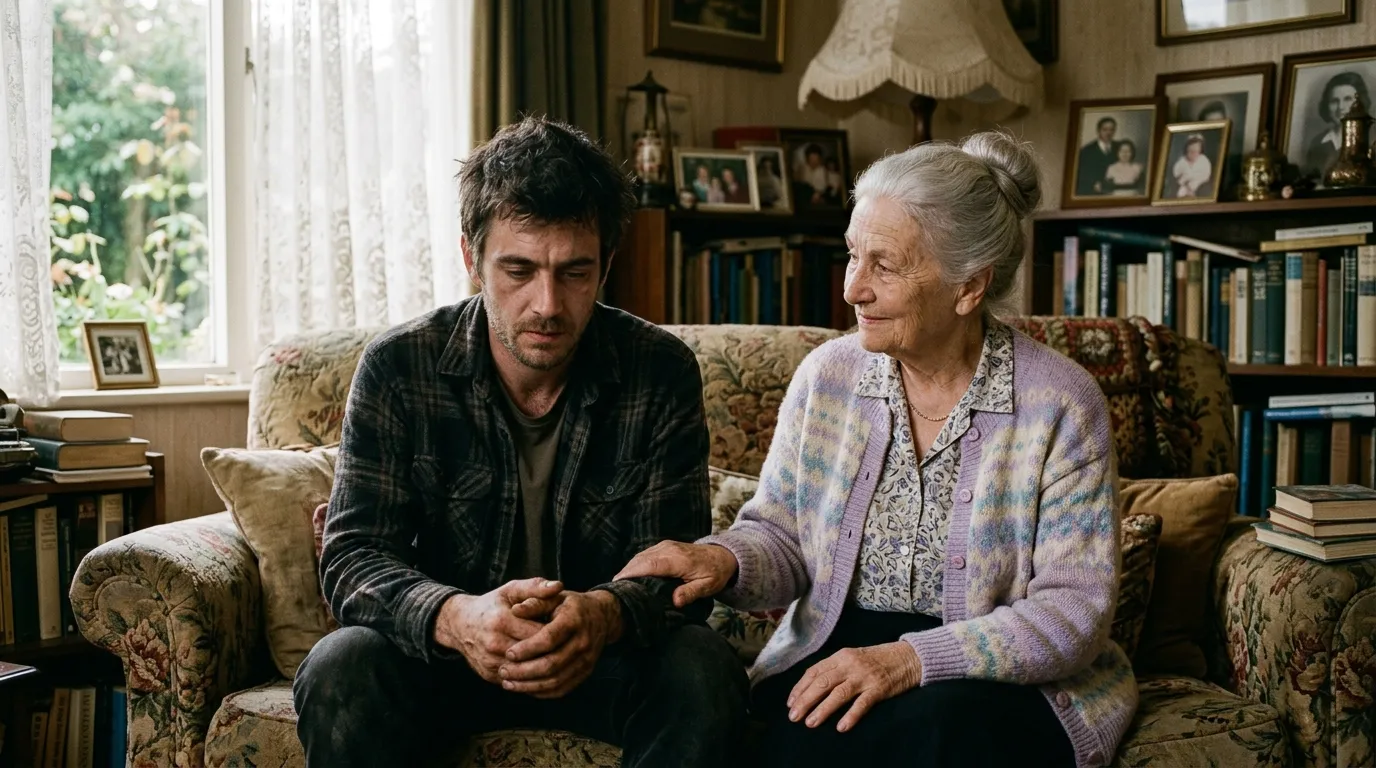
Eleonora welcomed me into her life when I had nothing left to give but broken promises.
I entered the marriage driven entirely by calculation. In my bitter, desperate mind, it seemed like a straightforward deal: I would endure a few quiet years playing the devoted, dutiful husband, wait for the inevitable, inherit her beautiful home, and finally purchase the comfortable life I believed the world owed me.
Yet Eleonora never acted like a woman being tricked. From the day I unpacked my single duffel bag in her guest bedroom, she treated me with relentless tenderness. She prepared warm meals three times a day, quietly replaced my worn-out shoes with brand-new boots, and tucked wool blankets over my shoulders when I fell asleep watching television. I gave her crumbs of politeness in return—stiff thank-yous and cold nods—while privately calculating the market value of her estate.
One brisk Tuesday morning, the charade ended. Eleonora collapsed on the linoleum floor of her kitchen while making tea. Three days later, her gentle heartbeat drifted away in a quiet hospital ward.
At her funeral, the silence of the cemetery was punctuated by the sharp whispers of her relatives. They gathered near the grave, glaring in my direction. “He was only ever with her for the house,” an aunt muttered under her breath. “A parasite waiting for a payday.”
They weren’t wrong. Their scorn burned, but I held my chin high because I thought the legal documents would justify every ounce of shame. The following afternoon, her family attorney summoned me to his mahogany-paneled office to read her final will and testament.
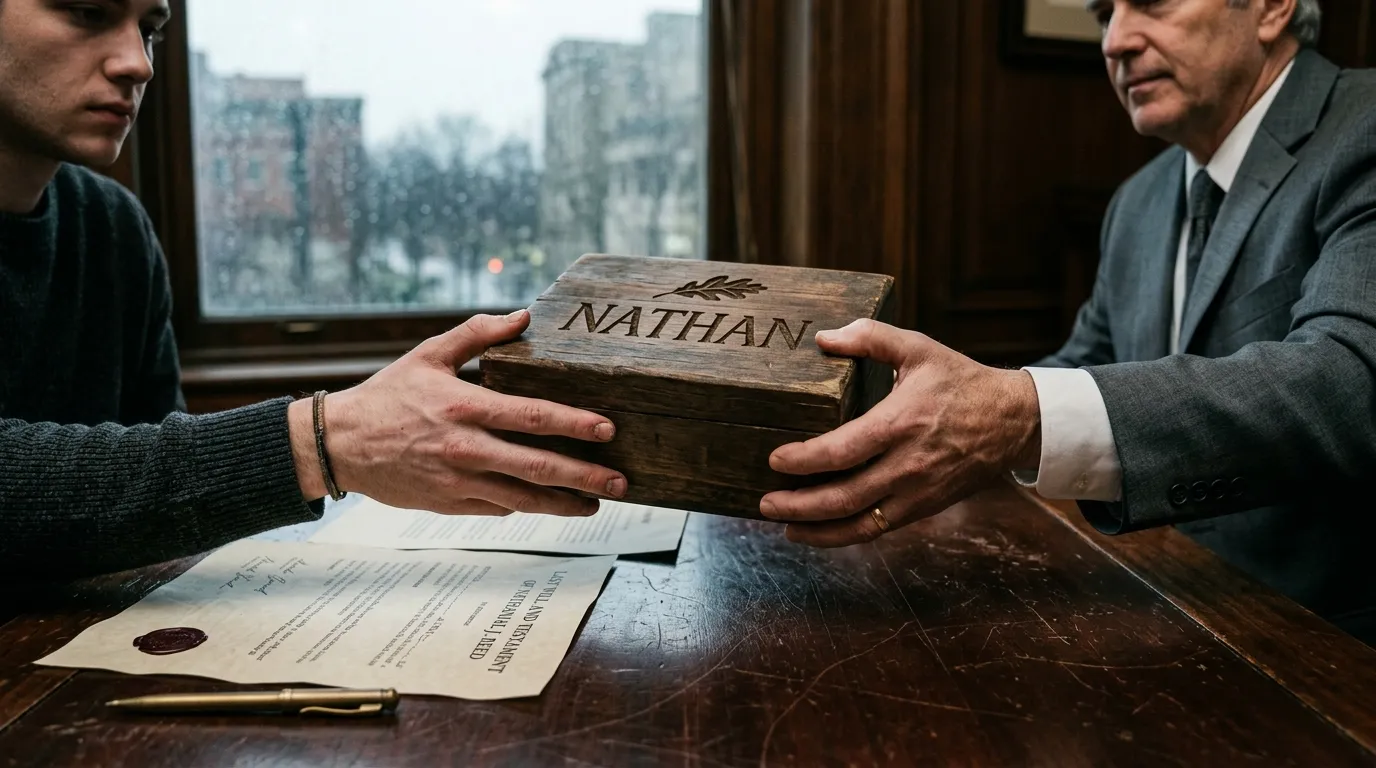
The will contained no deeds or fortune for me, only a small, carved wooden box.
Sitting in the leather chair, my pulse raced. In my mind’s eye, the deed to the property was already in my hand. But as the lawyer adjusted his glasses and cleared his throat, the illusion crumbled.
Eleonora had bequeathed the house entirely to her niece. Her remaining bank accounts and investments were divided equally among a children’s hospital, a local church, and a neighborhood homeless outreach. Not a single square foot of real estate belonged to me. Not one dollar was wired to my name.
“Did she… did she truly leave me nothing?” I managed to ask, my voice cracking under the weight of utter humiliation.
The lawyer set down the paperwork, looked at me with an unreadable expression, and reached into a desk drawer. He placed a small, dark wooden box before me. Across the lid, engraved in delicate script, were three words: For Nathan.
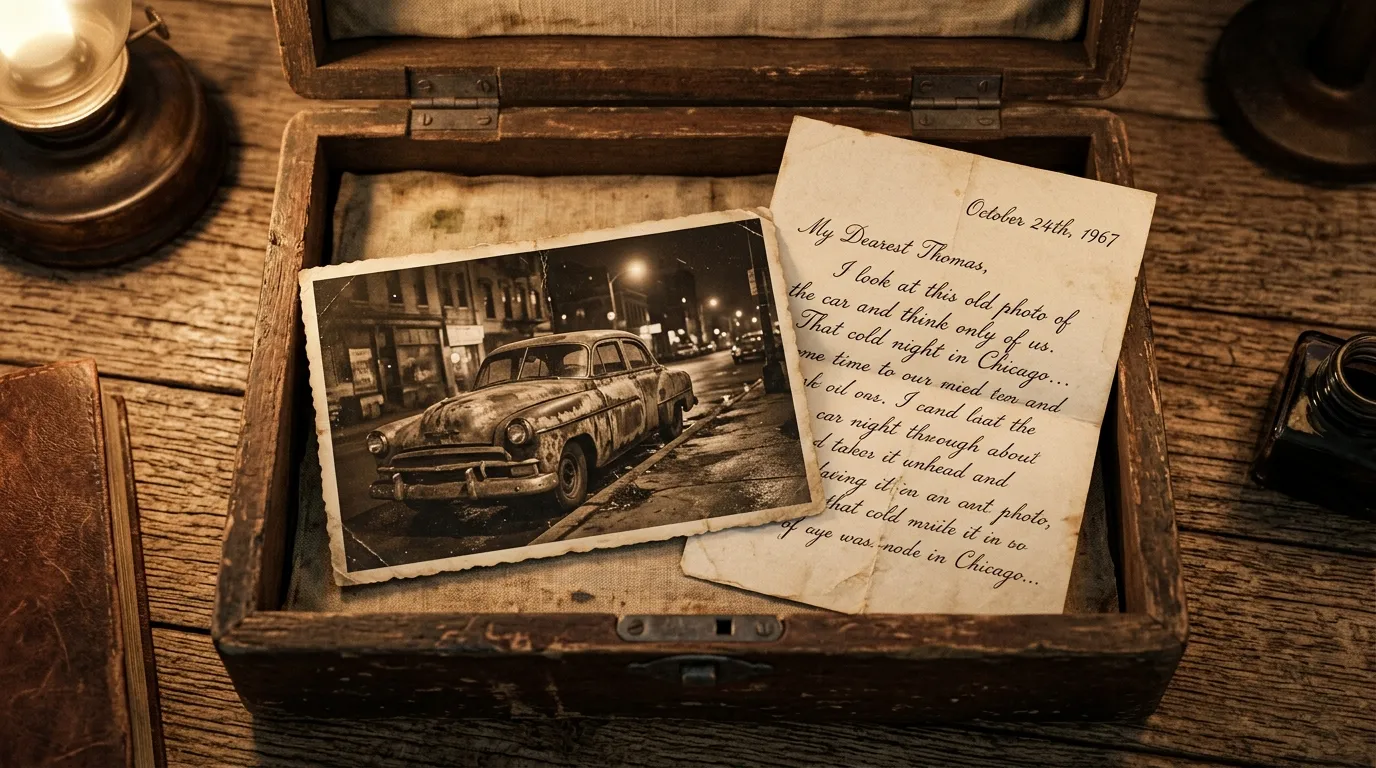
Inside lay proof that she saw straight through my armor into my deepest shame.
With trembling fingers, I lifted the brass latch. Resting at the very top was an old, faded polaroid of the beat-up sedan I used to sleep in before we met. On the back, in her steady, elegant handwriting, she had penned:
“I never saw a bad man, Nathan. I only saw a young boy whom life had broken far too hard, far too early.”
Beneath the photo lay a stack of official bank receipts: every single debt, collector notice, and overdue medical bill I had dragged behind me for years was stamped PAID IN FULL. Underneath them lay a twelve-month prepaid lease for a modest apartment in town, along with an interview confirmation for a warehouse apprenticeship.
At the bottom rested her final letter:
“Nathan, I knew from the moment you knocked on my door why you asked me to marry you. You looked at my home like a starving stray looks through a butcher’s window. You thought that having walls around you would cure the hunger inside you. But bricks and mortar cannot heal a wounded spirit. You didn’t need an estate to coast through life on; you needed a clean slate and an honest chance to discover who you actually are. Start fresh. Build a life with your own two hands, and become the honorable man I caught glimpses of when you forgot to pretend.”
I sat alone in that quiet office, clutching the letter against my chest, sobbing until my ribs ached. The woman I had plotted to exploit knew every selfish thought that had crossed my mind—and instead of discarding me, she had quietly cleared the rubble from my path.

Years later, the work of giving back has become my life’s most grounding anchor.
I moved into that small apartment the following week. I showed up for that job. It was exhausting, unglamorous, and demanding, but whenever my patience wore thin or old habits whispered that cutting corners was easier, I looked over at Eleonora’s wooden box resting on my nightstand.
Years have come and gone since that afternoon. I haven’t amassed a fortune, but I pay my own bills, look directly into people’s eyes, and no longer wait for someone else’s misfortune to secure my future. Every Saturday morning, I volunteer at the very food shelter where Eleonora donated her savings, loading boxes and serving soup to young people who carry the same hollow look I once wore.
I walked to the altar that day seeking real estate. But Eleonora understood what I was blind to: she didn’t leave me an inheritance of property, because she gave me an inheritance of character. She was never my mark, and she was never my punishment. She was my rescue.
Note:This work is inspired by real events and people, but it has been fictionalized for creative purposes. Names, characters, and details have been changed to protect privacy and enhance the narrative. Any resemblance to actual persons, living or dead, or actual events is purely coincidental and not intended by the author.
All images used in this article are AI-generated and intended for illustrative purposes only.
0 Comments