
I bought the house in 2011.
I want to state that directly at the very beginning because it is an objective, documented fact. In the end, facts are the hinges upon which this entire story swung, and I have always been a person who relies on the orderly presentation of reality long before opening the floor to interpretations, assumptions, or emotional posturing.
I bought the house on Alderwood Drive two full years before I ever laid eyes on Mark. The down payment had taken six grueling years of disciplined scrimping, funded by my salary as a supply chain analyst for a regional logistics company. I had stepped into that corporate role at twenty-four simply because the compensation was reliable, I possessed an innate knack for untangling logistical bottlenecks, and I carried a fundamental, bone-deep philosophy about financial security.
That philosophy was born from watching my father. He had owned and operated an independent hardware store for thirty-one years until the recession swept it away. In the lean years that followed, he paid rent to a commercial landlord who could—and did—hike the rates whenever the mood struck. Watching my father’s quiet humiliation taught me a foundational truth: the person who holds the deed experiences life on fundamentally different terms than the person merely paying for shelter. I vowed never to leave my roof at the whim of anyone else. I wanted the deed, the mortgage, the county property tax assessments, and the homeowner’s insurance declaration page to bear one single name: Claire Bennett.
The house was a classic four-bedroom colonial with a generous backyard, a private study, mature trees, and a kitchen that had last seen a remodel in the late nineties. It had great structural bones and floods of natural light. I had already spent two comfortable years making it my sanctuary when I met Mark at an annual vendor banquet—an event I had nearly skipped out of sheer fatigue.
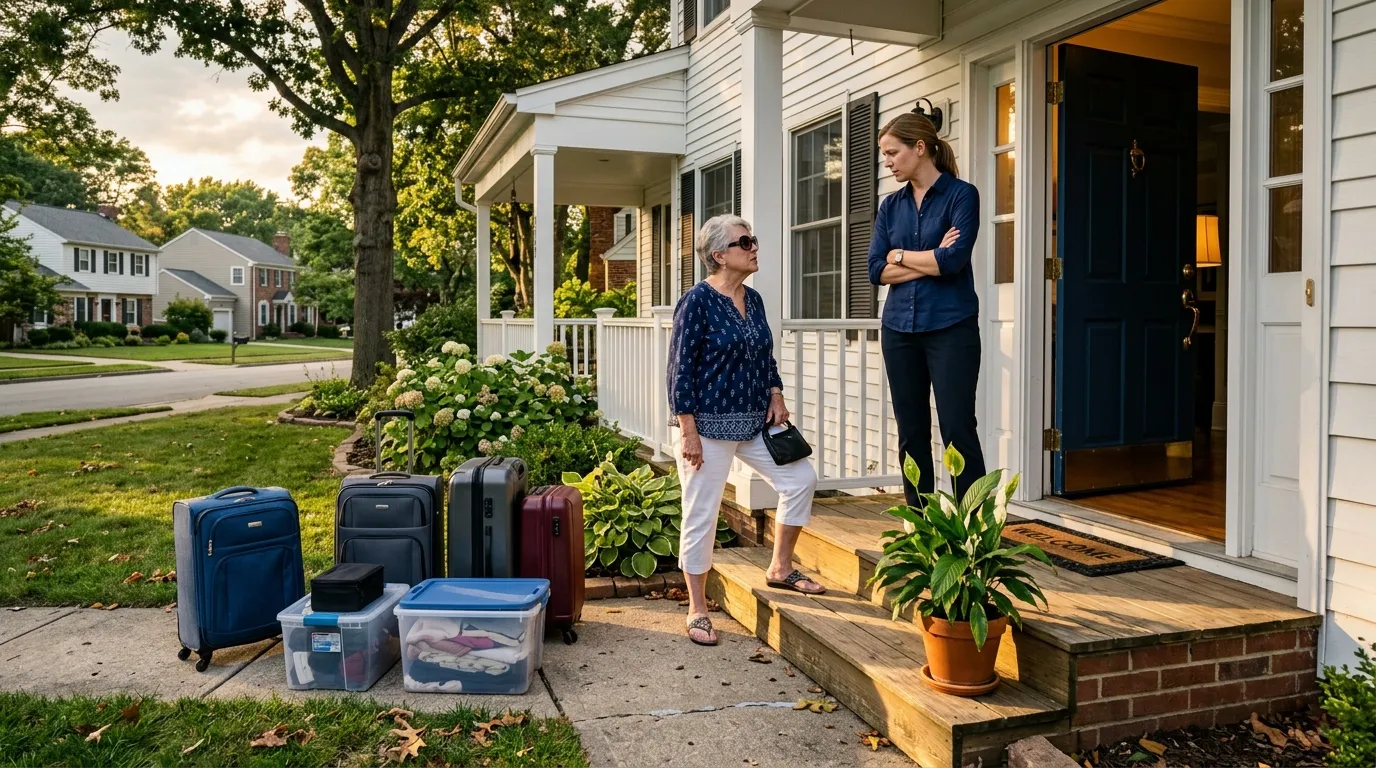
The colonial home on Alderwood Drive that I bought and paid for long before marriage.
Mark worked in commercial real estate. In hindsight, the irony is glaring, though his profession didn’t strike me as a red flag at the time; it merely suggested he appreciated the mechanics of property values. We dated steadily for a year and married in 2014.
To be fair to the marriage, it was genuinely good in many meaningful respects. Mark was present, engaged, and carried that effortless humor typical of men blessed with impeccable comedic timing. He expressed his devotion through tangible acts rather than grandiose speeches. Yet beneath our day-to-day rhythm lay an unexamined terrain of unspoken assumptions. We had skirted around the precise lines of what was his, what was mine, and what was ours—and, crucially, who possessed the authority to redraw those boundaries.
Mark was never added to the deed or the mortgage. When we tied the knot, the house was already half-paid off. During our first year of marriage, he offhandedly brought up adding his name to the title, but I brushed it aside with a casual remark about the bureaucratic hassle of refinancing. We dropped it and never revisited it. Subconsciously, I recognized I simply did not want to share ownership, though I avoided digging into why. Now, with the clarity of distance, I understand perfectly.
Then there was Diane, Mark’s seventy-four-year-old mother. Diane belonged to that formidable breed of matriarchs who treat aging as a personal grievance rather than an inevitability. Razor-sharp, theatrical, and fiercely protective, her entire universe revolved around Mark, her only son. While she was outwardly pleasant to me, her warmth carried the unmistakable conditionality reserved for a satellite orbiting her favorite sun.
For nine years, Diane sprinkled casual remarks into conversation like salt:
“You’re so blessed Mark provides such a wonderful life.”
“Must be marvelous never having to stress over mortgage payments.”
“I’m just bursting with pride over how well my boy has done for himself.”
I brushed them off as traditional relics of a bygone generation that measured a woman’s happiness strictly by her husband’s earning power. I stayed silent. That silence was my first critical mistake: I permitted an erroneous narrative to cement itself rather than having the uncomfortable conversation that would dismantle it.
That nine-year oversight collided with reality on a quiet Thursday afternoon.
At 4:17 PM, a text buzzed on my phone:
Mark: “Mom’s moving in. It’s already decided.”
I stared at the screen, reading the nine words twice to afford him the grace of a miscommunication before I dialed his number. He picked up on the fourth ring.
“What does ‘already decided’ mean, Mark?” I asked, my voice completely level.
“Claire, she’s in a bind with her landlord,” he replied defensively. “Her rent jumped forty percent. She needs somewhere to stay.”
“And at what point were you planning to include me in that calculation?”
“She’s my mother,” he said, as if that were a legal trump card.
“I am well aware of who she is,” I replied. “Where were you planning to put her?”
He fumbled through excuses, mentioning how miserable she was in her current complex and how his sister Lisa couldn’t spare a room because she needed her guest space two afternoons a week for her remote insurance job. That was the spark that sharpened my focus: Lisa’s home office was treated as untouchable, while mine was apparently being offered up as emergency shelter.
“You already volunteered my home office,” I said, cold realization washing over me.
“I’m just trying to make this work, Claire!”
“No, Mark. You’ve already made your arrangements. You’re just notifying me of the collateral damage.”
Before I could ask when this was supposed to occur, the line went dead. I called back twice; both went straight to voicemail. Shaking off the adrenaline, I forced myself back to my desk to finish my supply chain forecast. My logistics partners, unlike my husband, expected operational transparency when major disruptions were on the horizon.
At 5:11 PM, the crunch of gravel heralded an arrival. A silver crossover pulled into my driveway.
Out stepped Diane, donning white designer capris, an elegant navy blouse, and oversized sunglasses on an overcast afternoon. A moment later, Lisa emerged from the driver’s seat. This was no spontaneous family emergency; it was an orchestrated relocation. The trunk opened, revealing three hard-shell rolling bags, two plastic storage bins, a garment bag, and—incomprehensibly—a mature, potted peace lily.
I opened the front door and stood firmly across the threshold.
“Which room did Mark clear out for me, Claire?” Diane asked with an expectant smile.
“He didn’t clear out any room, Diane.”
The smile vanished. “Excuse me?”
Lisa hoisted a plastic bin against her hip. “Oh, come on, Claire. Don’t start drama right now. We’ve had a long drive.”
“I haven’t started anything,” I said calmly. “You two are the ones standing on my private porch with half an apartment packed in your car. Diane, you are more than welcome to step inside, sit down, and have a cup of tea. But you are not moving into this house today.”
“Mark told me I could live here!” Diane snapped, her voice rising an octave. “Step aside, Claire. These suitcases are heavy.”
I didn’t budge an inch. “I know what Mark told you. But you are not moving in.”
Lisa pulled out her smartphone, lens aimed directly at my face. “Go ahead, refuse an elderly woman shelter. Let’s see how your friends react to this on video.”
“Put the phone away, Lisa,” I said coldly. “The only thing that will embarrass your family today is the replay of your own entitlement.”
Fuming, Diane dialed Mark. No response. She tried again. Straight to voicemail. Trembling with frustration, she glared at me. “My son owns this property! You have no right to lock me out of Mark’s house!”
The truth sat right on the tip of my tongue: Mark doesn’t own a single square inch of this foundation. I bought it before I ever shook his hand. But I held back. If Diane honestly believed Mark owned this estate, it was because Mark had actively nurtured that fantasy through nine years of cowardice. I was not going to give him an easy out by delivering the blow myself. He was going to face the narrative he created.
“Fine!” Diane barked. “If you won’t listen to reason, let’s see what the authorities have to say!”
She dialed 911. Lisa gasped, “Mom, don’t!” but Diane pressed the phone to her ear, loudly announcing to the county dispatcher that her hostile daughter-in-law had barricaded her out of her son’s home.
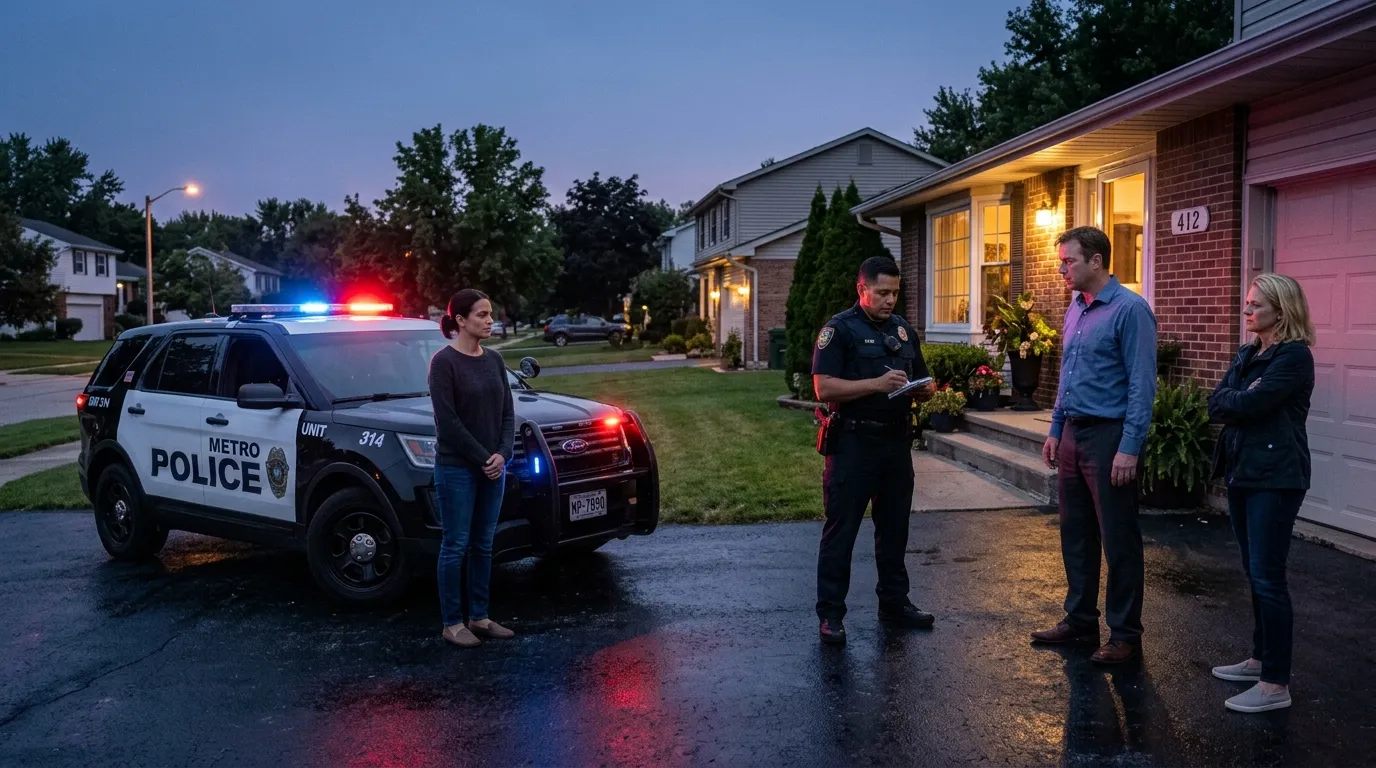
Officer Ruiz arrived at the scene just as Mark pulled into the driveway.
At 5:34 PM, two things happened in rapid succession: Mark’s sedan swung into the driveway, and Officer Ruiz’s patrol cruiser rounded the corner, lights flashing.
Mark stepped out of his car, turning pale as he took in the spectacle: his mother waving frantically, his sister clutching a storage bin, luggage scattered along the grass, and a uniform approaching. For the first time in his life, Mark realized the bill for his avoidance had arrived.
Officer Ruiz approached with the world-weary patience of someone accustomed to untangling neighborhood theatrics. “Alright, who placed the call?”
“I did, Officer!” Diane chimed in, marching forward. “My daughter-in-law is refusing to grant me access to my son’s house!”
Ruiz took out his notepad, turned to me, and tilted his head. “Ma’am? What’s your name?”
“I’m Claire Bennett. I live here.”
He turned back to Diane. “Do you reside at this address, ma’am?”
“I am moving in today,” she insisted. “My son told me—”
“Do you currently receive mail here? Have you established legal residency?”
“No, but—”
Ruiz turned his attention to Mark, who was lingering by his bumper, clearly wishing the pavement would swallow him whole. “Sir, are you the property owner?”
The silence that settled over that driveway was suffocating.
Mark looked at Diane. He looked at me. He swallowed hard. “Claire… can we please stop embarrassing everybody?”
Not: Officer, I made an egregious mistake.
Not: Mom, I lied by omission, and this is entirely my fault.
Simply: Stop embarrassing everybody. Even backed into a corner, his reflex was to frame my insistence on reality as the social crime.
“Sir,” Officer Ruiz pressed, his tone hardening. “I asked you a direct question. Do you own this property?”
“It’s… complicated,” Mark mumbled.
“No, Officer, it isn’t complicated at all,” I intervened, stepping forward. “I am the sole owner of this property. I purchased it in 2011, two years before I met Mark. My name is the only name on the title, the deed, and the mortgage. Mark has never had legal ownership of this home.”
The driveway went dead still.
Diane’s face drained of color, her haughty posture crumbling into utter disorientation. Lisa slowly set the storage bin down on the grass. Mark stared squarely at his shoes.
Officer Ruiz turned back to Diane. “Ma’am, the homeowner has the sole legal authority to decide who resides on this property. Your son has no legal power to grant occupancy without the deed holder’s consent. No laws have been broken here. You’ll need to resolve this as a civil family matter.”
With a curt nod, the officer returned to his cruiser and pulled away, leaving the four of us standing in the deafening quiet of the early evening.
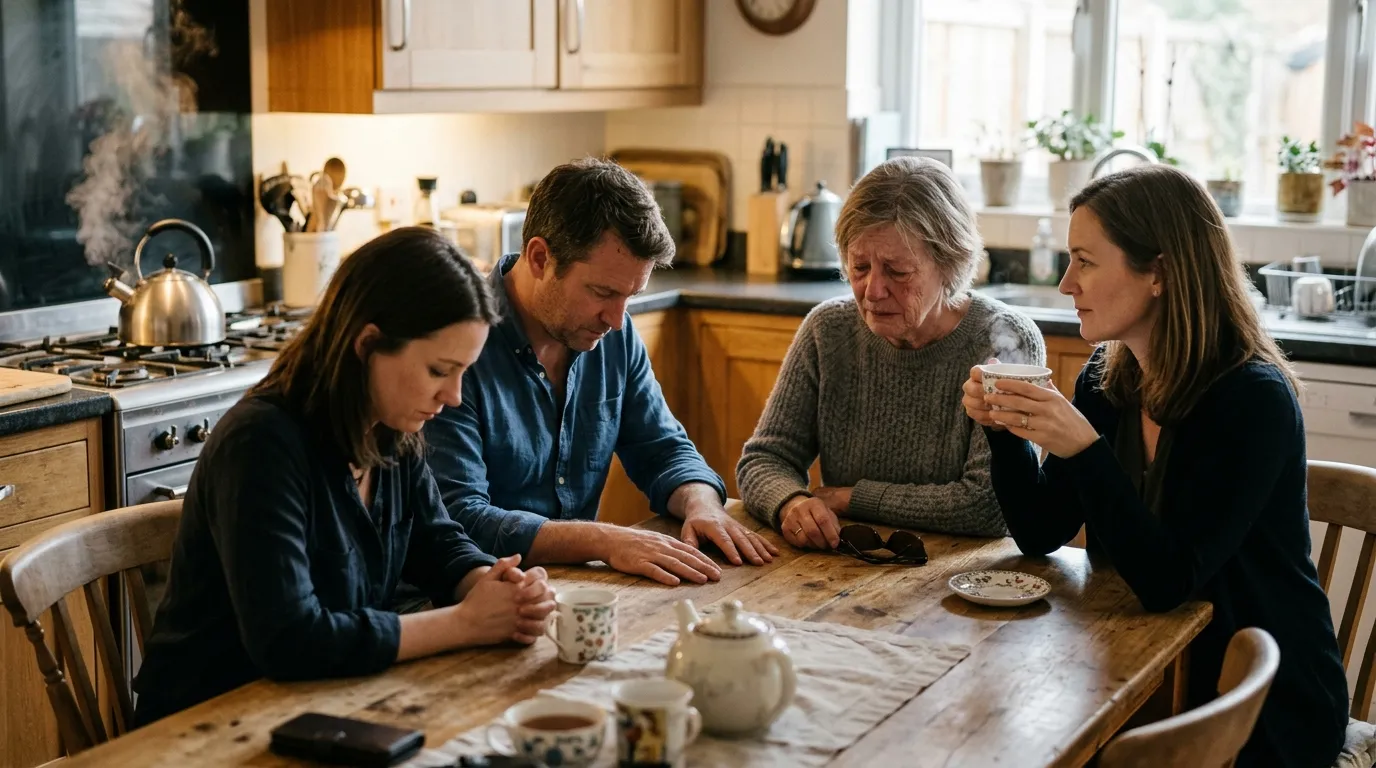
The difficult truth finally came out over cups of hot tea in the kitchen.
Diane turned to Mark, her voice uncharacteristically faint. “You told me this was your house.”
“I never explicitly said that, Mom,” Mark stammered.
“You never once corrected me when I did!” she whispered, the betrayal stinging her eyes.
I took a deep breath. “Diane, Lisa—come inside. Let’s sit down.”
It wasn’t blind forgiveness; it was the recognition that this rupture needed a table, chairs, and warm mugs if it was ever going to heal properly. Inside, I put the kettle on, letting the rhythmic whistle steady my thoughts. When the tea was poured, I sat down and addressed my husband.
“Mark, this house has been mine for twelve years,” I said evenly. “You have known that every single day of our marriage. Yet for nine years, you sat quietly while your mother showered you with praise for providing this home and wondered out loud how lucky I was to be taken care of. You soaked up a narrative that erased every drop of sweat I poured into building my own life.”
Diane looked at her son with genuine sorrow. “Is that true, Mark?”
“Yes,” Mark said, his voice cracking. “The house is Claire’s.”
Diane buried her face in her hands, then looked directly across the table at me. “Claire… I owe you a sincere apology. I thought I was celebrating my son’s success. I never realized I was belittling yours.”
“Thank you, Diane,” I replied softly. “I know you didn’t do it out of malice, but it hurt nonetheless.”
Lisa cleared her throat, her head down. “I’m sorry too, Claire. For the phone, and for bringing her here without checking with you first. I thought if we showed up, you couldn’t say no.”
“You tried to corner me in my own home,” I said. “And that was unacceptable.”
Then I turned back to Mark. “When Officer Ruiz asked who owned the house, you said it was ‘complicated’ and told me to stop embarrassing everyone. You were willing to sacrifice the truth just to protect your ego.”
“I was terrified of letting everyone down,” Mark admitted, his eyes wet. “I’ve been calculating everything backward. I should have asked you. I should have been honest nine years ago. I am so sorry.”
The anger that had propelled me through the afternoon began to dissipate, leaving behind a clean slate of clarity. “Diane,” I said, breaking the silence. “The senior community in Lanexa has open units, and you and Mark are going to tour them next week. But until that transition is sorted out, you are welcome to stay here in the guest room for three weeks. As our guest. Because you’re family.”
Diane wiped a stray tear. “Even after I called the police on you?”
“You reacted based on a lie you were fed,” I replied. “That wasn’t entirely on you.”
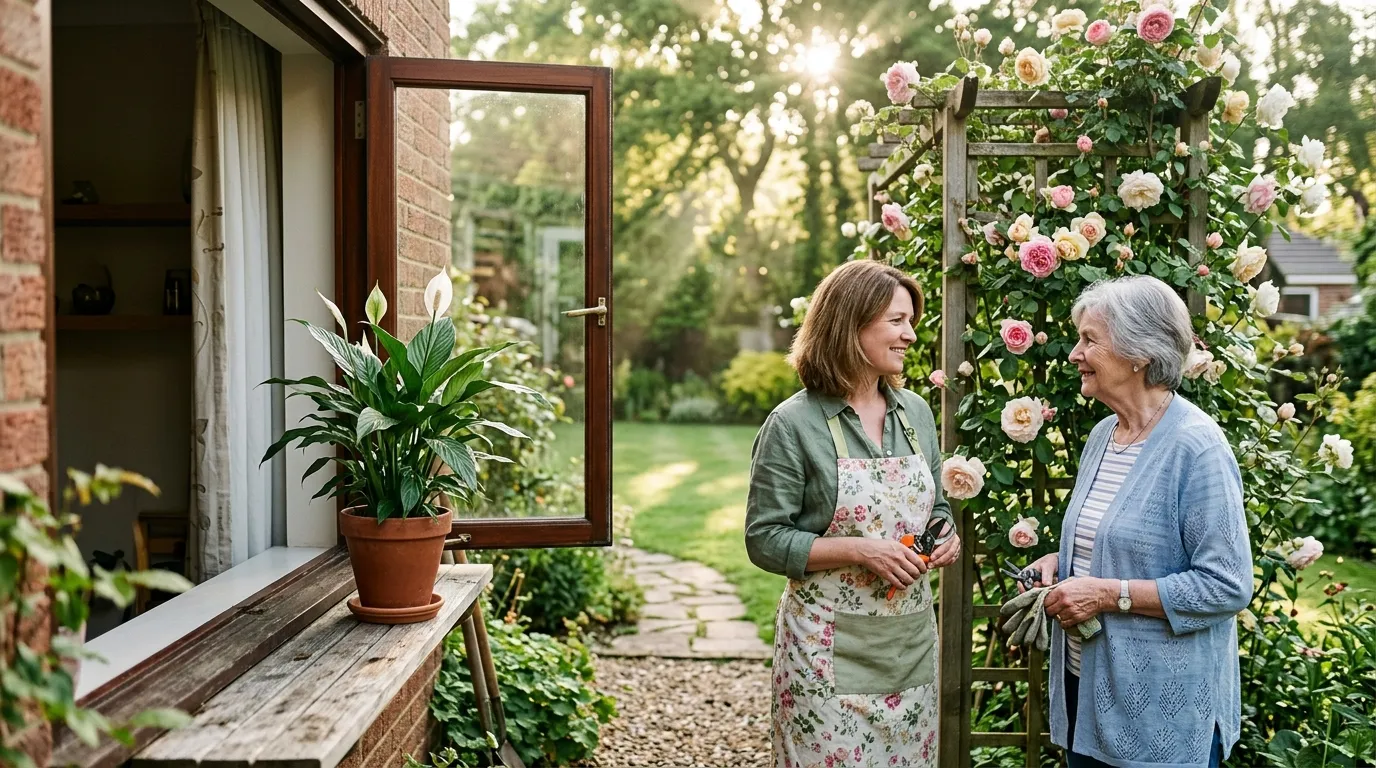
A fresh start: The peace lily found its place while we learned to prune our expectations.
Diane moved into the guest bedroom the next morning. She carried in her peace lily, placing it gently on the sill overlooking the backyard.
“You built a lovely life here, Claire,” Diane murmured, watching the breeze sway the garden roses outside. “Mark was the lucky one to be invited into it.”
“Thank you,” I said.
She gestured toward the overgrown rose bushes along the fence line. “Those roses need attention, though. You’ve been pruning them too short. People always make the mistake of cutting too short out of fear, when what the plant really needs is room to branch out on a long cut.”
I smiled softly. “I’d appreciate you showing me how to do it right.”
Later that evening, after the luggage was unpacked and the house grew quiet, I found Mark leaning over the kitchen counter, gazing at the empty tea mugs.
“Can we rebuild from here?” he asked quietly.
“We can,” I said, walking beside him. “As long as we agree that honesty comes before comfort. Every time.”
He nodded, resting his hand over mine. A single afternoon had upended nine years of comfortable illusions, but it left behind something far more durable: the bedrock of truth. I cleared the mugs, set them in the dishwasher, and began preparing dinner—because taking the next honest step forward is always the best place to begin.
Note:This work is inspired by real events and people, but it has been fictionalized for creative purposes. Names, characters, and details have been changed to protect privacy and enhance the narrative. Any resemblance to actual persons, living or dead, or actual events is purely coincidental and not intended by the author.
All images used in this article are AI-generated and intended for illustrative purposes only.
0 Comments