
The Call That Changed Everything
My mother-in-law stayed behind on our family beach vacation with a man she had known for less than a week. It was a bold, unexpected move that left everyone stunned. But exactly five days later, my phone illuminated the dark bedroom, ringing loudly at 12:47 in the morning.
It was Valerie.
When I answered, her voice was barely a whisper, trembling slightly through the receiver. “Please help me,” she pleaded softly. “Don’t tell my son.”
That one desperate sentence changed absolutely everything about our family dynamic.
I had been happily married to Owen for eight years. Valerie was one of those mothers-in-law who called her son almost every single day, yet somehow, she never made it feel overbearing or strange. Usually, it was harmless chatter. She would ask about his work, fill him in on which distant relatives were currently irritating her, or send him pictures of random things around her house that she thought needed fixing.
After Owen’s father passed away two years earlier, those daily calls became even more crucial. They were her lifeline. Owen complained about it sometimes, rolling his eyes as his phone vibrated, but he always answered. Valerie was his only parent left, and Owen was her only son. She had been married to his father for 35 beautiful years, and his sudden death seemed to drain the vibrant color right out of her life.
She stopped traveling. She stopped accepting dinner invitations. She simply stopped living out loud.

After my father-in-law passed, Valerie’s world shrank. We just wanted her to remember how to live again.
For the first few days of our beach vacation, she mostly just sat beside the resort pool with a thick book. Whenever well-meaning friends suggested she meet someone new, she would firmly shake her head. “I already had the love of my life,” she would say with quiet finality.
An Unexpected Spark
When Owen and I initially planned a week-long getaway at the beach, inviting Valerie seemed like the most obvious and loving thing to do. We wanted her with us. We wanted her to get out of her silent, empty house. More than anything, we wanted her to remember that life could still contain something beautiful besides grief.
For the first couple of days, as expected, she mostly read beside the pool. Then, she met Russell.
It happened completely by chance at the hotel bar on our second evening. Owen and I had gone upstairs to turn in early, but Valerie opted to stay behind for a nightcap. By the time we left her, she and Russell were deeply engrossed in conversation. I only really noticed him because of Valerie’s reaction to him. She was laughing. It wasn’t the polite, measured laugh she gave people when they told a joke she didn’t find particularly funny. She was actually, genuinely laughing.
Russell was 65, divorced, and had two adult children of his own.
At breakfast the following morning, Valerie appeared at our table wearing bright red lipstick. Owen stopped mid-bite and stared at her as if she were an alien.
“Why are you dressed up?” he asked bluntly.
She looked immediately offended. “I’m not that dressed up.”
“You’re wearing lipstick.”
“I’ve worn lipstick before, Owen.”
I kicked him hard under the table. “Not at eight in the morning, you haven’t,” he grumbled.
Valerie smiled, a secretive, youthful glimmer in her eye. “Russell asked if I’d have breakfast with him.”
Owen leaned back in his chair, crossing his arms. “Russell?”
“Yes, Owen. Russell.”
The Whirlwind Romance
That breakfast was just the beginning. Over the next few days, we barely saw Valerie at all. And honestly? I was absolutely thrilled about it. She and Russell took long walks along the beach every single morning. They shared intimate lunches together. One evening, they even drove about 20 minutes down the rugged coast to a fancy seafood restaurant. Valerie didn’t come back to the hotel until well after 10 that night.
She looked happier and more alive than I had seen her since long before her husband died. Owen noticed the dramatic shift too. But seeing his mother glowing with happiness didn’t stop his deeply ingrained habit of worrying.
He was pacing the hotel lobby, waiting for her when she returned.
“Mom, you barely know this man,” he scolded.
Valerie stopped walking, her smile fading. “Stop talking to me like I’m 16.”
“I’m just worried! You’re 63.”
“I know exactly how old I am, Owen.”
“Then stop acting like a teenager and let me look out for you.”
“I’m not acting like a teenager,” she shot back.
“You absolutely are.”
We soon learned that Russell had rented a charming little cottage farther down the coast for another entire month. When Valerie first told us about it, I assumed she was just making conversation. She wasn’t.
That afternoon, Russell formally invited her to stay with him after our family vacation ended. The night before Owen and I were supposed to fly back to our everyday lives, the three of us sat out on the warm balcony overlooking the ocean. Valerie calmly took a sip of her wine and announced that she had changed her return flight.
Owen stared at her, horrified. “You’ve known him for three days.”
“I know.”
“You’re staying with him?”
“I’m not moving in with him, Owen. Don’t be dramatic.”
“And you’re going to live with him?”
“I just said, I’m not moving in with him.”
“What would you call it then?!”
“A vacation,” she said smoothly.
“At his house? With a total stranger?”
Valerie’s peaceful smile completely disappeared. “Do you hear yourself?”
Owen leaned forward, his voice tight. “Mom, this just isn’t like you.”
“Maybe you don’t know what I’m like anymore.”
That sentence hit Owen much harder than she probably intended. He looked deeply wounded. Valerie stood up, her hands trembling slightly.
“I spent two whole years going from my quiet house to the grocery store and back. I finally meet someone who actually makes me laugh, and everyone acts like I’ve completely lost my mind.”
“Nobody said that,” Owen protested.
“You didn’t have to.”
She turned and walked away, wiping a tear from her cheek. Owen remained frozen on the balcony, staring blankly into the dark distance.
“This is a massive mistake,” he said eventually.
I looked toward Valerie’s closed room door. “Maybe.”
He turned to me, seeking an ally. “You agree with me?”
“I think she’s incredibly lonely, Owen.”
“Exactly!”
“But that doesn’t mean she’s helpless,” I reminded him gently.
He rubbed his face in frustration. “You really think we should just leave her here?”
“I think she’s an adult, and she is allowed to make a decision we wouldn’t personally make.”
The next morning, against his better judgment, Owen and I flew home without her.
The Silence After the Storm
At first, everything seemed perfectly fine. Valerie called Owen every single morning, right on schedule. She enthusiastically sent pictures of beautiful restaurants, breathtaking sunsets, and ridiculous, colorful cocktails with little umbrellas. Russell appeared in several of the photos. He looked completely normal and happy. More importantly, Valerie looked genuinely radiant.
Then, on the fourth day, the steady stream of pictures abruptly stopped.
“Mom hasn’t sent anything today,” Owen noted, pacing the kitchen.
“She called you this morning,” I reminded him.
“Yeah. For exactly six minutes.”
I stopped chopping vegetables and stared at him. “Do you actually time her phone calls?”
“No,” he lied. His defensive expression told me he absolutely did. I sighed and told him to just leave it alone and let her enjoy her time.
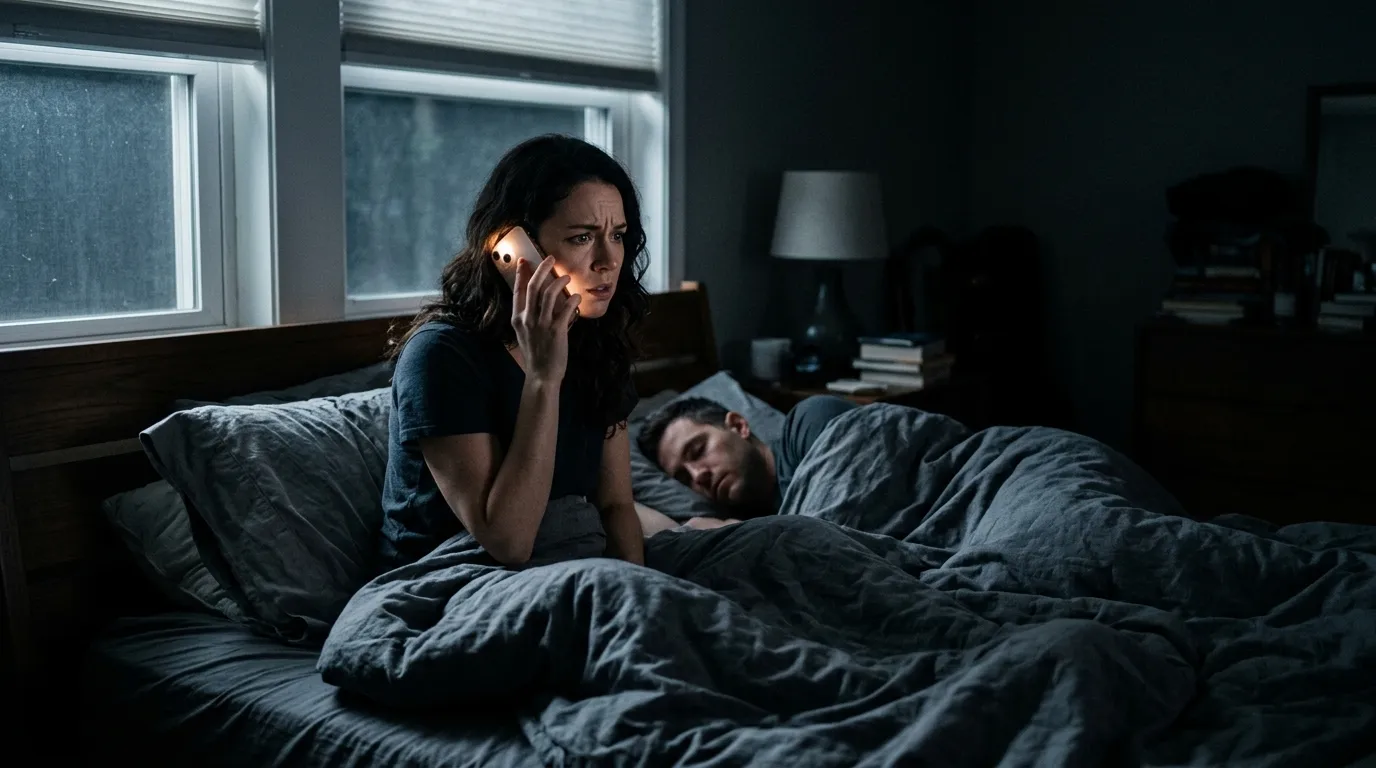
The 12:47 a.m. phone call that changed everything.
Then came the fifth night. We had been asleep for hours when my phone suddenly vibrated on the nightstand. It was 12:47 a.m. The caller ID glowed with one word: Valerie.
Owen was snoring softly beside me. I slipped out of the covers and answered quietly so I wouldn’t wake him. “Valerie?”
Nothing. Just the faint sound of static.
Then I heard heavy, shaky breathing. “Natalie?” Her voice was barely above a fearful whisper.
I sat up straight, my heart pounding. “Are you alone?”
“Yes.”
I glanced over at Owen. “He’s asleep. What’s wrong? What happened?”
There was another long, agonizing silence. Then she said the sentence that made my stomach completely drop.
“Natalie, I need you to save me.”
I was out of bed and pacing the hallway immediately. “Where’s Russell?”
“Sleeping.”
“Did he hurt you?” I demanded.
“No.”
“Did he threaten you?”
“No.”
“Are you locked in somewhere?”
“No.”
I stopped pacing and took a deep breath. “Then tell me exactly what’s happening, Valerie.”
Her breathing hitched, sounding close to a sob.
“Has he stopped you from leaving? Taken your phone? Your money?”
“No… no.” She was quiet again. Then she whispered in a rush, “I can’t explain this properly over the phone. I just know I don’t want to be here when he wakes up and starts trying to talk me out of leaving again.”
That was different. That wasn’t physical danger, but it was emotional suffocation.
“What’s wrong, Valerie?”
“I think I made a terrible mistake.”
“Okay,” I said calmly.
“I want to come home.”
“Okay.”
“Please help me.”
“I’m coming right now.”
Then she added the one thing she was most terrified of. “Please… don’t tell my son.”
I froze in the hallway. “What?”
“Please, Natalie.”
“Valerie, if you’re in danger—”
“I’m not scared exactly,” she interrupted. That honest answer somehow made the entire situation feel vastly more complicated.
“Where are you right now?”
“I’m hiding in the bathroom.”
“Can you get out of the house safely?”
“Yes.”
“Then pack what you need. Get out of the house, go somewhere public and well-lit, and text me the address.”
“Natalie, I feel so ridiculous,” she sobbed softly.
“You can feel ridiculous after breakfast,” I told her firmly. “Get packing.”
The Rescue Mission
By six o’clock that morning, I was standing at the airport terminal. I left Owen a carefully worded note on the kitchen counter explaining that his mother needed me for some girl time, and that I would tell him the full story once I understood what had happened.
After my flight landed, I sent him one quick message to keep him at bay: “She’s safe. I’ll call you when I understand the rest.”
Valerie was waiting for me at a small, coastal breakfast place three streets down from Russell’s rented cottage. Her large suitcase was parked awkwardly beside the table. She looked utterly exhausted, the dark circles under her eyes visible even from the doorway. But she didn’t look terrified. That mattered.
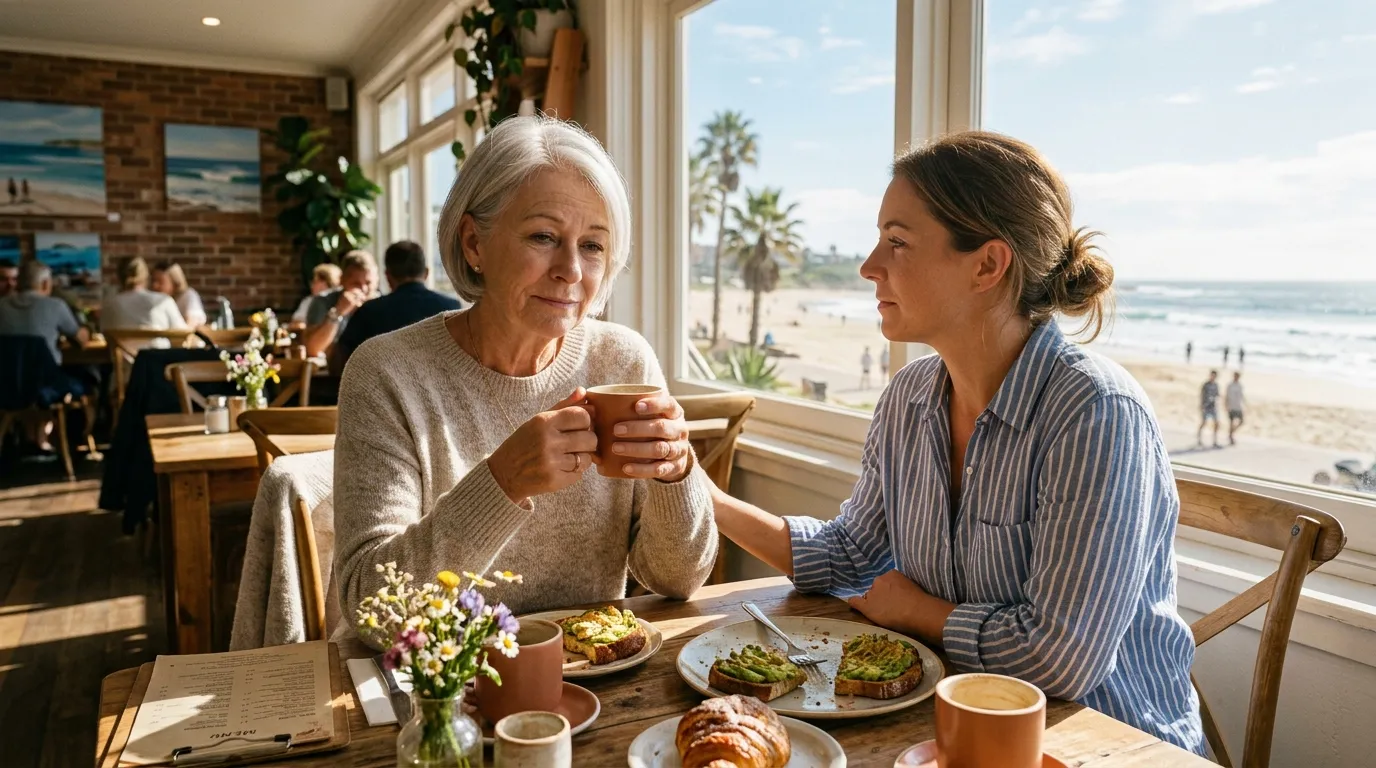
Changing your mind doesn’t mean you made a mistake; it means you’re finding your way.
When she saw me, she stood up and hugged me fiercely. “The first day was wonderful,” she blurted out before we even sat down.
She sank back into her booth. “I don’t even know if Russell did anything specifically wrong.”
I sat across from her and ordered a coffee. “Start with why you left in the middle of the night.”
She wrapped both hands around her warm mug, anchoring herself. “The first day really was wonderful. We cooked a beautiful dinner together. We walked along the beach at sunset. Russell opened an expensive bottle of wine and told me he hadn’t laughed that much in years. It felt so good to feel wanted.”
But the very next day, the atmosphere completely changed.
“He started talking about Christmas,” she said, her eyes wide.
I nearly choked on my coffee. “Wait. What did he say?”
“He casually asked whether I’d rather spend the holidays at his house or mine. I just brushed it off. I thought he was just making conversation, getting carried away in the moment.”
Then, Russell decided to drive her through a charming, expensive neighborhood near the coast.
“He pointed at this beautiful little blue house,” she recalled, shivering slightly. “He said something like, ‘That would be perfect for us next season.’”
“For us?” I asked.
“Exactly. I’d known this man for less than a week, Natalie.”
I nodded in understanding.
“But everyone around us smiled and encouraged it,” she continued. “A restaurant server asked whether we were just visiting the area. Russell smiled, pulled me closer, and answered, ‘My girlfriend just needs a little convincing to stay longer.’ I nervously laughed it off. Russell didn’t. He was dead serious. That was when something inside me began to shift and panic.”
The red flags kept mounting. The following morning, he started aggressively looking at local rental listings on his laptop. He pressured her, asking whether she preferred two bedrooms or three. Then he boldly suggested that she could eventually sell her house because keeping two separate homes “didn’t make sense” for a couple their age.
“He said he was just thinking ahead,” Valerie said quietly.
I raised my eyebrows. “He said eventually?”
“He said he was thinking ahead. But I started thinking about getting on a plane.”
That night, Valerie finally found the courage to tell Russell she wanted to spend the rest of the trip in a hotel by herself. His reaction was chilling, not because of anger, but because of his sheer refusal to accept reality.
He didn’t yell. He didn’t physically threaten her. He simply refused to accept her answer.
“He badgered me, asking why I was sabotaging something good,” she said, wiping beneath one eye. “He kept throwing my own words back at me, reminding me how lonely I’d told him I was. Then he psychoanalyzed me, saying fear was making me run away and he wouldn’t let me do that to myself.”
I leaned across the table, looking her dead in the eye. “Do you want to stay with him?”
She shook her head vigorously. “No.”
“Then that’s enough.”
She looked up at me, surprised by the simplicity of it. I repeated it so she would truly hear me.
“Changing your mind is enough, Valerie.”
Her mouth trembled, and the tears finally fell. “I couldn’t call Owen.”
“Because he’d say he knew it all along?”
She nodded, ashamed.
And that’s when I finally understood exactly why she had called me at midnight instead of her own son. She didn’t need someone to physically rescue her from a dangerous man. She needed an advocate—someone who wouldn’t turn her decision to leave into humiliating proof that she had been foolish.
The Confrontation
After breakfast, I walked with her back to the cottage to collect the rest of her things. Before we went inside, I pulled out my phone and texted Owen our exact address. I didn’t ask him to come. I simply wanted him to know where his wife and mother were.
Russell opened the front door. His confident expression crumbled immediately when he saw me standing there.
“Natalie,” he said, his voice tight.
“Hi.”
“What’s going on?” He looked frantically at Valerie. “What’s going on?”
Valerie stepped past him and picked up her smaller suitcase from the hallway. “I’m getting the rest of my things.”
His jaw tightened in frustration. “Did Owen send you?”
“No,” I answered.
Russell ignored Valerie and kept looking at me, searching for logic. “Does he know you’re here?”
“Now he does.”
He threw his hands up, looking deeply confused and offended. “Why is everyone treating her like she can’t make her own decisions? I was offering her a real life!”
Valerie stopped packing and stood up straight. “They aren’t treating me like that. I asked her to come here.”
“But I listened to you! I was trying to help you!”
“No,” Valerie said, her voice finally steady. “You argued with me. You decided I was panicking because you simply didn’t like my answer.”
Defeated, Russell slumped down onto the hallway bench. For the very first time, he looked much less like the smooth, confident man she’d met at the hotel bar, and much more like a fragile man who had become deeply frightened by the very real possibility of being alone again.
“After my divorce, my kids moved away,” he confessed, looking out the window at the ocean. “I go home, and there’s nobody there. My house is just… empty.” He looked back at Valerie, his eyes pleading. “Then I met you. I thought this was something real.”
“It was something,” Valerie said softly.
“Then why leave?”
“Because a few good days don’t mean we belong together.”
Russell slowly lowered his head. “I moved too fast.”
“So did I,” Valerie admitted gently.
That was the harsh truth neither of them had wanted to face in the sunlight. Russell had selfishly treated a few happy days as concrete proof that he had found a permanent partner to fill his void. Valerie had desperately treated those exact same days as proof that she was finally moving forward from her grief. Neither conclusion was fair to the other.
Russell eventually stood up. In a gesture of quiet surrender, he picked up one of Valerie’s heavy bags and carried it to the front door. This time, when she told him she was leaving, he didn’t challenge her.
The Climax: Breaking Patterns
We were carrying the last suitcase out to my rental car when another car screeched to a halt in the driveway. Owen leaped out. He must have booked the very first flight out of the city after seeing my address message.
He rushed toward us, breathless and panicked. “Are you okay?!”
“I’m perfectly fine,” Valerie said calmly.
Then Owen locked eyes with Russell standing in the doorway. His face hardened into pure fury. He whipped around to look at me. “What happened?”
But before I could even open my mouth to explain, Owen said the absolute worst words possible—the exact words that made Valerie stop walking.
“I knew this was a bad idea.”
Valerie turned slowly to face him.
Owen, blind to the damage he was causing, kept going. “I knew it. I told you this was a mistake from day one.”
She looked at him with ice in her eyes. “And that, Owen, is exactly why I didn’t call you.”
Owen blinked, completely taken aback. “What? No, Mom… I’m angry.”
“You think I’m embarrassed because Russell disappointed me. You think I need to be lectured.”
“Aren’t you embarrassed?”
“No. I’m angry.”
“At him?” Owen pointed furiously at the house.
“No. At you.”
Owen looked completely stunned, as if she had slapped him. Valerie abandoned her suitcase and stepped right into his personal space.
“Since your father died, you question absolutely everything I do. You treat me like a fragile glass doll.”
“Mom, I’m worried about you!”
“You check whether I’ve eaten. You ask where I’m going. You call my friends in a panic if I don’t answer the phone by the third ring!”
“Because I care about you!”
“I know you do,” her voice cracked, softening just a fraction. “But sometimes, Owen, your concern feels like supervision. It feels like a prison.”
Owen stood rooted to the spot. He didn’t know what to say.
“I never wanted you to feel incapable,” he finally whispered.
“I know.” Valerie took a deep, shaky breath, letting the ocean air fill her lungs. “But I did. And I wanted to prove to myself that I could make one bold, spontaneous decision without needing your signed approval first.”
Owen’s defensive posture finally melted away.
“Leaving Russell doesn’t make staying here in the first place stupid,” Valerie continued, her voice strong and unwavering. “It just means I tried something, I learned something, and I changed my mind. That’s a right I still have.”
For once in his life, Owen didn’t defend himself. He looked at his mother. Really looked at her. Then he looked at the heavy suitcase sitting on the gravel. Then back at her.
“What do you want to do now?” he asked quietly.
Valerie blinked, surprised by the pivot.
“I want my own hotel room.”
It was probably the first genuinely useful, non-judgmental question he’d asked all morning.
“I want my own hotel room, son.”
Owen nodded slowly. His hand reflexively moved toward his phone in his pocket to fix the problem for her. Then, catching himself, he stopped and pulled his hand away.
“Okay,” he said. “Tell me if you want help booking it.”
Valerie’s expression softened into a beautiful, genuine smile. “I will.”
Moving Forward
She booked the expensive, ocean-view room all by herself. Owen, finally understanding his assignment, flew home that evening to give us space. I stayed with Valerie at the hotel for two more nights, simply because she asked me to.
We ate incredible dinners together. We walked for miles along the beach, letting the waves crash over our feet. We talked about life, grief, marriage, and everything in between—except Russell.
On my last morning before my flight, we were sitting on her new balcony. Valerie looked over at me and smiled thoughtfully.
“I thought jumping into things with Russell meant I was finally moving forward.”
I looked at her. “And now?”
She thought about it for a long moment. Then her smile widened into something profoundly peaceful.
“I think sitting here, ordering a decadent dessert all by myself, might count too.”
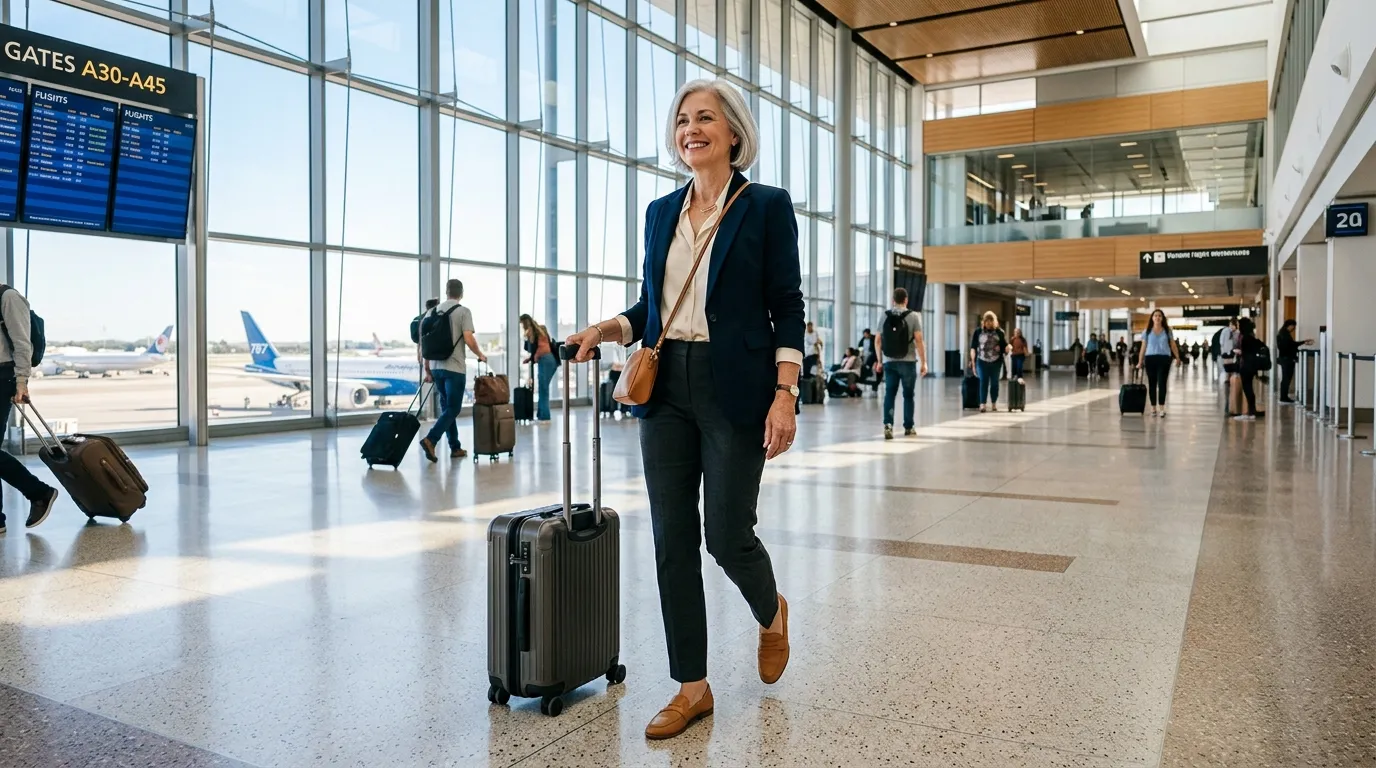
This time, she was choosing her own destination.
Months later, Valerie proudly booked another trip. But this time, she booked it entirely by herself. No spontaneous companions, no running from grief.
Owen drove her to the airport. When she gracefully lifted her own suitcase from the trunk of the car, nobody was helping her escape from anything. She had chosen the destination entirely on her own terms.
Owen hovered near the trunk, clearing his throat nervously. “Right. You’re 63.”
Valerie paused and looked at him, one eyebrow arched.
“Do you want me to check the hotel reviews just one more time?” he couldn’t help but ask.
She slowly turned her whole body toward him.
Owen immediately realized his mistake and raised both hands in surrender, stepping back. “Right. You’re 63. I know.”
Valerie laughed, a bright, beautiful sound. “And I am very, very capable of surviving dinner with strangers, Owen.”
Then she leaned in, kissed his cheek warmly, took her rolling suitcase, and walked through the sliding glass doors of the airport completely alone.
And this time, nobody followed her.
Note:This work is inspired by real events and people, but it has been fictionalized for creative purposes. Names, characters, and details have been changed to protect privacy and enhance the narrative. Any resemblance to actual persons, living or dead, or actual events is purely coincidental and not intended by the author.
All images used in this article are AI-generated and intended for illustrative purposes only.
0 Comments